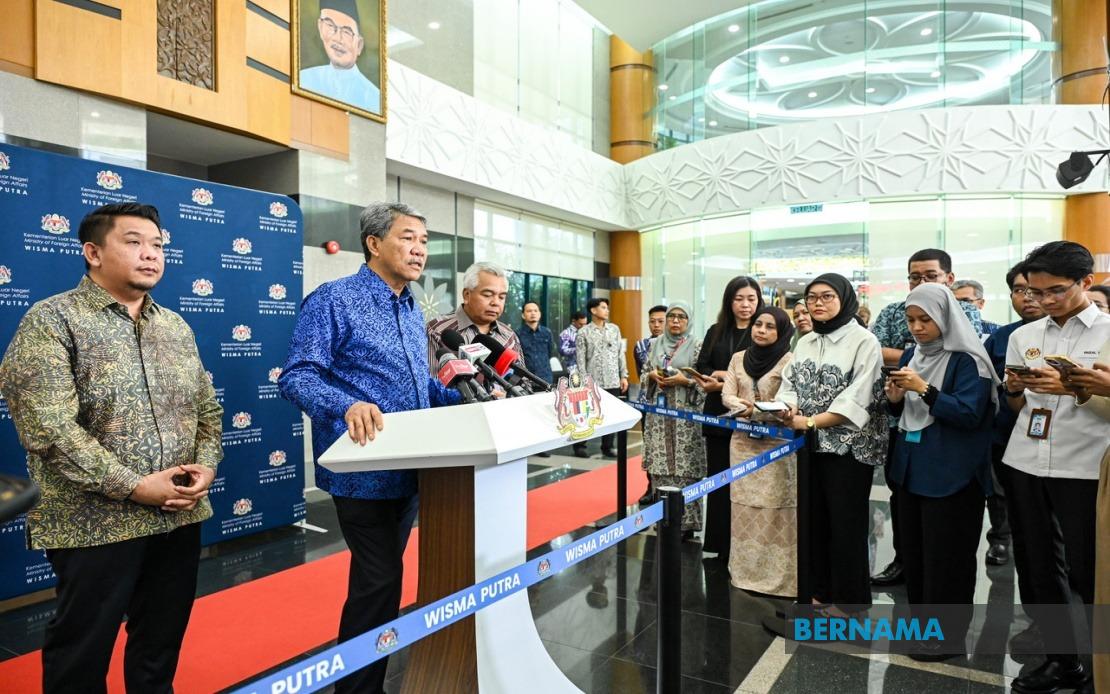
Malaysia's Foreign Minister Datuk Seri Mohamad Hasan disclosed that Myanmar has signalled its commitment to facilitating the maritime return of 5,000 refugees currently sheltering in the country. The development emerged during a recent diplomatic engagement with Myanmar Foreign Minister Tin Maung Swe, offering a potential pathway toward addressing one of Southeast Asia's most intractable humanitarian crises. Speaking at the 59th ASEAN Day commemoration in Putrajaya on Monday, Mohamad underscored that while the overture represents a constructive step, critical questions about the welfare and protection of those being returned must be thoroughly examined before any operation commences.
The Malaysian government has already undertaken the laborious process of documenting and identifying each of the 5,000 individuals slated for repatriation, a foundational requirement for executing any large-scale population movement. However, Mohamad cautioned that despite preliminary coordination with Myanmar authorities, no concrete timeline has yet been established for launching the seaborne operation. He emphasised that Malaysia's priority remains accelerating the process while maintaining rigorous oversight to prevent the coercion or endangerment of vulnerable populations. This balancing act between expediting returns and safeguarding human dignity reflects the ethical complexity that surrounds refugee movements in the region.
Acknowledging the broader refugee landscape, Mohamad stressed that international discourse too frequently conflates Myanmar's displacement crisis with the Rohingya population alone, obscuring the reality that multiple ethnic communities have fled the country seeking sanctuary. The Chin and Karen communities, among others, represent substantial proportions of Myanmar's displaced populations, each with distinct historical grievances and protection needs. This wider perspective is crucial for comprehending the full scale of instability and suffering within Myanmar's borders. By broadening the conversation beyond a single ethnic group, Malaysia's diplomatic posture signals recognition that the humanitarian emergency transcends simplified narratives and demands nuanced, inclusive solutions.
The ASEAN bloc has collectively embraced Myanmar's refugee challenge as a matter requiring coordinated regional action rather than bilateral arrangements alone. Mohamad reiterated that member states view the crisis with appropriate gravity and have committed to addressing it through established institutional mechanisms. This collective commitment reflects ASEAN's evolving understanding that transnational displacement and humanitarian emergencies cannot be managed effectively through isolated national responses, particularly in a region characterised by porous borders and interconnected migration corridors.
Central to ASEAN's approach remains the Five-Point Consensus, a framework adopted to guide the bloc's engagement with Myanmar's political and humanitarian dimensions. The 5PC, which was negotiated and formally endorsed by Myanmar's leadership alongside other ASEAN leaders, encompasses measures addressing the cessation of violence, humanitarian assistance, constructive dialogue, and support for ASEAN's mediation efforts. Mohamad stressed the paramount importance of preserving this mechanism as the foundation for regional diplomacy toward Myanmar, arguing that any modifications or reformulations must be returned to the ASEAN leadership for collective deliberation rather than unilateral alteration. This insistence on procedural integrity reflects concerns that ad hoc deviations could undermine the framework's credibility and effectiveness.
The minister's position essentially argues that the 5PC cannot be dismissed or superseded simply because implementation has proven difficult or protracted. Rather, if circumstances have shifted in ways that necessitate refinement, the appropriate course involves transparent renegotiation among all stakeholders through ASEAN's established channels. This legalistic approach to consensus-building, while sometimes criticised as overly cautious, serves to anchor ASEAN's engagement with Myanmar in mutually agreed principles that all member states—and Myanmar itself—had voluntarily endorsed. Abandoning or significantly altering these foundations risks fracturing the already delicate regional consensus on how to respond to Myanmar's turmoil.
For Malaysia, which hosts a substantial refugee population from Myanmar and has borne considerable fiscal and administrative burdens in managing their presence, the prospect of organised repatriation carries both humanitarian and pragmatic appeal. The ability to facilitate voluntary, safe returns would alleviate pressure on Malaysia's already stretched asylum and welfare systems while simultaneously demonstrating that regional mechanisms can produce tangible outcomes. However, the repatriation initiative also hinges on genuine improvements in Myanmar's political trajectory and security conditions—prerequisites that have yet to materialise comprehensively across all regions. Simply returning refugees to an environment of ongoing conflict or persecution would constitute a failure of Malaysia's stewardship and a betrayal of the protections offered under international humanitarian law.
The announcement also signals that behind-the-scenes diplomatic engagement continues between Malaysia and Myanmar despite broader regional tensions and the military junta's controversial grip on power. Mohamad's characterisation of Myanmar's Foreign Minister as the "new" holder of that portfolio indicates personnel changes within Myanmar's government structure, potentially suggesting evolving dynamics within the regime itself. Whether such shifts portend meaningful policy recalibrations or merely represent bureaucratic reshuffling remains an open question requiring sustained diplomatic observation.
Looking forward, the repatriation proposal will be tested by practical implementation challenges that extend far beyond initial political agreement. Maritime transport requires extensive logistical coordination, including vessel procurement, route planning, security protocols, and receiving arrangements at destination ports. Furthermore, verification mechanisms ensuring that returnees are received safely and not subjected to persecution or forced displacement again will be essential. Malaysia's stated commitment to considering the safety dimension indicates awareness of these complexities, though translating rhetorical caution into operational safeguards will demand meticulous attention throughout the process.
The broader significance of this development lies in demonstrating that despite Myanmar's political isolation and the persistence of internal conflict, diplomatic pathways toward managing the humanitarian fallout remain open. ASEAN's persistence in maintaining dialogue with Myanmar, even as it navigates significant moral and political tensions, reflects the bloc's pragmatic assessment that disengagement would serve neither regional stability nor the interests of displaced populations. Malaysia's intermediary role in facilitating these conversations positions it as a constructive voice within ASEAN's Myanmar deliberations, balancing moral advocacy with acknowledgment of the constraints inherent in managing a complex crisis across multiple sovereignties.
Ultimately, the promise to repatriate 5,000 refugees represents a limited but meaningful step toward resolution of a humanitarian emergency that has accumulated hundreds of thousands of displaced persons across Southeast Asia. The initiative's success will depend on Myanmar's sustained commitment to safety standards, ASEAN's continued collective oversight, and Malaysia's vigilance in ensuring that those returned are protected from the perils that originally forced them into exile. The coming months will test whether diplomatic expressions of intent can translate into protection and dignity for some of Myanmar's most vulnerable populations.

