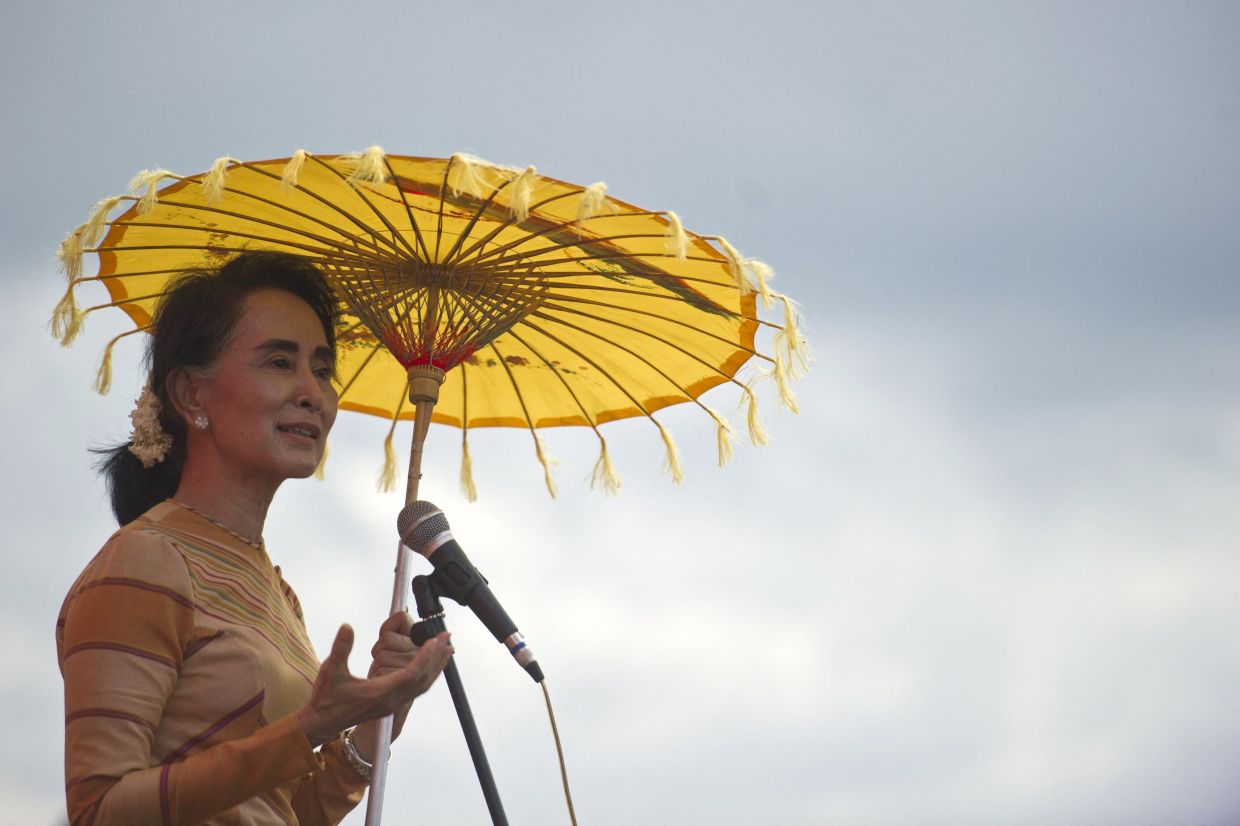
Myanmar's military junta delivered a pointed message to Asean this year when it firmly rejected the bloc's latest request to visit Aung San Suu Kyi, the deposed democratic leader who recently turned 81. The refusal, delivered through regime spokesperson Khaing Khaing Soe at a June 30 news conference, represents far more than a simple administrative denial. Instead, it underscores a deepening crisis within Southeast Asia's regional framework and exposes the uncomfortable reality that the military government in Naypyitaw views Asean as powerless to enforce its will.
The rejection of Asean chair Philippines Foreign Secretary Maria Theresa Lazaro's visit request marked the second occasion she had been rebuffed in her attempts to meet Myanmar's most prominent political prisoner. Her earlier effort in January had similarly failed, despite meeting with Min Aung Hlaing himself at Myanmar's capital. This consistent stonewalling suggests a deliberate strategy by the junta to demonstrate absolute control over its internal affairs and to determine unilaterally which foreign representatives may access Suu Kyi. The regime's justification—that she is a convicted prisoner serving sentences and therefore ineligible for international visits—rings hollow to observers who note the selective nature of these restrictions.
Who the junta does permit to visit Suu Kyi reveals telling geopolitical priorities. Former Thai Foreign Minister Don Pramudwinai managed a meeting in July 2023, while Chinese Foreign Minister Wang Yi reportedly visited her during an April trip to Naypyitaw this year. These exceptions illuminate which relationships Min Aung Hlaing values most and which powers he considers worthy of privileged access. The contrast between these approved visitors and Asean's repeated rejections sends an unmistakable signal: Beijing and Bangkok, through their diplomatic channels, have cultivated relationships the junta deems more strategically important than maintaining good standing with the regional bloc. For Malaysia and other Asean members seeking to influence Myanmar's trajectory, this reality presents a sobering assessment of their collective bargaining position.
Analysts interpret Myanmar's defiance as stemming from a fundamental miscalculation of power dynamics within Asean. According to Hunter Marston of the Lowy Institute, Myanmar's leadership operates from a conviction that the bloc needs the country far more than the regime requires Asean's support or recognition. This asymmetry explains the junta's apparent indifference to Asean pressure. By restricting access to Suu Kyi, the regime signals its determination to control the political narrative entirely and to dictate which external actors may influence or observe its internal governance. The message to Asean is blunt: the grouping lacks sufficient leverage to compel Myanmar compliance through diplomatic channels alone.
The imprisonment conditions surrounding Suu Kyi underscore the junta's calculated strategy of using her detention as a diplomatic bargaining chip. Since her arrest following the February 2021 coup, she has been serving a sentence of approximately eighteen years following several rounds of reduced jail terms from the original conviction of thirty-three years. The charges against her—including violations of Myanmar's official secrets act and corruption allegations—have been widely dismissed by international observers as politically motivated and without credible evidentiary foundation. More significantly, reports suggest she has been under house arrest since April, meaning that she has effectively become incommunicado to all independent sources. Her own son, Kim Aris, revealed that he has not been permitted to visit or communicate with his mother for five years, despite the regime's repeated claims that she enjoys good health.
Suu Kyi's isolation serves multiple purposes for Min Aung Hlaing's government. By maintaining her imprisonment and restricting her visitors, the junta preserves what independent historians describe as essential leverage over Asean's diplomatic agenda. The regime can argue that it is enforcing law and order through the proper judicial process, thereby establishing legal justification for her continued detention and inaccessibility. Simultaneously, the junta demonstrates to its domestic audience and to regional observers that no external pressure—whether from Asean or from individual member states—can force the government to modify its political settlement. The regime's refusal to grant access essentially asserts sovereignty in its most uncompromising form.
This intransigence directly contradicts Asean's post-coup peace framework. The Five-Point Consensus, adopted following the February 2021 military takeover, outlined conditions including an end to violence, humanitarian aid access, and dialogue between all stakeholders. Crucially, the plan specified that Asean's special envoy should be permitted to meet all concerned parties, which logically encompasses Suu Kyi herself. Yet Min Aung Hlaing has shown persistent reluctance to honour this commitment. For over five years, Asean has responded by maintaining an unprecedented ban on his attendance at regional leaders' summits, a symbolic gesture that has proven ineffective in compelling compliance. The impasse reveals a fundamental structural weakness within Asean's enforcement mechanisms.
The human cost of this political stalemate cannot be overstated. Since the coup, independent conflict monitors estimate that at least 100,000 people have died in Myanmar's ongoing strife. The junta's staging of what international observers have labelled a sham election earlier this year, combined with Min Aung Hlaing's transition from military chief to president in April, has merely consolidated power rather than advancing political resolution. The democratic transition that Asean hoped to facilitate through its peace framework has been postponed indefinitely, with Suu Kyi serving as the ultimate hostage to a process that shows no sign of genuine progress. Her continued imprisonment symbolizes the failure of Asean's multilateral approach to enforce meaningful change.
Some analysts perceive Myanmar's treatment of Suu Kyi as fundamentally about preventing Asean from asserting any supervisory role over the country's internal political settlement. Historian Phyo Win Latt suggests that the junta distinguishes between recognition and scrutiny: it welcomes international acknowledgement of its authority but rejects external oversight of its governance decisions. By denying Asean representatives access to Suu Kyi, the regime signals its determination to reserve all decisions regarding her fate exclusively for Naypyitaw. This interpretation suggests that the junta views Asean not as a partner in Myanmar's future but as a potential threat to its consolidated power if the bloc were permitted to observe conditions too closely or to influence the treatment of political prisoners.
The Myanmar government's position finds support in its argument regarding Asean's inconsistent application of intervention principles. From Naypyitaw's perspective, Asean has historically abstained from intervening in member disputes, citing the principle of non-interference in internal affairs. Yet the bloc has made Myanmar a consistent exception, pushing the Five-Point Consensus and threatening to exclude the country's leadership from regional forums. The junta reasonably questions why Myanmar should face pressure that Asean does not apply to other members managing internal conflicts or territorial disputes. Thailand and Cambodia's longstanding border disagreement remains unresolved without comparable multilateral intervention or sanctions. This selective pressure creates resentment and provides the military government with rhetorical cover for dismissing Asean's demands as unjustly targeting Myanmar while overlooking comparable failings elsewhere.
The episode reveals broader tensions within Asean that extend beyond Myanmar. The bloc's founding principle of non-interference in internal affairs creates inherent limitations on its ability to pressure member states on governance issues. Yet the humanitarian catastrophe unfolding in Myanmar—with over 100,000 deaths and ongoing military operations—demands a response that the non-interference principle struggles to accommodate. Individual member states like the Philippines and Malaysia find themselves constrained by consensus-based decision-making and the veto power of countries like Thailand that maintain closer strategic ties to Myanmar's junta. This institutional paralysis effectively empowers the Myanmar regime to ignore Asean's moral and political calls for change.
For Malaysian policymakers and observers, this situation presents uncomfortable implications. As an Asean member, Malaysia has a stake in whether the bloc can meaningfully influence major regional developments. The repeated rejection of Asean's access requests to Suu Kyi suggests that the organization's diplomatic tools have diminished effectiveness. Myanmar's apparent strategy of cultivating deeper relationships with China and strategic partners like Thailand while dismissing Asean pressure indicates that regional solidarity may be eroding. The junta's calculation that it can defy Asean with impunity raises questions about the bloc's utility in managing transnational challenges that affect all member states, from refugee flows to security implications of prolonged instability. Unless Asean can develop mechanisms to enforce its collective decisions more effectively, member states like Malaysia may find themselves increasingly sidelined in shaping outcomes that directly impact regional stability and prosperity.

