Myanmar's recovery strategy hinges increasingly on tourism, with the military-backed government wagering that resurrecting the country's once-thriving travel industry will signal broader economic stabilisation to both domestic audiences and international observers. The government has established an ambitious target of 1.8 million foreign arrivals this year—nearly double the 973,263 visitors who entered the country in 2025—as part of a calculated effort to demonstrate that portions of the nation remain economically functional despite years of civil conflict and diplomatic estrangement. This tourism push represents one of the most visible economic initiatives launched since the 2021 coup, serving as a barometer for whether Myanmar can genuinely attract international confidence during a period of tentative political recalibration.
The administration's gamble on tourism reflects a recognition that regional connectivity offers the most realistic pathway to recovery given the country's isolation from Western markets. Officials have explicitly identified Chinese and Thai visitors as the linchpin of their strategy, acknowledging that geographical proximity and existing trade relationships make these markets more accessible than distant Western tourists. Maung Maung Kyaw, permanent secretary at the Ministry of Hotels, Tourism and Culture, outlined this regional focus in recent discussions, indicating that near-neighbour arrivals will fundamentally determine whether tourism targets prove achievable. This concentration on neighbouring countries represents a significant departure from Myanmar's pre-2021 tourism model, which drew heavily from Western travellers seeking pristine landscapes and authentic Buddhist experiences.
Current performance data suggests the government faces considerable headwinds in meeting its ambitious goals. Through May this year, Myanmar had welcomed 448,205 international arrivals, representing only a five per cent increase compared to the same period last year—a trajectory insufficient to reach the 1.8 million target without a dramatic acceleration in the second half. Even if officials achieve their stated objective, visitor numbers would remain substantially below the 4.7 million who arrived in 2015, the year Myanmar first opened to international tourism following decades of isolation. The contrast with neighbouring Thailand, which attracted approximately 33 million tourists last year and maintains similarly aggressive targets, underscores Myanmar's competitive disadvantage in the regional tourism ecosystem.
Chinese travellers comprise Myanmar's largest source of international arrivals by air, with data showing a twelve per cent increase during the first five months of 2024. Thai visitors form the second major demographic, posting seven per cent growth, while South Koreans represent an emerging constituency. These statistics reveal the extent to which Myanmar's recovery depends on Asian markets, particularly Beijing's willingness to facilitate outbound tourism. The visa-on-arrival programme recently expanded to include citizens from China, India, Japan, and South Korea, whilst nationals from Russia and most Southeast Asian nations already enjoy visa-free access. Officials indicate that further liberalisation of travel documentation will respond to demand fluctuations from specific markets, suggesting a flexibility that contrasts with Myanmar's previously rigid border procedures.
The legitimacy of tourism recovery figures has become complicated by the documented presence of human trafficking networks operating within Myanmar. Official statistics covering legal arrivals do not account for thousands of individuals trafficked into online scam compounds, a phenomenon that has prompted regional law enforcement crackdowns and the forced repatriation of numerous Chinese nationals. This underworld dimension of migration flows undermines the credibility of tourism narratives and raises questions about whether genuine visitor growth can be meaningfully separated from coercive movement of vulnerable populations. The distinction matters considerably for international perception, particularly for governments and travel operators assessing the security and legitimacy of Myanmar's tourism sector.
President Min Aung Hlaing's diplomatic overtures since his April inauguration have created space for tourism rehabilitation through normality restoration with regional partners. State visits to China and India, coupled with efforts to rebuild relationships with Southeast Asian neighbours, have established a diplomatic framework within which tourism revival becomes plausible. Thailand, historically one of Myanmar's closest economic partners, has begun cautious re-engagement, with Foreign Minister Sihasak Phuangketkeow visiting Yangon in April. More tellingly, prominent Thai travel influencers including Farose and Bas from Go Went Go have recently filmed content in Yangon, reintroducing Myanmar to regional audiences after years when the country largely disappeared from travel narratives. This influencer engagement represents a crucial signal that Myanmar is transitioning from pariah status to acceptable destination.
Luxury hotel operators in Yangon report modest but meaningful occupancy improvements since the election, with some properties recording approximately ten per cent increases. Chatrium Hotel Royal Lake's General Manager May Myat Mon Win, who advises the Myanmar Tourism Federation, notes that contemporary guests represent a different demographic profile than pre-coup leisure travellers. Current visitors comprise predominantly business delegations, Buddhist pilgrimage groups, and individuals investigating investment opportunities. This composition reflects Myanmar's current appeal as a frontier economy rather than a conventional tourist destination, with visitors driven by commercial calculation rather than purely recreational motivation. Japanese arrivals are anticipated to grow, though primarily through business-related travel and corporate due diligence rather than traditional sightseeing.
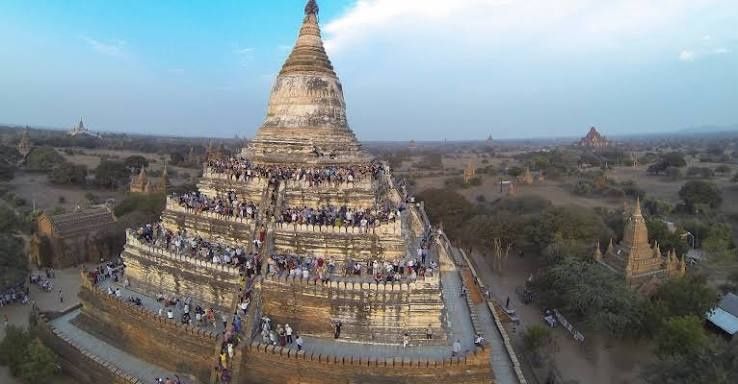
Yangon, Mandalay, Bagan, Inle Lake, and the Golden Rock Pagoda remain Myanmar's principal tourism assets, according to government officials emphasising trust-building as the administration's central strategic priority. These destinations offer distinctive attractions grounded in colonial heritage, Buddhist antiquity, and relatively underdeveloped natural landscapes—assets that commanded international attention before the coup. Tour operators report renewed inquiry patterns from Europe, the United States, and India despite constrained international flight capacity, suggesting that Myanmar's tourism appeal extends beyond immediate regional markets. Thet Lwin Toh of Myanmar Voyages International Tourism Co notes that Western interest persists despite practical barriers, pointing to latent demand that could expand substantially if connectivity improves.
Western governments maintain cautious or negative travel advisories despite nascent recovery indicators. The United States State Department continues its "Do Not Travel" recommendation citing armed conflict and civil unrest, a posture that reflects genuine security concerns in certain regions whilst potentially overstating risks in major tourist centres. Paradoxically, official data demonstrates that American arrivals increased seventeen per cent through May despite State Department warnings, suggesting that independent travellers increasingly discount official guidance in favour of social media sources. Liam Martinez, a 34-year-old Texan who visited Yangon after viewing YouTube content, exemplifies this pattern of travellers relying on digital influencer assessment rather than governmental analysis, describing his experience as entirely safe whilst acknowledging the disconnect between media narratives and ground-level security realities.
Myanmar's tourism recovery strategy ultimately represents a calculated bet on regional integration as the pathway to economic reconstruction following geopolitical fracture. The government has implicitly accepted that Western markets remain inaccessible during this transitional period, redirecting instead toward Chinese, Thai, and broader Asian constituencies whose geographical proximity and existing commercial relationships facilitate easier reengagement. Whether this regional-focused model proves economically sufficient, and whether tourism success might translate into broader investor confidence and international legitimacy, will substantially influence Myanmar's trajectory over the coming years. The hotels reopening, temples welcoming foreign pilgrims, and influencers filming travel content represent more than sectoral recovery—they symbolise whether Myanmar can meaningfully reconstruct its international standing through incremental normalisation rather than transformative political change.

