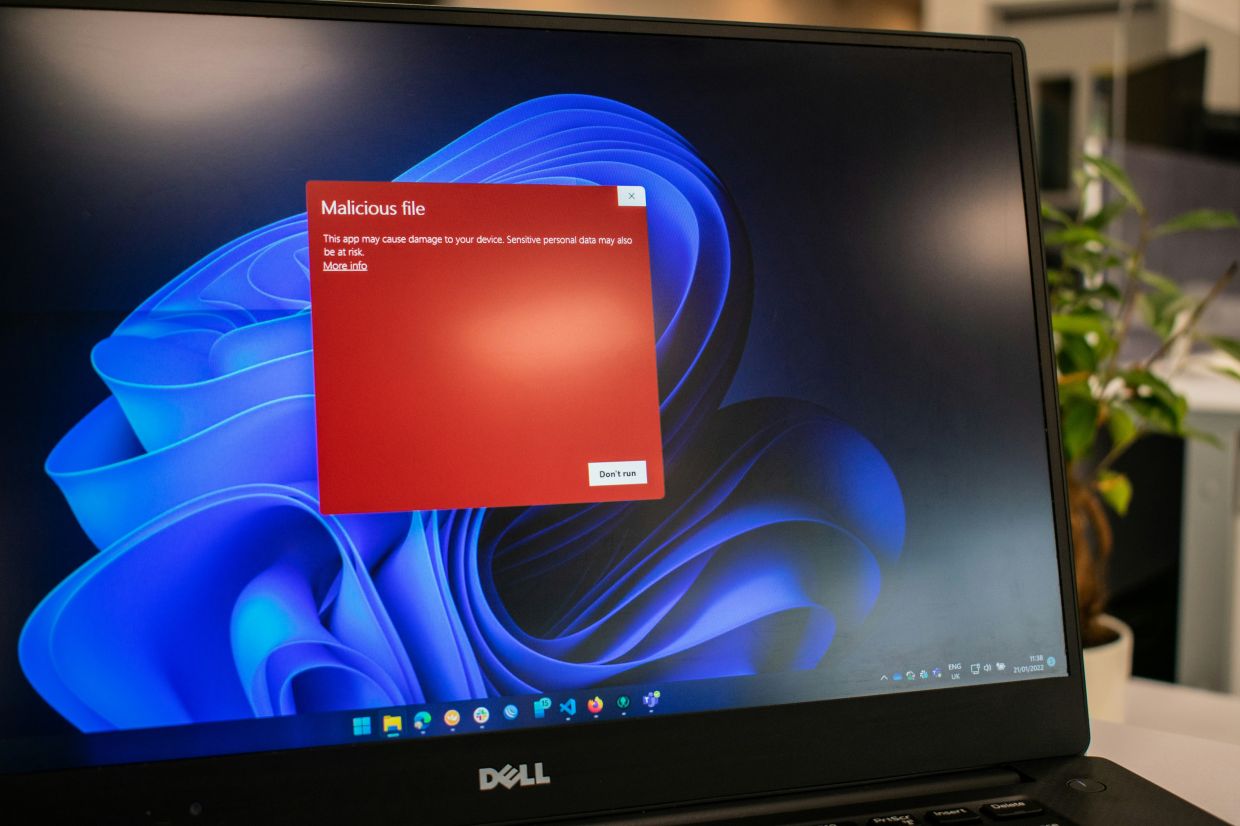
Malaysia's cybersecurity authority MyCert has issued an urgent alert regarding a malware distribution campaign actively spreading through WhatsApp Web and Desktop platforms, with attackers specifically targeting Windows-based computers through carefully crafted social engineering schemes. The threat uses a combination of psychological manipulation and technical deception, sending unsuspecting users files that appear to be legitimate financial or legal correspondence but actually contain dangerous executable code.
The campaign employs a particularly insidious approach to deceive recipients. Attackers send messages containing file attachments with names specifically designed to mimic common business documents that people regularly receive and open without hesitation. Examples of these deceptive filenames include "Acknowledgment of Debt.vbs", "Sila semak bil anda.vbs", "December statement of account.vbs", and "Reconciliation.vbs". The naming convention deliberately references financial statements, debt acknowledgements, and account reconciliation documents — materials that Malaysian businesses and individuals frequently encounter in their normal commercial and personal dealings, making them far more likely to open such files without question.
The technical sophistication of this attack lies in a fundamental mismatch between what the filename suggests and what the file actually is. While the names imply PDF documents or other standard office formats, these are actually Visual Basic Script files — executable programs written in code that automatically run when opened. This distinction is crucial because when a user double-clicks what they believe to be a harmless document, they are instead triggering the installation of malicious software onto their system without any additional prompting or authorization required from the user.
Once executed, the malware deploys a Remote Access Trojan, or RAT, which gives attackers comprehensive control over the infected machine. This tool allows criminals to remotely access the compromised device and maintain that access indefinitely, even if the device is rebooted or the user believes they have disconnected from the threat. The RAT represents a complete compromise of the affected system, granting attackers the same capabilities as if they were physically sitting at the keyboard.
Further compounding the danger, the malware actively disables security features that would normally alert users to malicious activity. By suppressing security prompts and evasion mechanisms, the infection operates silently in the background while the unsuspecting user continues their normal activities. This stealthiness allows attackers to capture sensitive information displayed or entered on the keyboard without triggering antivirus alerts or other security warnings that might tip off the victim.
The information harvesting capability is particularly alarming for financial security. Attackers gain the ability to intercept passwords, banking PIN numbers, and one-time passwords — the very authentication mechanisms designed to protect online accounts. For Malaysian users with significant digital banking activity, this represents an existential threat to their financial accounts and digital assets. The compromised system becomes a perfect surveillance tool, monitoring everything the user types or views, creating opportunities for identity theft and unauthorized financial transactions.
MyCert's advisory emphasizes fundamental behavioral changes to protect against this threat. Users should exercise extreme caution with any unexpected file attachments received through messaging platforms, even if the sender's name appears familiar or the filename seems legitimate. Simply replying to such messages confirms to attackers that a phone number is active and responsive, potentially leading to escalated targeting or sale of the verified contact to other criminal operations. Instead, users should immediately report suspicious messages directly through WhatsApp's reporting mechanism and notify MyCert through the dedicated Cyber999 email address at [email protected], including screenshots of the message, timestamp, and sender details.
For users who have already fallen victim to this attack, the response must be swift and comprehensive. The first priority is to immediately disconnect the infected device from the internet entirely, cutting off the attacker's remote access capability. For corporate users, this should be immediately followed by notification to the organization's IT security team, as an infected corporate device poses risks to the entire network and data systems. Users should not attempt to continue working on the compromised system, as doing so may expose additional sensitive corporate information.
The recovery process requires treating the compromised system as completely exposed. All passwords, PINs, security questions, and other authentication credentials entered on the infected machine should be considered known to attackers and must be changed immediately — but this must be done from a separate, clean device. Changing passwords while logged into the compromised system merely provides attackers with the new credentials. Users should employ a different computer, tablet, or mobile device to reset all online accounts, particularly banking and email services, which serve as gateways to other accounts.
Due to the sophisticated nature of the RAT and its ability to evade detection, standard consumer antivirus software typically cannot remove this threat. MyCert explicitly warns against relying on conventional malware scanning tools, as the malware is specifically designed to disable such defenses. Users should seek professional cybersecurity assistance to properly remove the infection, ensuring that all components of the malware are fully eliminated and the system returned to a secure state.
This incident underscores the evolving sophistication of cybercriminal operations targeting Malaysia and the Southeast Asian region. As financial services increasingly move online and messaging platforms become central to business communication, attackers are adapting their tactics to exploit the intersection of human trust and technological vulnerability. Malaysian organizations and individuals should treat this warning as a critical security alert and implement stricter verification protocols for any unsolicited file attachments, regardless of apparent sender legitimacy.

