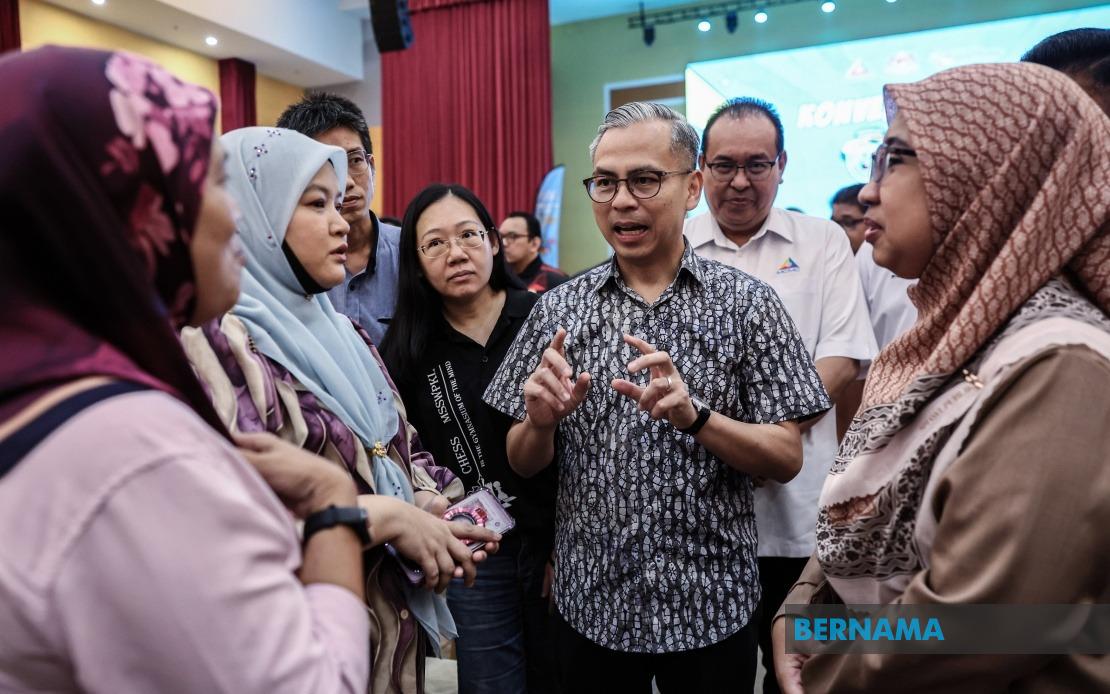
The government has moved to dispel confusion about the MyKhas allocation scheme by reiterating that the fund serves as a direct instrument for constituency development rather than as a personal prerogative of Members of Parliament. Datuk Seri Fahmi Fadzil, the PKR Information Chief and Communications Minister, emphasised this distinction during a press conference in Kuala Lumpur on Thursday, underscoring Prime Minister Datuk Seri Anwar Ibrahim's position that all government allocations are fundamentally for public benefit and cannot be claimed as exclusive rights by individual lawmakers.
The clarification comes amid broader debate about how special allocations are distributed and managed within Malaysia's political system. Fahmi explained that MyKhas operates as a formalised mechanism enshrined within Malaysia Plan and Budget documents as a special provision that falls squarely within the Prime Minister's authority. This institutional arrangement means the disbursement of funds remains centrally controlled and directed according to need rather than being discretionary spending available to individual MPs.
What distinguishes MyKhas from traditional constituency allowances is its explicit targeting toward specific community needs within parliamentary constituencies. The fund can be deployed across diverse areas including school infrastructure, religious educational institutions, places of worship, and essential public works such as drainage systems. This framework reflects a deliberate policy shift toward transparent, needs-based allocation rather than allowing elected representatives to direct resources according to personal or partisan preferences.
Fahmi's own experience illustrates the impersonal nature of the scheme. As an MP himself, he cannot utilise MyKhas funds for personal benefit or even direct them as he sees fit. Instead, the mechanism functions as a reservoir of resources intended exclusively for the people and registered voters within the relevant constituencies. This constraint applies uniformly across all parliamentary representatives regardless of their party affiliation or ministerial position, establishing an important principle of equal treatment within the allocation system.
The government's emphasis on this distinction carries particular significance given Malaysia's history of concerns about the misuse of public allocations. By centralising decision-making about MyKhas distribution within the Prime Minister's office rather than leaving it to individual MPs, the administration aims to reduce opportunities for patronage or the funnelling of resources toward politically sympathetic groups. The arrangement also provides a mechanism for ensuring that opposition-held constituencies receive equitable treatment.
For constituencies administered by opposition parties, the government has established a formal pathway for accessing MyKhas funds. Residents and community organisations can submit applications through the Implementation Coordination Unit within the Prime Minister's Department. This provision theoretically removes any partisan barrier to accessing the scheme, though the practical effectiveness of this arrangement remains subject to broader scrutiny of government implementation.
Anwar Ibrahim himself reinforced this governance philosophy in recent public statements, affirming that parliamentary allocations serve the broader purpose of improving living standards and providing essential facilities to constituents. His messaging emphasises that such resources are public goods intended to enhance community infrastructure and welfare, not instruments of political reward for elected representatives. This rhetorical stance reflects a conception of public office as trusteeship rather than personal entitlement.
The MyKhas framework also addresses a persistent tension within Westminster-style parliamentary systems operating in developing democracies. Elected representatives typically command significant informal influence over resource distribution within their constituencies, raising concerns about whether public allocations serve the genuine needs of all residents or primarily benefit politically aligned groups. By institutionalising MyKhas as a Prime Minister-administered fund with transparent criteria and processes, the government attempts to navigate this challenge.
For Malaysian constituencies and residents, the practical implications of this arrangement depend substantially on implementation. The effectiveness of MyKhas in reaching intended beneficiaries will likely determine whether the scheme succeeds as a mechanism for equitable development or devolves into another layer of bureaucratic allocation subject to political influence. Transparency in application processes, clear criteria for fund dispersal, and independent oversight would strengthen the scheme's credibility.
The clarification also reflects evolving norms about political ethics and public resource management within Malaysian governance. As public consciousness about accountability grows, political leaders face increasing pressure to demonstrate that government funds serve public rather than partisan interests. Fahmi's repeated assertion that MyKhas benefits constituencies and voters rather than individual MPs signals alignment with this expectation, though scepticism about actual implementation remains justified pending concrete evidence of the scheme's operation.
Regional observers of Malaysian politics will note that this debate mirrors conversations occurring across Southeast Asia about the relationship between elected representatives and public resource allocation. Many countries in the region grapple with similar questions about whether to centralise control over constituency development funds or allow representatives greater discretion. Malaysia's approach through MyKhas represents one institutional solution to managing this perennial governance challenge.
The government's messaging strategy appears designed to establish firm boundaries around the legitimate use of public allocations while maintaining the rhetoric of development-focused spending. Whether this translates into substantive changes in how resources actually flow to constituencies, and whether opposition-held areas receive equitable treatment in practice, will ultimately determine the scheme's success in delivering on its stated purpose of serving constituent needs rather than political interests.

