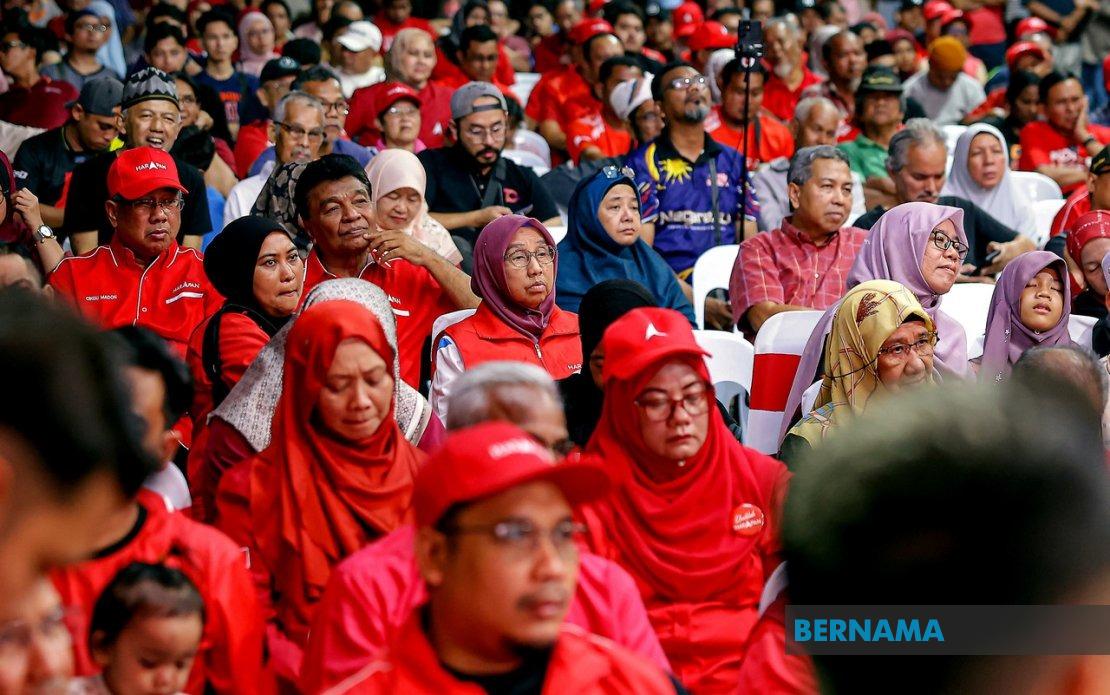
As campaigning intensifies for the 16th Negeri Sembilan state election, a consistent message is crystallising across the electorate: voters care less about politicians' credentials than their capacity to listen and act. A survey conducted during the sixth day of the campaign reveals that Negeri Sembilan residents are increasingly evaluating candidates not on background or party machinery, but on their demonstrated ability to translate grievances into workable, ground-level solutions.
This voter sentiment reflects a broader shift in Malaysian state politics, where local issues—often disconnected from national narratives—dominate decision-making at the ballot box. Rather than broad party ideology, residents of Negeri Sembilan's 36 constituencies are zeroing in on whether a candidate will remain accessible once elected and whether they understand the practical challenges facing ordinary households. The disconnect between voters' expectations and how campaigns are traditionally structured suggests potential friction ahead, particularly for parties relying on hierarchical or distant campaign models.
Kamarulzaman Ab Aziz, a 64-year-old retiree, articulates a view many voters share: geographical origin matters far less than approachability. His conviction that an outsider with genuine community engagement beats a disengaged local candidate reflects a pragmatic reorientation in how Negeri Sembilan voters assess representatives. This willingness to look beyond traditional ties—typically based on family networks or long-standing community presence—underscores how voter expectations have evolved. For political candidates and parties, the implication is stark: parachuting in unfamiliar faces may be viable if those candidates demonstrate authentic interest in constituent concerns and maintain visible, consistent accessibility throughout their tenure.
Cost of living emerges as the most visceral concern among working-class and small-business voters. Nurulainee Hamidon, a 37-year-old food trader from Port Dickson, articulates the squeeze small retailers face: supply costs climb relentlessly, yet raising prices alienates customers already stretched thin. For vendors and their suppliers, this creates an impossible arithmetic where margins shrink and household survival becomes contingent on sheer volume. The issue resonates beyond retail; it touches transport costs, raw material sourcing, and wage pressures that small enterprises cannot easily absorb. Any government winning the mandate will face immediate pressure to address inflationary effects through targeted support for small and medium enterprises, potentially through subsidised logistics networks, bulk procurement arrangements, or tax relief mechanisms tailored to retail sectors.
Rural and estate communities represent another crucial voter segment with distinct grievances. M. Manisha, a 38-year-old housewife, highlights a persistent complaint: development initiatives bypass outlying areas, leaving residents with inferior infrastructure and fewer opportunities. Estate populations—many relying on agricultural or plantation work—often experience delayed access to basic amenities like reliable broadband, proper healthcare facilities, and quality education compared to urban centres. For the incoming state government, this signals demand for a decentralised development strategy that explicitly includes estate clusters and rural zones in infrastructure planning, not as afterthoughts but as integral components of state-level economic and social development.
Employment quality and wage equity constitute priorities for younger voters entering the workforce. Mohammad Najmi Aiman, 22, who will cast his ballot for the first time in Paroi, articulates a frustration common among fresh graduates: jobs exist, but compensation often fails to reflect qualifications or market demand. This suggests a disconnect between education outcomes and labour market valuation—a structural issue that transcends individual campaign promises but demands state-level attention through skills development partnerships with industry, apprenticeship schemes, and wage transparency initiatives.
Parallel to these substantive concerns, voters are signalling demand for campaign decorum and political maturity. Lim Kian, a 43-year-old private sector worker, explicitly frames healthy electoral competition as a prerequisite for democratic legitimacy. His concern about ad hominem attacks and negative campaign tactics reflects broader anxiety about civility and dignity in political discourse. In practice, this suggests voters may penalise parties perceived as running dirty campaigns or whose supporters engage in divisive rhetoric online or offline. Maintaining a constructive, issues-focused campaign may therefore confer electoral advantage, particularly among swing voters in marginal constituencies.
The electoral mechanics underscore the scale of engagement required. With 889,490 registered voters—comprising 867,151 regular voters plus military and police personnel—distributed across 36 seats, turnout and geographic concentration become crucial. Early voting on July 28 and main polling on August 1 create tight timeline pressures for candidates to crystallise voter preferences. The presence of 103 candidates across 36 seats indicates multi-cornered contests in several constituencies, potentially fragmenting votes and allowing candidates with concentrated support among specific demographic blocs to prevail despite lower overall vote shares.
The convergence of voter demands—accessibility, competence, targeted solutions to bread-and-butter issues, rural inclusion, and campaign civility—creates a template for successful candidates that differs markedly from traditional party-machinery-heavy campaigns. Parties and candidates who invest in understanding hyperlocal grievances, maintain genuine touchpoints with communities, and avoid scapegoating or divisive rhetoric may find themselves better positioned to retain or expand support. Conversely, campaigns relying primarily on party brand, national narratives, or top-down messaging risk disconnection with an electorate increasingly focused on tangible, local deliverables.
For Malaysia's broader electoral trajectory, the Negeri Sembilan contest offers a microcosm of how voter expectations are shifting. As inflation persists, rural development lags, and youth employment struggles remain unresolved, state and federal governments face mounting pressure to demonstrate concrete outcomes. The willingness of Negeri Sembilan voters to evaluate candidates on accessibility and delivery rather than party loyalty or biographical credentials signals a maturing electorate that prizes substance over symbolism. How political parties respond to these signals—whether by reshaping their candidate selection processes, deepening community engagement, or reorienting campaign messaging toward actionable solutions—may ultimately determine whether they strengthen their hold on power or find themselves increasingly vulnerable to challengers willing to engage voters on the issues that matter most to their daily lives.

