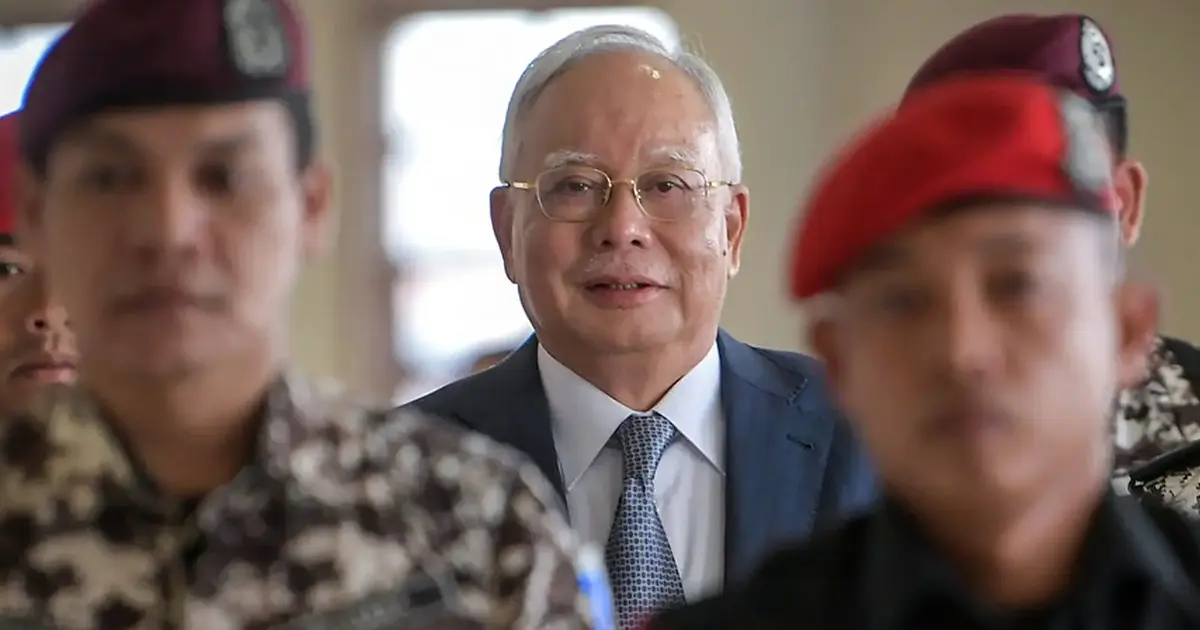
The Court of Appeal has decided to allow former Prime Minister Najib Razak to participate in upcoming proceedings examining the Bar Council's challenge to a decision made by the pardons board, following an application he presented to the court without notice to the opposing side. This development marks another significant moment in the protracted legal saga surrounding Najib's conviction, as Malaysia's highest court system continues to grapple with questions about executive clemency powers and the scope of judicial review over such decisions.
The permission was granted following an ex parte application—a legal procedure where one party submits arguments to the court without the opposing party's presence or knowledge—filed by the former leader's legal team. This procedural step allows Najib to directly engage with the court during the substantive hearing, rather than remaining a passive subject in disputes concerning his case. The decision underscores the continued involvement of Malaysia's apex court in examining fundamental questions about how pardons and remission decisions are made and whether they are subject to legal challenge.
For Malaysian legal observers and constitutional experts, the case represents an intersection of several competing principles within the nation's legal framework. The Bar Council, Malaysia's professional body for lawyers, has mounted a formal challenge arguing that the pardons board's previous decision warrants judicial scrutiny. Meanwhile, Najib and his legal advisors have worked to secure their own standing in the proceedings, a move that demonstrates the adversarial nature of clemency-related litigation in Malaysia's courts. The ability to attend and present arguments directly could prove consequential in how judges ultimately view the substantive issues at stake.
The underlying dispute concerns the extent to which courts can review decisions made by the pardons mechanism, which operates at the intersection of the executive and judicial branches. Malaysia's constitutional framework grants significant discretionary power to the pardons authority, yet the Bar Council's challenge suggests that even these broad powers must operate within legal boundaries. Such constitutional questions have profound implications not only for Najib's personal situation but also for how clemency decisions will be scrutinized in future cases, potentially affecting countless other individuals who might seek pardons or remission of sentence in coming years.
Najib's participation in the hearing is likely to amplify public interest in proceedings that have already attracted considerable media attention and political commentary. His presence in court can shape the narrative surrounding the case, allowing him to be seen as actively defending his interests rather than remaining distanced from proceedings. For supporters and detractors alike, the hearing will offer insight into how Malaysia's judicial system approaches questions of executive clemency and whether constitutional safeguards exist to constrain such powers.
The Bar Council's intervention in the case reflects the profession's broader role as custodian of legal principles and procedural fairness. By mounting a formal challenge, the body signals that questions about pardons decisions are matters of legitimate legal concern extending beyond the individuals directly affected. This positions the legal profession as a guardian of constitutional propriety, a stance that carries particular weight in a nation where judicial independence and rule-of-law principles remain subjects of ongoing national debate and reform efforts.
The timing of this procedural permission is significant given the broader context of Malaysian politics and recent developments in how the courts have addressed high-profile cases. In recent years, Malaysia's judiciary has demonstrated increasing willingness to engage in substantive review of government decisions, a trend that reflects evolving constitutional jurisprudence. Whether this hearing will continue that trajectory or adopt a more restrained approach toward executive clemency remains to be seen, though the outcome will likely influence how similar questions are addressed in subsequent cases.
Southeast Asian observers also track these developments with interest, as the region confronts questions about how judicial systems should interact with executive clemency powers. Malaysia's approach could set precedents that influence legal thinking in neighboring jurisdictions facing comparable constitutional questions. The case therefore has significance extending beyond Malaysia's borders, contributing to broader regional conversations about separation of powers and judicial oversight of executive action.
The substantive hearing itself will require the court to grapple with technical legal questions about what matters may be brought before judges for review and what factors should inform judicial reasoning in such sensitive areas. These procedural and substantive questions will demand careful calibration by the judges, who must balance respect for executive discretion with the principle that governmental action should operate within legal boundaries. How the court ultimately resolves these competing considerations will shape not only Najib's circumstances but also the trajectory of Malaysian constitutional law regarding clemency and pardons for years to come.

