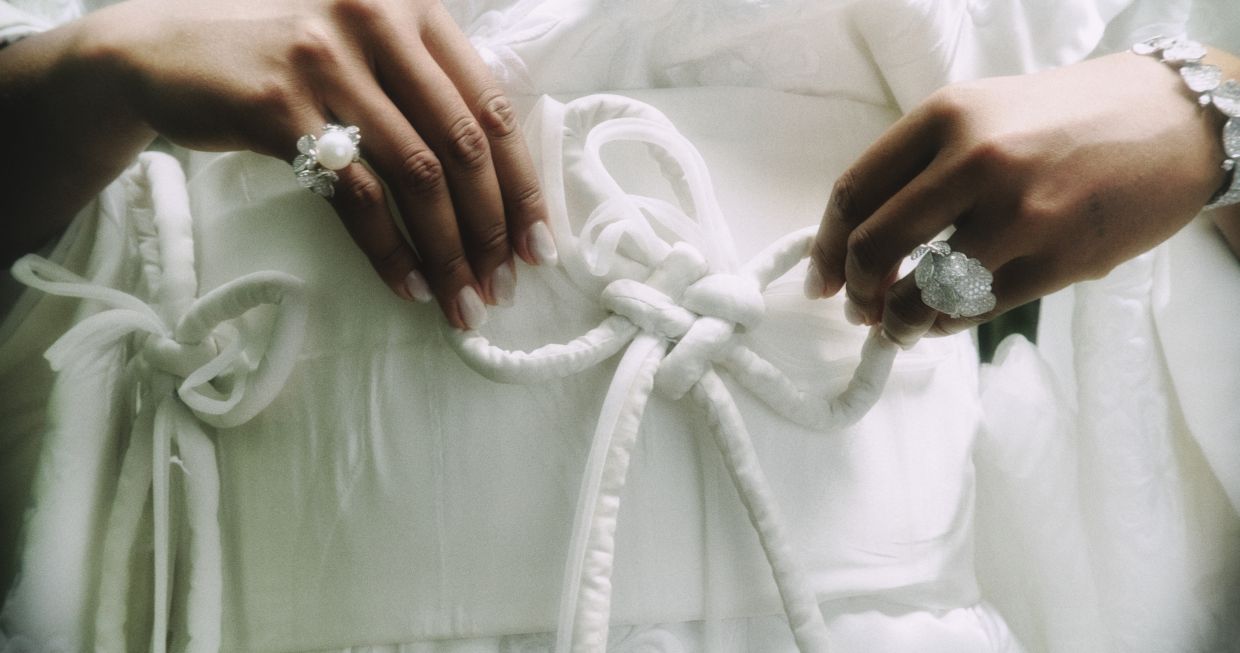
Naomi Osaka's appearance at Wimbledon this June proved that professional tennis has entered a new era where the walk-on spectacle rivals the match itself. Arriving on the opening day in a striking all-white ensemble designed by independent Japanese creator Hana Yagi—titled "Evolving Ceremony"—the 14th-seeded former world number one demonstrated yet again her distinctive approach to competitive fashion. Despite managing a foot injury that threatened her participation, Osaka stepped onto the court in a gown that blended centuries of Japanese aesthetics with contemporary couture sensibility, signalling that her tournament outfits have become as meticulously crafted as her game strategy.
The Yagi creation represented far more than a beautiful dress. Drawing inspiration from traditional kimonos and the junihitoe, the elaborate 12-layer ceremonial gown worn by Heian period noblewomen between 794 and 1185, the design incorporated seven different textiles salvaged from vintage kimonos, a traditional shiromuku wedding dress, and a deconstructed wedding gown. This commitment to upcycling demonstrates Osaka's deliberate embrace of sustainability in sports fashion—a choice that extends beyond aesthetics into genuine environmental consciousness. The accompanying Nike performance dress underneath featured Japanese kirigami-inspired floral appliques with delicate micro-pleating and a curved hemline, completing a coordinated vision that sold out even before the tournament commenced.
Osaka's strategic selection of Yagi as her designer revealed another dimension to her fashion philosophy. At just over twenty years old, Yagi represents the emerging generation of independent creatives working from Tokyo. The designer achieved recognition after becoming a finalist in Italy's International Talent Support competition in 2019 before establishing her own label. By amplifying Yagi's work at one of tennis's most prestigious tournaments, Osaka deliberately leveraged her platform to showcase promising talent outside traditional luxury powerhouses. Her stylist Marty Harper articulated this mission explicitly, describing their approach as giving "voices to new kids on the block"—transforming walk-on moments into a launchpad for emerging designers who might otherwise remain invisible to global audiences.
This Wimbledon appearance culminated what has evolved into a deliberate trilogy of fashion statements across the year's major tournaments. At the Australian Open in January, Osaka emerged from the tunnel wearing a jellyfish-inspired Robert Wun gown accompanied by a butterfly hat, symbols pointing toward rebirth and her identity as a young mother. The French Open saw her in a Kevin Germanier black corset and voluminous ballgown skirt, crafted from upcycled Nike kits and subtly referencing the Eiffel Tower. Viewing these three moments in sequence reveals a coherent narrative arc: sustainability, cultural heritage celebration, emerging talent amplification, and personal storytelling woven through competitive sport.
The technical challenges underlying these theatrical presentations exceed what most observers realise. Creating a garment that commands attention from the stadium's upper reaches while remaining removable within ninety seconds demands engineering as much as artistry. Harper explained that they possess merely three minutes to dress Osaka completely, with less than one minute available for undressing before the match begins. This constraint forces designers to think beyond traditional couture parameters, requiring pieces that function as both sculpture and practical athletic wear.
Yagi's solution for the Wimbledon dress demonstrated ingenuity matching its visual sophistication. By constructing the ensemble as nine independently detachable segments held together with velcro fasteners, the designer achieved dual objectives: allowing rapid transformation before play commenced while enabling recombination of pieces throughout the tournament. The dress featured an adjustable ten-foot train that could be modified depending on which court Osaka played on—a practical consideration, as Wimbledon's outer courts lie sufficiently distant from the players' lounge that an extended train might acquire damage during transit. "One of the key concepts was that the look would evolve as Naomi progresses," Yagi noted, emphasising how the dress's modular design mirrored Osaka's tournament journey.
Osaka's approach to competitive fashion parallels but distinctly differs from precedents set by other tennis icons. Serena Williams transformed on-court wear into powerful personal expression, using fashion as a vehicle for artistry and individuality. Contemporary players like Jannik Sinner leverage designer partnerships through brand ambassadorships. Yet Osaka has synthesised these approaches into something more deliberately constructed: a systematic platform for cultural storytelling, sustainability advocacy, and creative talent development. Her walk-on moments have become performances that compete for attention with the athletic competition itself.
The choice of Mikimoto pearls as jewellery complemented this carefully orchestrated cultural narrative. Japan's most celebrated pearl purveyor brought additional authenticity to the heritage celebration embedded throughout the Wimbledon presentation. Osaka explained in her statement that collaborating with Yagi offered opportunity to "celebrate Japanese history and craftsmanship while creating something that feels entirely modern." The dual qualities she emphasised—power balanced with delicacy, tradition merged with innovation—capsule the philosophical framework guiding her fashion strategy.
For Malaysian and Southeast Asian audiences, Osaka's approach carries particular relevance. The region's creative industries have long struggled for global visibility, with emerging designers and artisans typically dependent on luck or patronage to reach international markets. Osaka's deliberate cultivation of underrepresented creative voices demonstrates how athletes with global platform and resources can function as cultural ambassadors. Her investments in independent designers—particularly those from Asian heritage backgrounds—challenge the assumption that world-class competitive fashion must emerge exclusively from established luxury fashion houses.
Moreover, Osaka's sustainability emphasis addresses growing concerns about fashion's environmental footprint within the Asian context, where fast fashion production has created significant ecological consequences. By commissioning designs from upcycled materials and vintage sources, she models an alternative approach that elevates rather than exploits artisanal traditions. This positioning matters especially for a region rich in textile heritage, where contemporary designers struggle to make traditional crafts economically viable in today's market.
The broader implication extends to sport's evolving role as cultural expression platform. Professional athletes increasingly function as tastemakers and trend-setters whose influence extends far beyond their respective disciplines. Osaka's weaponisation of the pre-match entrance as a moment for storytelling, cultural celebration, and creative patronage suggests that competitive advantage increasingly encompasses dimensions beyond athletic performance. She has essentially created what might be termed the "attention championship"—a parallel competition where aesthetic sophistication, cultural authenticity, and creative vision matter as much as serve velocity and baseline consistency.
Whether Osaka advances through Wimbledon's tournament bracket ultimately becomes secondary to her accomplishment of captivating global attention before the first serve. Her gown has garnered headlines and analysis exceeding coverage of most players' actual match performances. This achievement reflects a fundamental understanding that modern professional sport operates as spectacle, where fashion functions as narrative device. For Osaka, each tournament becomes opportunity to articulate identity, champion underrepresented designers, advocate for sustainability, and celebrate heritage—all while maintaining her competitive standing as a seeded player. Few athletes have managed such sophisticated integration of athletics, fashion, cultural activism, and business acumen.

