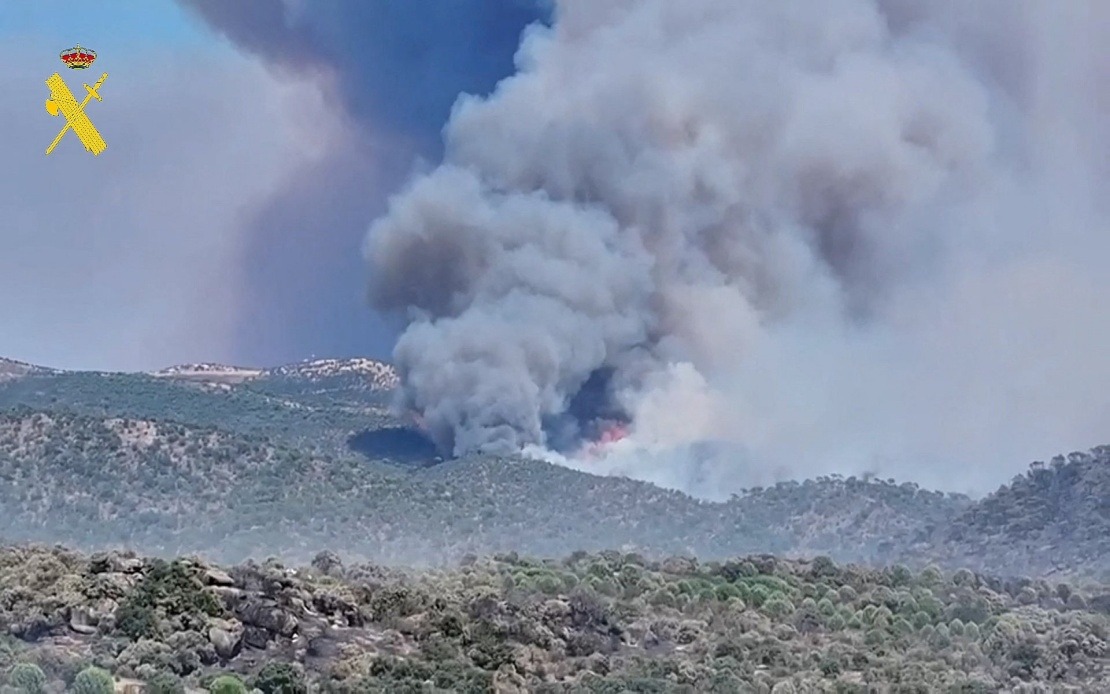
One of NASA's three essential planetary tracking facilities fell silent on Friday as Spanish authorities rushed to evacuate personnel from the Madrid Deep Space Communications Complex, situated in hills roughly 65 kilometres west of the capital, amid an escalating regional wildfire emergency. The complex, which forms a cornerstone of NASA's Deep Space Network infrastructure, ceased operations as flames advanced across the drought-stricken Spanish landscape, marking a rare disruption to the agency's continuous global monitoring of distant spacecraft and astronomical phenomena.
The Madrid station functions as the lynchpin of an interconnected three-site global network designed to maintain unbroken contact with NASA's far-flung missions. Working in tandem with comparable facilities in Goldstone, California, and near Canberra, Australia, the Deep Space Network leverages Earth's rotation to ensure continuous line-of-sight communication with interplanetary probes, rovers, and observatories. This geographic distribution means that as our planet rotates, responsibility for tracking critical missions passes seamlessly between the three locations, preventing any gaps in communication that could prove catastrophic for space exploration efforts spanning decades.
The evacuation occurred as Spain grappled with an unprecedented wave of wildfires throughout the summer season, exacerbated by prolonged drought conditions and extreme heat waves that have become increasingly common across Mediterranean Europe. Officials confirmed the mandatory evacuation of the Madrid facility, though damage assessments could not proceed while emergency services battled the advancing flames. NASA's official statement acknowledged the precautionary closure while emphasising the agency's commitment to personnel safety, underscoring that protecting employees and surrounding communities took precedence over maintaining continuous station operations.
Despite the temporary disruption, NASA successfully averted any disruption to active mission communications through a well-rehearsed contingency protocol. The Space Communications and Navigation Programme, operating in coordination with the Jet Propulsion Laboratory, orchestrated a rapid transition of all critical tracking responsibilities to the Goldstone facility in California. This seamless handover ensured that spacecraft currently communicating with NASA—including planetary rovers, orbital probes, and distant interplanetary missions—experienced no interruption in contact or data transmission. The existing infrastructure's redundancy proved invaluable, preventing what could have been a serious operational crisis.
The Deep Space Network represents decades of accumulated astronomical and engineering capability, and the Madrid station specifically holds particular significance for missions targeting the inner solar system and beyond. Loss of such a facility, even temporarily, illustrates the vulnerability of critical space infrastructure to increasingly severe environmental conditions. The Spanish wildfire season exemplifies broader climate-related challenges facing nations that host vital international scientific facilities, with Australia similarly confronting record-breaking bushfire seasons in recent years that have threatened other scientific installations.
For Southeast Asian observers, this incident carries instructive implications regarding infrastructure resilience in an era of climate volatility. As the region experiences its own patterns of environmental stress—from seasonal haze caused by forest fires to intensifying monsoon conditions—the capacity of critical infrastructure to withstand environmental shocks becomes paramount. Several nations in Southeast Asia host important telecommunications and scientific facilities that could face comparable vulnerabilities, suggesting that contingency planning and redundancy investment warrant urgent attention from policymakers and facility operators.
NASA's ability to rapidly redistribute tracking operations also reflects the maturity of global space cooperation frameworks, where multiple national agencies coordinate support for missions of international significance. The Goldstone facility's assumption of full tracking duties demonstrated the inherent strength of distributed infrastructure models, where no single location proves indispensable for maintaining mission continuity. This approach has become industry standard precisely because of scenarios such as the Madrid wildfire, where unexpected environmental disruptions demand rapid operational flexibility.
The agency indicated that assessments regarding potential structural damage, equipment degradation, or data loss would commence only once emergency conditions permitted safe access to the complex. Such evaluations typically extend over weeks or months, depending on the severity of thermal exposure and fire damage. Even facilities that escape direct flame contact may sustain damage from extreme heat, smoke contamination, and water damage from firefighting efforts, requiring comprehensive engineering evaluation before resuming normal operations.
Spain's ongoing wildfire crisis reflects climate realities increasingly shaping infrastructure planning across Europe and beyond. Facility operators now confront scenarios that previous generations considered unlikely, necessitating investment in hardening, backup power systems, and evacuation protocols that would have seemed excessive just a decade ago. The Madrid station's evacuation, while highlighting operational vulnerability, also vindicated NASA's earlier decision to maintain redundant tracking capacity across geographically dispersed locations rather than consolidating operations for efficiency gains.
As conditions stabilise and authorities gain control over the regional wildfire threat, NASA personnel will eventually access the Madrid facility to assess damages and commence restoration efforts. The incident underscores that even the most critical scientific infrastructure remains subject to environmental forces beyond human control, and that climate-driven risks to vital facilities deserve serious consideration in long-term planning frameworks. For space agencies and international scientific institutions, the lesson proves clear: distributed infrastructure with genuine redundancy remains not a luxury but an operational necessity.

