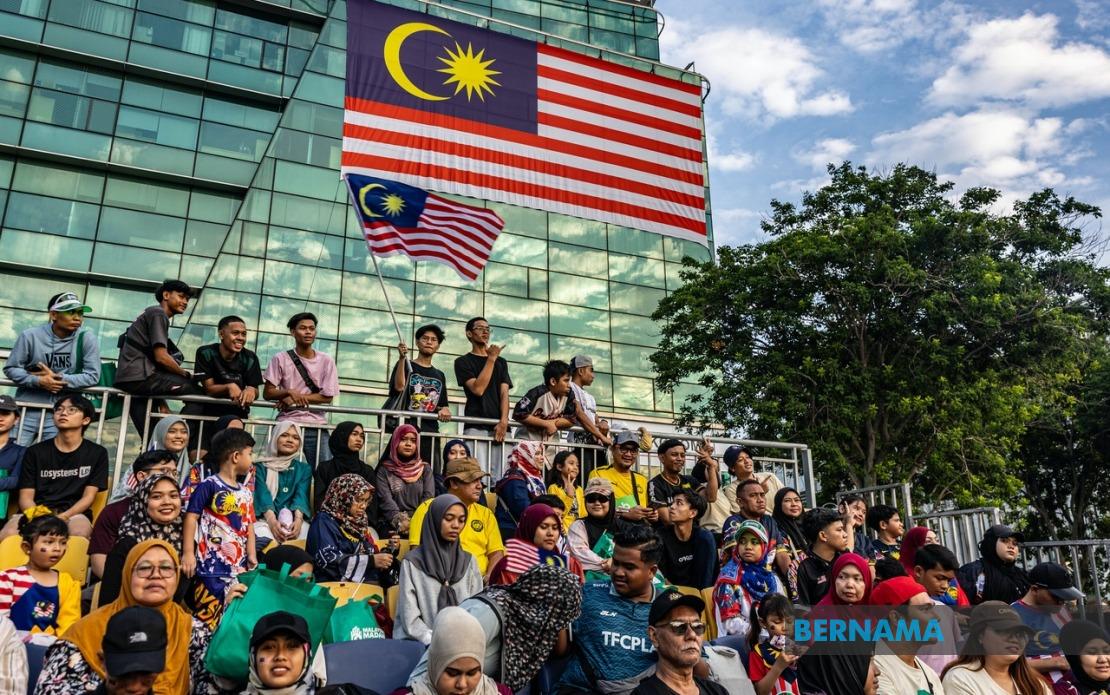
The 2026 National Day celebration in Putrajaya drew considerably more spectators than anticipated, with Communications Minister Datuk Seri Fahmi Fadzil confirming that attendance surpassed the original projection of 80,000 people. This robust turnout underscores sustained public enthusiasm for commemorating Malaysia's independence, with visitors journeying from across the nation to participate in the festivities at the federal administrative centre. The successful gathering reflects ongoing national pride and civic engagement, particularly significant as the country continues to build cohesion across its diverse population.
Fahmi, who chairs the 2026 National Day and Malaysia Day (HKHM) Main Committee, attributed the seamless execution to meticulous planning and favourable conditions throughout the day. The absence of security incidents or logistical disruptions demonstrated the effectiveness of coordination among multiple government entities tasked with managing such large-scale events. Attendees arrived from varied locations, including Sandakan in Sabah and Jeli in Kedah, illustrating the nationwide appeal of centralised National Day observances and the willingness of Malaysians to travel considerable distances to participate in collective celebration.
The smooth operation benefited significantly from interagency collaboration, particularly involving the Department of Environment, MetMalaysia and the National Disaster Management Agency. These organisations worked proactively to monitor atmospheric conditions and maintain readiness for cloud seeding interventions should weather deteriorate. Such comprehensive preparation ensured that celebrants could comfortably experience the full programme without weather-related disruptions, a consideration often overlooked but crucial for public events of this magnitude. The successful weather management exemplifies how technical agencies contribute to the success of major national occasions.
Beyond the central parade ceremony, organisers provided diverse recreational and entertainment options designed to appeal to families and visitors of varying ages and interests. The Anjung Floria precinct showcased national defence assets, allowing civilians rare opportunities to observe military equipment and capabilities. Simultaneously, the Riuh Merdeka programme at Monumen Alaf Baru offered cultural entertainment, whilst numerous food vendors ensured sustenance was readily available. This multi-faceted approach transformed National Day observance from a ceremonial event into an extended festival experience, encouraging extended visits and broader community participation.
The 69th National Day parade itself represented a substantial organisational undertaking, mobilising 76 contingents and 22 marching bands across 11 decorated vehicles. Approximately 10,819 participants drawn from government agencies, security forces, uniformed bodies, government-linked companies, educational institutions and civil society organisations participated in the procession. This extensive mobilisation demonstrates the thoroughness with which the Malaysian state approaches national commemorations and the breadth of institutional involvement required to stage such productions. The sheer logistical complexity involved in coordinating disparate groups reflects sophisticated event management capabilities.
Notably, the 2026 iteration introduced several inaugural elements that reflected contemporary national priorities and regional developments. The Royal Johor Military Force made its first appearance at a centralised National Day celebration, expanding the scope of military participation beyond federal-level forces. The inclusion of a Southeast Asian Games 2027 contingent signalled forward-looking messaging about Malaysia's upcoming hosting responsibilities, whilst the Orange Economy Sustainability cluster contingent underscored governmental emphasis on sustainable development frameworks. These additions suggest deliberate curation to communicate specific policy narratives alongside traditional celebration elements.
Cultural programming formed a centrepiece of the celebration, with the "Gema Inovasi MADANI" percussion performance representing an innovative fusion of contemporary creativity and traditional instrumentation. The performance marshalled 150 percussionists alongside 1,500 human graphic performers, creating visually and aurally compelling spectacles that showcased Malaysia's artistic diversity. The deployment of Rebana Inovasi and Kompang Inovasi—traditional percussion adapted for modern performance contexts—demonstrated how cultural heritage can be contemporised without dilution of authenticity. Such programming serves educational functions for younger audiences whilst affirming cultural identity among established citizens.
The closing performance, "Rentak MADANI, Paluan Tradisi," involved 2,350 participants in a large-scale finale that blended contemporary rhythm with traditional percussion themes. Simultaneously, the Royal Malaysian Air Force contributed aerial displays featuring fighter, transport and helicopter squadrons, adding spectacle and affirming military capability. The layering of cultural performance with military demonstration reflects a deliberate messaging strategy combining national pride with security assurance, a formula that has characterised Malaysian National Day observances for decades.
The celebration proceeded under the thematic banner "Malaysia MADANI: Kesejahteraan Dinikmati," positioning the 2026 observance within the broader MADANI development framework championed by the current government. This thematic alignment ensured that National Day commemoration served dual purposes: honouring historical independence whilst communicating contemporary governance priorities. The integration of prosperity and wellbeing messaging into independence celebration rhetoric reflects governmental efforts to link past achievement with present-day policy objectives, creating narrative continuity across temporal scales.
Fahmi articulated aspirations that the 69th National Day would deepen citizens' emotional attachment to the nation and homeland, framing the celebration as opportunity for collective recommitment to unity and national preservation. This rhetoric addresses ongoing concerns about social cohesion in pluralistic Malaysia, where competing identities and interests occasionally strain national unity. By emphasising shared celebration and collective purpose, governmental messaging attempts to reinforce overarching Malaysian identity transcending ethno-religious or regional particularities. The success of such messaging ultimately depends on sustained policy implementation addressing substantive grievances rather than ceremonial affirmation alone.
For Southeast Asian observers, the successful execution of Malaysia's National Day commemoration carries broader implications for regional event management and national cohesion efforts. As Malaysia approaches its role hosting the Southeast Asian Games in 2027, the demonstrated capacity to stage large-scale public events with minimal disruption suggests organisational maturity. Neighbouring countries and international stakeholders often evaluate national stability and institutional capacity through such public celebrations, making successful execution consequential for Malaysia's regional standing and international perceptions. The convergence of historical commemoration with contemporary development messaging, evidenced in this year's celebration, reflects sophisticated understanding of how ceremonial occasions can serve multiple political and social functions simultaneously.

