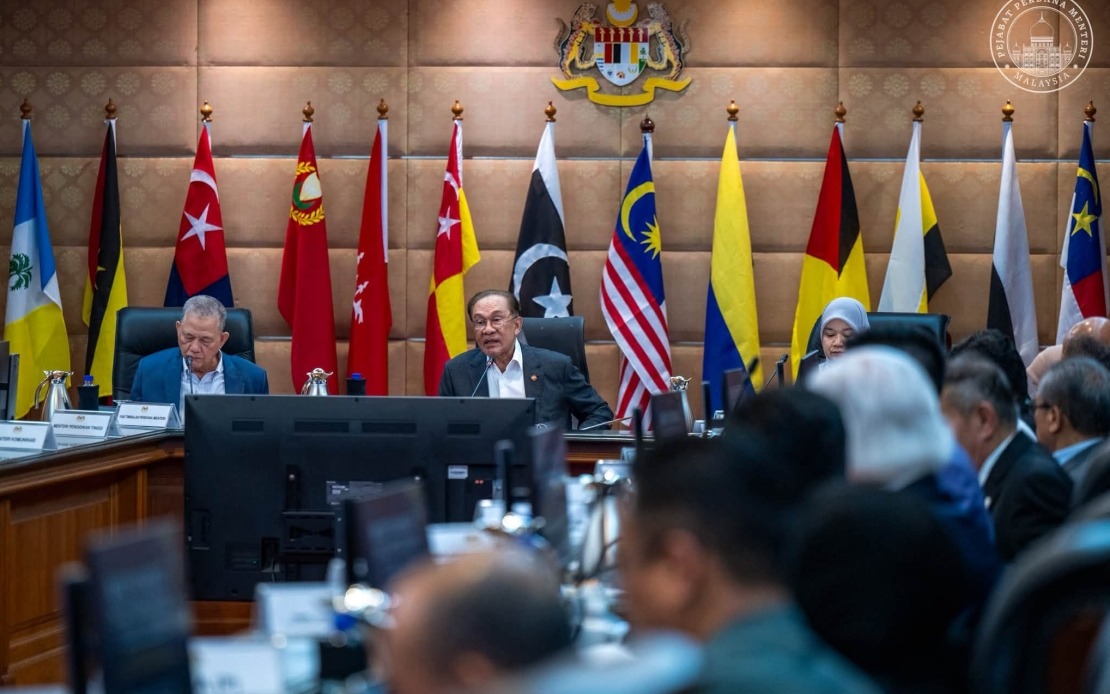
Prime Minister Datuk Seri Anwar Ibrahim has established the National Education Council as a structural vehicle to undertake fundamental changes to Malaysia's education landscape. Speaking after the council's inaugural meeting on June 30, the Premier emphasised that the newly-formed body represents a commitment to ensure the nation's education system adapts to contemporary challenges and opportunities. The council's creation signals recognition that Malaysia's educational infrastructure requires intentional, evidence-based overhaul rather than incremental adjustments to existing frameworks.
The council's remit encompasses both foundational school education and tertiary institutions, reflecting a holistic approach that acknowledges the interconnected nature of the education pipeline. By establishing an umbrella body to coordinate reforms across these traditionally separate domains, the government seeks to create synergies and ensure consistency in policy direction. This vertical integration of oversight represents a departure from compartmentalised management and suggests an intention to view Malaysia's education trajectory as a cohesive continuum rather than disconnected segments serving different age groups and constituencies.
Curriculum development and pedagogical content feature prominently in the council's mandate. Anwar highlighted that improving educational materials and learning frameworks constitutes a central pillar of the reform agenda. This focus acknowledges that even well-intentioned policies falter without substantive improvements to what students actually encounter in classrooms. The emphasis on content quality suggests recognition that Malaysia's education system, while providing broad coverage, requires refinement in delivery mechanisms and the substance of knowledge transfer to enhance learning outcomes and student engagement across all demographic groups.
English language proficiency emerges as a strategic priority within the reform architecture. The council is tasked with strengthening English as a second language without simultaneously compromising the primacy of the Malay language or diluting cultural and moral instruction. This calibrated approach attempts to navigate the tension between equipping Malaysians with globally-valued linguistic competency and protecting national identity markers. For a Southeast Asian nation operating within an increasingly Anglophone global economy, enhanced English capabilities among students could materially improve employment prospects and Malaysia's competitive position in international knowledge sectors.
The preservation of Malaysia MADANI's foundational values within an modernised education system underscores the council's commitment to balancing progress with cultural continuity. Rather than treating reforms as wholesale rejection of existing arrangements, the framework explicitly incorporates moral and cultural education as non-negotiable components. This integration reflects understanding that educational transformation cannot be purely technical or market-driven but must remain rooted in the nation's broader social contract and identity construction. By embedding these considerations within reform discussions, policymakers signal that change will not erode the ethical and cultural dimensions of learning.
District-level educational quality represents another critical focus area for the council's work. Anwar's emphasis on elevating standards at the grassroots administrative level acknowledges that national policies frequently encounter implementation challenges when filtered through local bureaucracies and institutions. By targeting the district stratum, the government targets a critical junction where policy encounters ground reality, where resource constraints become tangible, and where students from varying socioeconomic backgrounds actually experience education. This decentralised approach recognises that blanket national interventions, however well-designed, cannot address the contextual specificities of Malaysia's geographically and economically diverse districts.
The Bumiputera education agenda occupies a prominent position within the council's strategic priorities. Strengthening educational access, quality, and outcomes specifically for Bumiputera communities reflects commitment to addressing persistent equity gaps that have resisted previous interventions. This targeted focus acknowledges that aggregate national improvements may mask continued disparities affecting specific populations. By dedicating deliberate attention to Bumiputera educational empowerment within the broader reform structure, the council signals intent to pursue excellence while attending to social cohesion and equitable distribution of educational benefits across Malaysia's multiethnic fabric.
Science, technology, engineering, and mathematics education receives heightened attention as the council constructs a talent pipeline to meet Malaysia's anticipated future economic requirements. As industries become increasingly technology-dependent and knowledge-intensive sectors drive global competition, STEM competency emerges as essential for workforce relevance and national prosperity. The council's explicit focus on developing STEM talent from the ground up suggests recognition that future Malaysian competitiveness depends on building robust educational foundations in these fields rather than attempting to retrofit skills among older populations. This forward-looking emphasis positions education not merely as socialisation or cultural transmission but as essential infrastructure for economic advancement.
Anwar's rhetorical emphasis on objective evaluation and pluralistic consultation within the reform process signals openness to evidence and expertise from diverse quarters. By invoking scientific assessment and acknowledging that effective reform requires contributions from various stakeholders and knowledge domains, the Prime Minister frames educational change as a technical challenge requiring input from educators, researchers, economists, and policymakers. This inclusive epistemology contrasts with approaches that centralise decision-making within narrow corridors of power and suggests institutional confidence that transparent, evidence-based deliberation yields superior policy outcomes.
The council's establishment implicitly critiques complacency toward existing educational arrangements while simultaneously rejecting the false choice between preservation and transformation. Anwar's call for courage in implementing reforms acknowledges that meaningful change invariably encounters resistance from those invested in status quo arrangements. By publicly declaring that satisfaction with current conditions should not obstruct progress, the Prime Minister signals willingness to undertake politically difficult restructuring if evidence and expert consultation justify such moves. This stance potentially opens space for more ambitious reforms than Malaysia's education sector has witnessed in previous decades, though execution ultimately determines whether structural changes translate into meaningfully improved student outcomes and enhanced national competitiveness.

