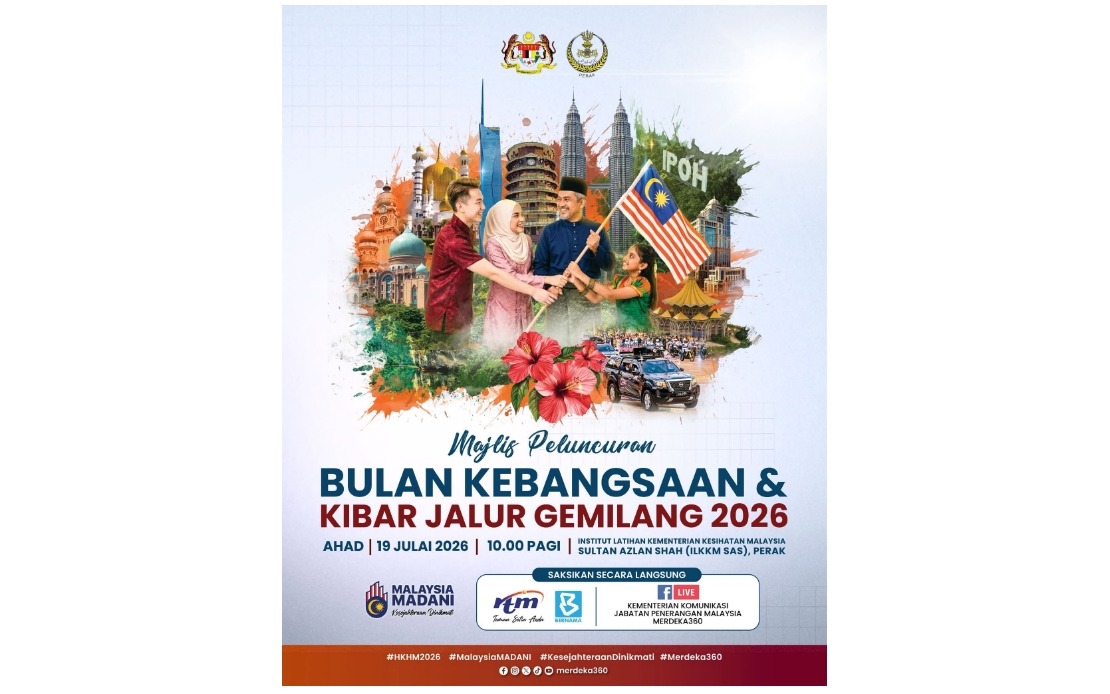
Malaysia's 2026 National Month celebration will officially commence on July 19 with a launch ceremony at Institut Latihan Kementerian Kesihatan Malaysia Sultan Azlan Shah in Perak, signalling the beginning of the nation's patriotic season ahead of the August 31 National Day and September 16 Malaysia Day observances. The morning event, beginning at 10 am, will be broadcast across Radio Televisyen Malaysia, BERNAMA TV and multiple digital platforms including Facebook Live, ensuring widespread public participation in the kickoff festivities.
The overarching theme selected for this year's dual celebrations is "Malaysia MADANI: Kesejahteraan Dinikmati", a phrase that translates to prosperity being enjoyed comprehensively across the nation. This thematic choice reflects the government's broader policy framework centred on inclusive development and equitable distribution of national wealth. The Malaysia MADANI logo, previously adopted in recent years, continues as the official visual representation for the campaign through 2026, providing continuity and brand recognition among Malaysians.
According to promotional materials posted on the Merdeka360 platform, citizens are encouraged to download official logos, patriotic songs and marketing resources to amplify the spirit of national pride throughout the month-long period. The digital campaign emphasises the rallying cry "Fly the Jalur Gemilang, ignite the spirit of patriotism", inviting Malaysians from all backgrounds to actively participate in celebrating their shared identity. The Merdeka360.my portal serves as a centralised hub for all materials, making it accessible for schools, community organisations, businesses and individuals seeking to join the festivities.
The philosophical underpinning of this year's theme deserves closer examination. By anchoring celebrations around "Kesejahteraan Dinikmati"—enjoyed welfare—the government signals a shift in emphasis from simply achieving economic growth towards ensuring that prosperity reaches all segments of society. This reflects recognition of ongoing concerns about wealth inequality and uneven development across regions, demographics and income brackets. For Malaysian readers, this messaging suggests the government is acknowledging that growth alone is insufficient without accompanying mechanisms for fair distribution.
Communications Minister Datuk Seri Fahmi Fadzil has previously outlined that the primary National Day celebration on August 31 will take place at Dataran Putrajaya, designed to be modest in scale yet vibrant in spirit and participation. This stands in contrast to previous years' grander celebrations, signalling a recalibration of how the nation marks its founding. Meanwhile, Malaysia Day on September 16 will shift to Sarawak as the host location, rotating the honour to East Malaysia and reinforcing the concept of national unity encompassing both peninsular and island territories.
To sustain momentum and deepen engagement throughout the National Month period, seven supporting programmes have been carefully curated and scheduled across the country. The Kembara Bahasa HKHM initiative will traverse Malaysia highlighting linguistic diversity and national identity through language. The Quran Hour programme caters to the Muslim-majority population, creating spaces for spiritual reflection during the observance period. Ambang Merdeka serves as a countdown activity building anticipation towards the main celebrations, while the Merdeka Countdown provides daily engagements leading up to August 31.
Additionally, RIUH Merdeka—which translates to the "excitement" or "bustle" of Merdeka—promises active, participatory events that encourage public involvement beyond passive observation. The National Statesmen Commemoration Ceremony honours historical figures who shaped Malaysia's independence and nation-building journey, connecting contemporary Malaysians to their historical roots and reminding citizens of the sacrifices and vision underlying national sovereignty.
For Southeast Asian observers and international audiences, these celebrations underscore Malaysia's commitment to demonstrating unity amid diversity. The inclusion of East Malaysia through Sarawak's hosting of Malaysia Day, combined with programmes spanning linguistic and religious dimensions, showcases the federation's attempt to balance federal identity with constituent state recognition. This becomes increasingly relevant as regional geopolitics emphasise sovereignty and internal cohesion.
The timing of the launch in mid-July provides a five-week runway towards the August 31 celebration, allowing sufficient time for grassroots mobilisation, corporate participation and community preparation. Schools, government agencies and private sector organisations typically use this period to organise flag-hoisting ceremonies, exhibitions and inter-office competitions, creating multiple touchpoints for national engagement beyond the headline events.
For Malaysian business and civil society sectors, the National Month period traditionally represents an opportunity to align corporate initiatives with national objectives, whether through community service projects, employee engagement activities or consumer-facing campaigns. The explicit framing around "enjoyed prosperity" may incentivise corporate social responsibility efforts that visibly address inequality and regional development disparities, as companies position themselves as contributors to the Malaysia MADANI vision.
The decision to broadcast the launch ceremony across traditional and digital platforms reflects modernisation of how national moments are consumed and shared. Rather than relegating observances to physical attendance, the multimedia approach democratises participation, enabling rural communities, overseas Malaysians and diaspora members to connect with the celebrations. This recognises that patriotism and national identity increasingly operate across digital as well as physical spaces.
As Malaysia approaches these national celebrations, the emphasis on shared prosperity serves as a reminder that national unity requires tangible improvements in citizens' lives and visible commitment to inclusive development. The months ahead will test whether the Malaysia MADANI framework translates rhetoric into demonstrable benefits that resonate with Malaysians across different circumstances and regions.

