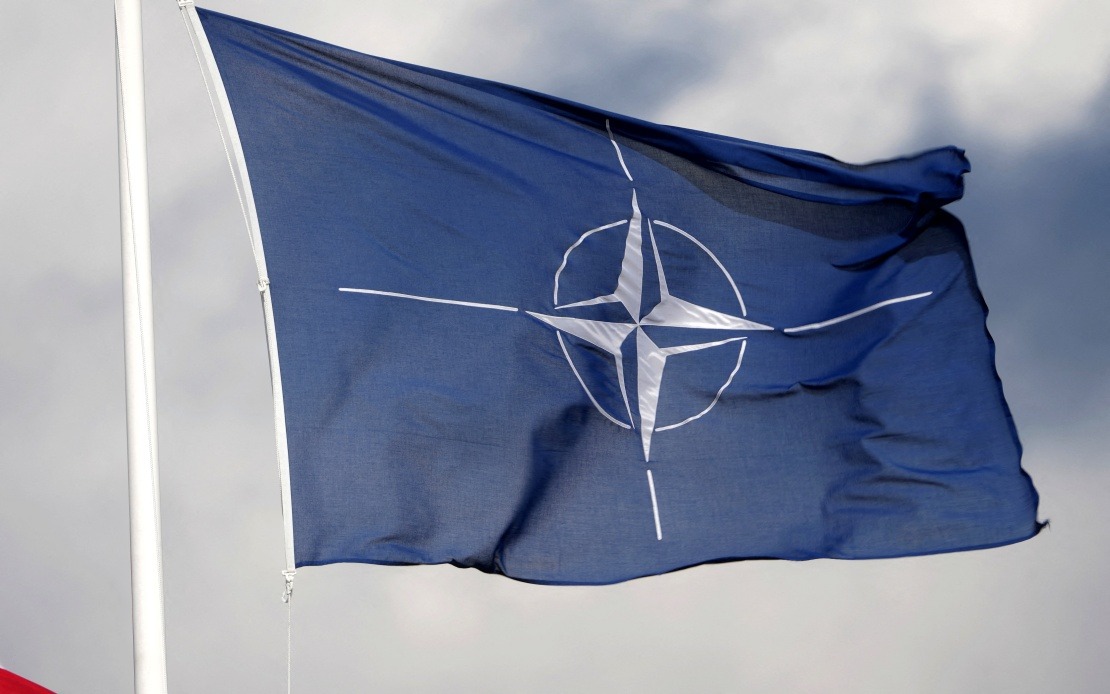
The NATO alliance is bracing for a significant expansion in military expenditure, with combined defence spending by its 32 member states anticipated to surpass US$1.8 trillion in 2026. This substantial increase, reflecting roughly 11 per cent growth from the estimated US$1.63 trillion spent in 2025, signals the alliance's determination to bolster its security posture in response to evolving global threats and geopolitical tensions. The projections come on the heels of commitments undertaken at The Hague summit last year, where member nations agreed to ambitious targets for sustained military investment over the coming decade.
The United States will continue to dominate NATO's defence budget, commanding approximately US$1.03 trillion in 2026—equivalent to roughly 57 per cent of the entire alliance's military spending. This extraordinary figure underscores the American security umbrella's central role within the transatlantic partnership and reflects Washington's ongoing commitment to maintaining military superiority while supporting allied defence requirements across Europe and NATO's eastern flank. Germany, having emerged as the alliance's second-largest military spender, is projected to allocate around US$147 billion, a position reflecting both its geographic centrality and strategic importance in countering potential threats from the east.
Following Germany in the spending hierarchy are the United Kingdom with approximately US$110 billion, France contributing US$80 billion, Italy committing US$57 billion, and Poland directing US$53 billion toward defence initiatives. Canada's defence budget is estimated at US$52 billion, while Türkiye is anticipated to spend US$48 billion. This distribution of spending reveals how the burden of European security is distributed unevenly across the alliance, with significant regional variations reflecting different threat assessments, historical commitments, and economic capacities.
A particularly noteworthy development is the emergence of smaller Baltic and Eastern European nations as leaders in proportional defence investment. Lithuania, Estonia, Latvia, Poland, and Greece are all expected to exceed the 3.5 per cent of gross domestic product threshold for core defence spending in 2026—a benchmark established at the 2025 Hague summit. These countries' commitment to allocating such substantial portions of their national wealth to military capability reflects genuine security concerns rooted in their proximity to potential adversaries and historical experiences, making them among NATO's most militarily dedicated members despite their smaller economies.
Across the broader alliance, the average core defence spending is projected to reach 2.86 per cent of GDP in 2026. While this figure remains below the 3.5 per cent core defence target, it represents meaningful progress toward the alliance's stated objectives and demonstrates widespread recognition among member states that elevated military investment is now a strategic necessity rather than an optional commitment. The convergence toward these benchmarks reflects a fundamental shift in how NATO members view defence spending following years of relative complacency during the post-Cold War period.
The long-term aspiration outlined at The Hague summit reveals even more ambitious targets for 2035, when NATO allies have committed to channelling 5 per cent of GDP into defence and defence-related expenditures. This comprehensive framework bifurcates spending into core defence allocations of 3.5 per cent and broader security-related investments comprising the remaining 1.5 per cent. The latter category encompasses critical infrastructure hardening, systemic resilience development, and technological innovation—recognising that modern security challenges extend beyond traditional military domains into cyber capabilities, supply chain security, and technological advancement.
For Southeast Asian observers, these NATO spending trajectories carry significant implications. The alliance's strengthened military posture affects global security architecture and influences strategic calculations throughout the Indo-Pacific region, where many nations maintain security relationships with NATO members or benefit from the stability underpinned by transatlantic security arrangements. Malaysia and other regional states monitor NATO's development closely, particularly regarding defence technologies, military doctrine evolution, and the global security environment that indirectly shapes regional stability and maritime security in strategically vital waterways.
The financial magnitude of NATO's defence expansion also reflects underlying geopolitical dynamics that resonate across Asia-Pacific. The alliance's reinvigoration stems partly from concerns about great-power competition and the erosion of the liberal international order—dynamics that directly parallel regional nations' own strategic challenges in navigating relationships between major powers and protecting national interests in contested spaces. The resources NATO is mobilising represent a substantial reallocation of economic capacity toward security, demonstrating how contemporary international tensions are reshaping budget priorities globally.
Member states' varying commitment levels to the spending targets reveal important fissures within the alliance. While frontline states like Poland and the Baltic republics surge ahead with aggressive defence investment, the divergence suggests ongoing diplomatic efforts may be necessary to ensure burden-sharing remains equitable and that all members meet their pledged thresholds. These discussions carry implications for alliance cohesion and burden-distribution fairness—concerns that will likely dominate NATO discussions through the remainder of the decade as spending targets progress toward 2035.
The trajectory of NATO spending also signals to potential adversaries the alliance's resolve and financial capacity to sustain elevated military readiness across multiple domains. Simultaneously, the investment patterns highlight which nations the alliance prioritises for military strengthening and forward deployment, with enhanced spending in Poland and Baltic states reflecting NATO's eastern focus. This geographic concentration of resources shapes the strategic landscape that smaller and medium powers must navigate, influencing their own defence planning and partnership considerations.
Looking ahead, the realisation of these spending projections depends on multiple factors including economic performance, political commitment sustainability, and the persistence of threat perceptions that currently drive member nations' military expenditure decisions. Should geopolitical tensions ease or economic circumstances deteriorate, actual spending might deviate from current estimates. Conversely, should security challenges intensify, pressure for even higher defence allocations would likely emerge, potentially accelerating timelines toward the 2035 targets that the alliance has collectively endorsed.

