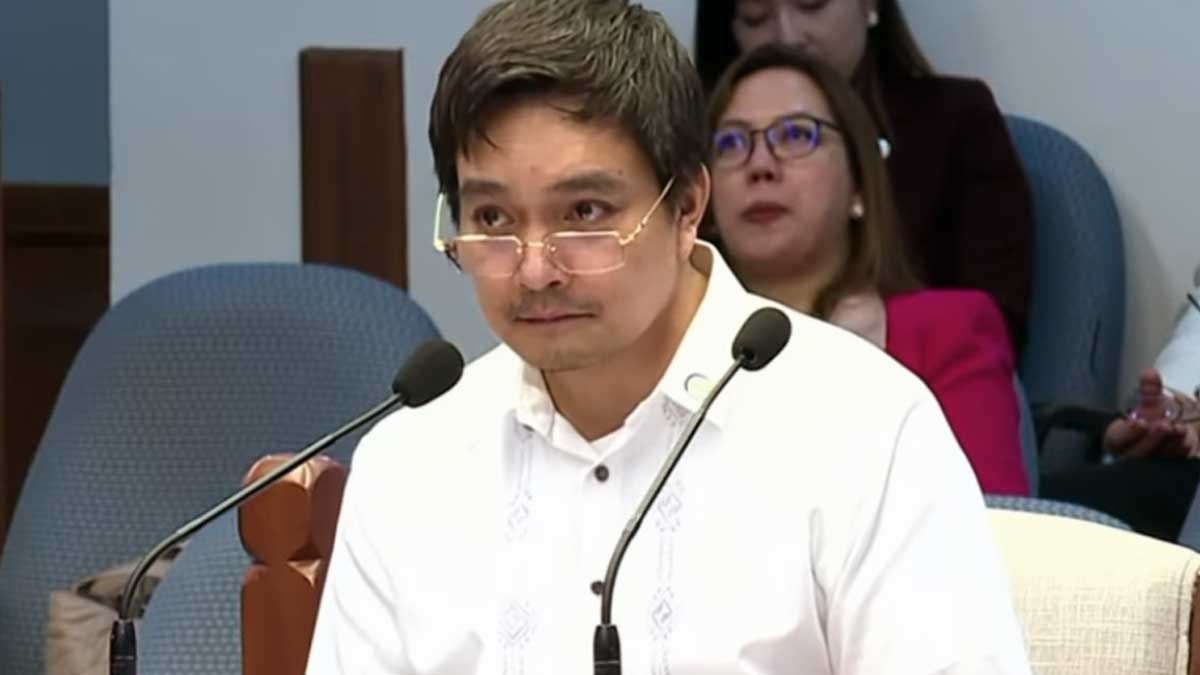
The impeachment trial of Philippine Vice President Sara Duterte intensified on Tuesday as a National Bureau of Investigation official maintained that investigative evidence points to her involvement in a purported assassination plot, even while acknowledging the absence of firsthand knowledge linking her directly to hiring someone to kill President Ferdinand Marcos Jr. Jeremy Lotoc, the NBI's Regional Director and former head of the Crime Division, faced rigorous questioning from defence counsel Mark Vinluan during cross-examination, with the exchange highlighting the challenging evidentiary foundation underpinning one of the most serious charges against the sitting vice president.
The central tension in Lotoc's testimony revolved around the distinction between circumstantial evidence and direct proof. The NBI official repeatedly asserted that their investigation had produced evidence supporting the conclusion that Duterte contracted someone to carry out killings, yet when pressed by defence lawyers, he conceded he possessed no personal knowledge of such an arrangement. This distinction carries significant weight in impeachment proceedings, where the threshold for establishing guilt differs from criminal prosecutions but nonetheless requires a credible evidentiary foundation. Lotoc's insistence that he "believed" in Duterte's culpability based on gathered evidence suggested the NBI's case rested substantially on indirect factors rather than witness testimony or documentary evidence of an actual contract.
The investigation that Lotoc oversaw focused on assassination threats Duterte made during an online media briefing on November 23, 2024. Those remarks formed the basis of the fourth article of impeachment filed against her, representing one of the most explosive accusations in what has become an increasingly fractious relationship between the president and his vice president. Duterte's public statements about wanting to hire someone to kill Marcos Jr., First Lady Liza Araneta-Marcos, and former House Speaker Martin Romualdez shocked Philippine political circles and triggered immediate investigations by multiple government agencies. The NBI's role in examining these threats placed Lotoc at the centre of determining whether Duterte's words constituted mere rhetoric or genuine criminal intent.
During the proceedings, Vinluan methodically challenged the evidentiary chain underlying the NBI's conclusions. The defence lawyer questioned whether Duterte's mere utterance of assassination threats, shocking as they were, necessarily demonstrated that she had actually attempted to contract an assassin. This line of questioning probed whether the investigation had uncovered any specific individuals approached by Duterte, any financial transactions related to such an arrangement, or any other tangible evidence beyond her own recorded statements. Lotoc's responses suggested the investigation had not produced such direct evidence, instead relying on inferences drawn from Duterte's position as vice president and her family history.
When Vinluan directly asked whether Lotoc possessed personal knowledge that Duterte had contracted an assassin, the NBI director answered affirmatively—but then acknowledged he had no personal knowledge of this fact. This apparent contradiction highlighted the tension between what the investigator believed the evidence suggested and what it actually demonstrated. Lotoc's qualification that he based his belief on "evidence we've gathered" without specifying that evidence raised questions about the investigation's methodological rigour and whether the NBI had documented its investigative steps in a manner that could withstand legal scrutiny.
The courtroom atmosphere grew contentious as prosecutors and defence counsel clashed over interpretation of Duterte's remarks and the weight of the evidence presented. Senate President Sherwin Gatchalian, serving as presiding officer, intervened multiple times, at one point reminding both sides that the impeachment trial was "not a college debate." This intervention underscored the high stakes and emotional temperature surrounding the proceedings. When Gatchalian himself questioned what evidence demonstrated Duterte's capability to carry out assassination threats, Lotoc initially suggested her position as vice president inherently provided such capability—an assertion the Senate chief quickly challenged as logically insufficient.
Lotoc's subsequent reference to Duterte's father, former President Rodrigo Duterte, proved particularly noteworthy. The NBI director pointed to the senior Duterte's ongoing case before the International Criminal Court regarding alleged extrajudicial killings during his administration's war on drugs as evidence that his daughter possessed the capability and inclination to commit similar acts. This argument essentially rested on a family-based assessment of violent propensity rather than direct evidence of the vice president's own criminal conduct. Such reasoning, however, raised troubling implications about guilt by association and whether an individual's family history could appropriately form the basis for impeachment charges in a democratic system.
For Malaysian observers and Southeast Asian analysts, the Duterte impeachment trial illustrates the fraught dynamics that can emerge when executive tensions reach crisis proportions. The Philippines' impeachment process, which requires a two-thirds supermajority in the Senate for conviction, necessarily involves extensive public proceedings that dissect evidence and credibility. Unlike Malaysia's more closed constitutional processes, Philippine impeachments play out in the media glare, shaping public opinion and potentially influencing the judiciary. The trial's evolution will likely depend heavily on whether prosecutors can produce more direct evidence linking Duterte to assassination planning, or whether the case remains anchored primarily to her inflammatory rhetoric.
The proceedings also underscore broader questions about presidential and vice-presidential immunity in the Philippines. Duterte's position as vice president creates unique legal complexities, as sitting officials cannot typically be prosecuted in ordinary courts while in office. The impeachment route represents one of the few constitutional mechanisms available for addressing serious allegations against a sitting vice president. This structural reality meant that the Senate trial represented Duterte's primary legal forum, making the quality of evidence and credibility of witnesses particularly consequential.
The trial has also exposed fissures within the Philippine law enforcement apparatus regarding how seriously different agencies treat the vice president's assassination threats. The NBI's investigation, while producing evidence that investigators believe supports Duterte's involvement in some form of assassination plotting, has not yet produced the documentary or testimonial evidence typically required for criminal conviction. Whether Senate members will find the existing evidence sufficient to recommend impeachment—let alone achieve the two-thirds supermajority necessary for conviction—remained uncertain as the trial proceeded through its various phases.
Moving forward, the prosecution faces a significant evidentiary burden in substantiating its case beyond Duterte's own recorded statements and the circumstantial inferences the NBI has drawn from them. The defence strategy of demanding direct knowledge and documentary proof appears designed to highlight potential weaknesses in the investigative foundation. Subsequent witnesses and evidence presentations will prove critical in determining whether prosecutors can construct a sufficiently compelling narrative to convince Senate members that Duterte deserves removal from office—a remarkably high constitutional threshold that demands extraordinary evidence and near-universal agreement among senators.

