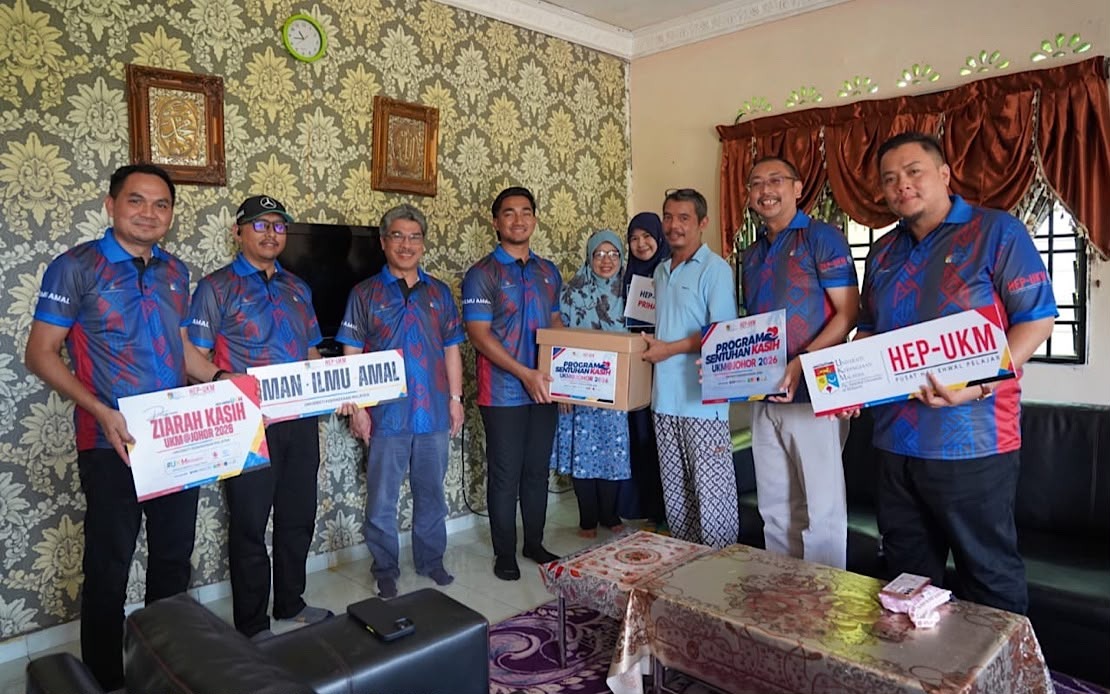
Universiti Kebangsaan Malaysia (UKM) successfully brought its Sentuhan Kasih outreach initiative to Johor last weekend, drawing participation from nearly 1,000 residents across multiple neighbourhoods in a bid to deepen the university's connection with surrounding communities. The two-day programme, conducted under the banner "Dari Kampus ke Komuniti, Menyebar Kasih dan Bakti" (From Campus to Community, Spreading Love and Service), saw 78 members of the UKM community fanning out across Kota Masai, Pasir Gudang, Kampung Baru Sri Aman and Taman Jaringan in Skudai to deliver hands-on assistance and engagement initiatives. The widespread participation underscores an emerging trend in Malaysian higher education, where universities are moving beyond their institutional boundaries to embed themselves within local social structures and address community needs directly.
The scope of activities deployed during the Sentuhan Kasih programme reflected a comprehensive approach to community service. Beyond conventional gotong-royong cleaning and beautification drives, UKM organised targeted wellness interventions including mental health screening sessions—a particularly vital offering given rising concerns about psychological well-being across Malaysian society. Sports activities provided recreational engagement for residents, while the "ziarah kasih" visits ensured personalised outreach to specific households. This multi-layered programming strategy acknowledges that community needs extend beyond physical infrastructure to encompass health, wellness, and social cohesion. Higher Education Minister Datuk Seri Dr Zambry Abd Kadir's attendance lent institutional weight to the initiative, signalling government endorsement of universities playing an active role in grassroots community development.
For UKM's Student Affairs Centre (HEP-UKM), the programme served a dual pedagogical purpose. According to HEP-UKM director Assoc Prof Dr Darfizzi Derawi, who also chairs the Sentuhan Kasih UKM@Johor initiative, student participation in such community engagement provides invaluable experiential learning that lecture halls cannot replicate. The exposure to real-world social dynamics equips students with adaptive capacity, communication fluency, and interpersonal soft skills increasingly demanded by contemporary employers. This perspective reflects a broader shift in higher education philosophy, recognising that graduate competitiveness depends not solely on technical knowledge but on demonstrated ability to navigate complex human interactions, understand diverse perspectives, and contribute meaningfully to society. By positioning community service as integral to the educational mission rather than an optional extra, UKM signals that holistic development encompasses civic responsibility.
Darfizzi's remarks that universities must transcend their physical campuses to engage authentic community contexts carry particular significance for Malaysian institutions navigating their social licence to operate. In an era of rising tuition costs and questions about relevance to national development priorities, visible and substantive community engagement serves to justify institutional autonomy and public funding. The commitment to expand Sentuhan Kasih periodically to other states suggests UKM envisions this as a flagship initiative capable of establishing the university as a genuine partner in regional development rather than an insular academic enclave. Such positioning becomes strategically important as Malaysian higher education institutions compete internationally while facing pressure to demonstrate tangible local impact.
The reception in Johor neighbourhoods illuminated both the hunger for university-community partnership and the logistical constraints facing residents. Herman Ismadi Ismail, community leader for Kota Delima Zone, remarked that approximately eighty percent of local residents work in the industrial sector, rendering their weekends precious and frequently occupied despite formal time off. Nevertheless, the strong turnout and cooperative spirit demonstrated that residents recognised genuine value in the outreach effort. This dynamic reveals how strategically timed and genuinely responsive community initiatives can mobilise participation even among time-constrained populations. The willingness of working-class residents to engage reflects a hunger for institutional support and recognition that often remains unmet by more distant or bureaucratic organisations.
Beyond the large-scale weekend activities, UKM extended targeted support through welfare visits to seven families of enrolled students across the Tiram and Puteri Wangsa areas in Johor. These household visits represented a more intimate dimension of the university's engagement, acknowledging that student success often hinges on family circumstances and material security extending beyond campus life. By conducting welfare assessments and providing direct support where needed, UKM addressed a critical gap in student support ecosystems. Many Malaysian university students, particularly those from lower-income backgrounds, face financial and domestic pressures that directly threaten academic persistence. Institutional recognition of these realities and proactive intervention demonstrates student welfare as a strategic priority rather than a peripheral concern.
UKM Vice-Chancellor Prof Datuk Dr Sufian Jusoh contextualised these initiatives within the institution's broader commitment to producing graduates who embody social responsibility alongside academic excellence. His remarks emphasised that universities bear responsibility for shaping character and values alongside imparting knowledge and skills. The Sentuhan Kasih programme exemplifies this commitment by embodying principles of compassion, collective action, and social obligation in tangible form. By engaging students directly in service delivery and exposing them to community realities, UKM cultivates ethical consciousness and social awareness that persist beyond graduation. This approach resonates with longstanding Malaysian values emphasising community solidarity and mutual obligation, while modernising these concepts within contemporary higher education frameworks.
Sufian's observation that institutional support for students extends beyond financial assistance to encompassing holistic well-being reflects recognition that student success depends on addressing interconnected material, psychological, and social dimensions. Financial aid alone, without attention to living conditions, health, family circumstances, and social integration, proves insufficient for students facing multiple stressors. By treating student welfare as a comprehensive endeavour requiring partnership between institutional resources and community contexts, UKM positions itself as genuinely invested in graduate development rather than merely credentialing completers. This philosophy gains increasing traction as universities worldwide confront evidence that student well-being directly influences retention, academic performance, and post-graduation outcomes.
The Sentuhan Kasih programme also reflects evolving understandings of university social responsibility within the Malaysian context. As higher education expands and institutions compete for resources and reputation, community engagement functions increasingly as both ethical commitment and strategic positioning. Universities demonstrating visible, substantive community impact strengthen claims to public support while reinforcing their legitimacy within society. For Johor specifically, UKM's outreach addresses a regional development agenda emphasising inclusive growth and equitable access to institutional resources. As Johor continues industrialisation and urbanisation, ensuring that universities contribute actively to social cohesion and community development becomes increasingly critical to managing growth sustainably.
Looking forward, the commitment to scale Sentuhan Kasih across Malaysian states suggests UKM views community engagement as central to institutional identity and mission. This systematic expansion contrasts with ad-hoc corporate social responsibility gestures, instead framing ongoing community partnership as integral to university functioning. Should this model gain adoption among other Malaysian institutions, it could catalyse meaningful shifts in how universities relate to surrounding societies. The result would be institutions more deeply embedded within their regions, more attentive to local priorities and constraints, and more positioned to contribute genuine solutions to pressing development challenges rather than maintaining detachment from community realities.

