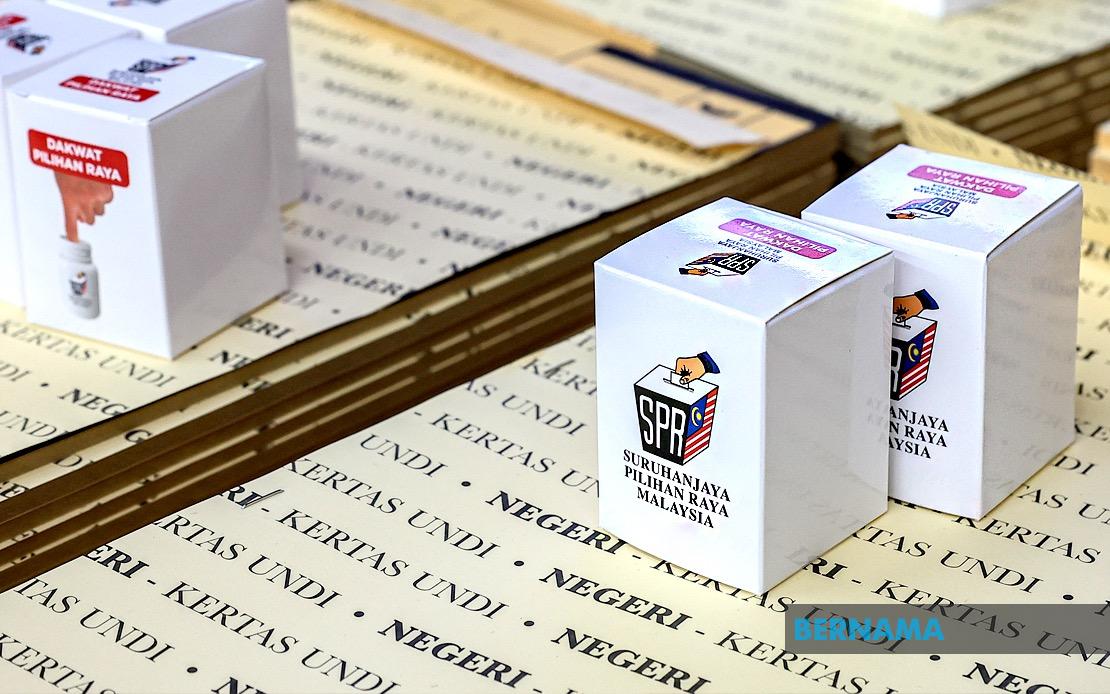
Almost a quarter of a million eligible voters from Malaysia's armed forces and police will exercise their franchise a day before the general Johor electorate on Saturday, participating in an early voting exercise that reflects the electoral commission's accommodation of those unable to vote on polling day. The 24,751 early voters—comprising 12,041 military personnel and their spouses alongside 12,710 police officers and their spouses—will visit 64 designated early polling centres distributed across Johor tomorrow, a logistical undertaking that underscores the complexity of managing elections in a state of nearly two million residents.
The architecture of early voting arrangements demonstrates how electoral administration adapts to the operational constraints of disciplined forces. Police and military personnel face unpredictable duty schedules that may conflict with standard voting hours, necessitating alternative voting windows. The 53 early polling centres designated for police personnel and 11 established for military staff will open in synchrony at 8 am, enabling a coordinated exercise that completes before the main election. For police votes specifically, 12,067 individuals will cast ballots in person at their designated venues, while 643 others will participate through postal voting, illustrating the multi-channel approach to ensuring participation despite operational commitments.
The police deployment required to facilitate this exercise reveals the substantial organisational effort embedded in what appears a straightforward electoral procedure. Approximately 3,565 police personnel—including 647 officers, 2,806 rank-and-file members, and 112 civilian administrative staff—will be mobilised to manage the early voting process. Beyond the immediate polling operations, their responsibilities extend to comprehensive security provision: manning ballot box escorts, orchestrating traffic management, conducting crime-prevention patrols, staffing operational command centres, monitoring strategically sensitive locations, and maintaining law enforcement coverage across all affected areas. This deployment illustrates how electoral integrity demands not merely counting mechanisms but also the physical security apparatus surrounding the democratic process.
The staggered closure of polling centres tomorrow—occurring between noon and 6 pm depending on each venue's registered voter numbers—reflects an efficiency-oriented scheduling that avoids unnecessary resource allocation. Smaller rural centres such as Buloh Kasap Police Station in Segamat, Tenang Police Station in Labis, and Bandar Penawar Police Station will close at midday, as their minimal voter rolls—ranging from six to 28 individuals—complete the voting process swiftly. Conversely, urban installations with concentrated personnel demonstrate significantly higher participation rates. The Federal Reserve Unit Hall No 2 at Johor Police Headquarters, serving Stulang constituency, will accommodate 1,338 early voters, while the KEMAS Preschool at the 6th General Operations Force Battalion in Bakri, designated for Bukit Naning constituency, will process 927 voters, indicating substantial concentrations of military and police presence in these areas.
Weather forecasting by the Malaysian Meteorological Department introduces an environmental dimension often overlooked in electoral analysis yet operationally significant for polling logistics. Rain anticipated in Batu Pahat, Muar, Pontian and Tangkak districts tomorrow could affect voter accessibility to centres, though fair conditions prevailing elsewhere in the state suggest minimal overall disruption. Such meteorological considerations become particularly pertinent in rural constituencies where poor road conditions exacerbate mobility challenges during wet weather, potentially suppressing turnout among elderly voters or those without private transport.
The broader electoral context frames this early voting exercise within the 16th Johor State Election proper, wherein 172 candidates will contest across 56 state seats on Saturday. This candidate-to-seat ratio of approximately 3.1 reflects a moderately competitive electoral environment, with multiple contenders per constituency suggesting vigorous inter-party and intra-party competition. The concentration of candidates in a limited number of seats indicates strategic deployment by major political coalitions, anticipating that certain constituencies represent either swing opportunities or deeply contested battlegrounds where victory margins historically prove narrow.
For Malaysian observers monitoring electoral administration, the early voting framework illustrates institutional capacity in managing diverse voter categories with distinct operational requirements. The segregation of military and police voting into dedicated facilities—rather than mainstreaming them into civilian polling centres—reflects both constitutional delineation of these groups' electoral participation and practical recognition that their organisational structures facilitate dedicated voting arrangements. This bifurcation avoids administrative complications arising from security clearance procedures or duty roster conflicts that might otherwise create bottlenecks in civilian polling facilities.
The magnitude of early voters relative to total registered voters in Johor offers insight into the disciplined forces' demographic representation within the electorate. While precise state-level voter registration figures require verification, rough estimation suggests early voters constitute approximately 1.2 to 1.5 percent of Johor's likely total registered voters—a non-trivial minority whose voting patterns could prove consequential in closely-contested constituencies. Should military or police voters demonstrate bloc-voting tendencies aligned with particular political formations, their concentrated numbers in specific constituencies could theoretically alter local electoral outcomes, though such patterns remain difficult to predict absent detailed constituency-level demographic analysis.
The implementation of early voting procedures also raises questions about electoral transparency and public confidence in vote integrity. Allowing some voters to cast ballots forty-eight hours before general election day introduces potential complications: vote counting procedures must prevent premature disclosure of results that could influence undecided civilian voters; ballot security protocols must ensure votes cast early receive protection equivalent to those cast on polling day; and procedural consistency must be maintained across both early and standard voting exercises to prevent perceptions of discriminatory treatment. Malaysian electoral authorities have managed similar arrangements in previous elections, suggesting established protocols exist, yet vigilance remains necessary to preserve public confidence in democratic institutions.
Looking forward to Saturday's poll, the completion of early voting tomorrow will transition focus toward mobilising civilian voters, finalising logistical preparations at the remaining 56 voting locations, and intensifying final campaign messaging from competing political formations. The 172 candidates pursuing office will capitalise on the closing campaign window to consolidate support, particularly targeting the constituencies where early voting revealed elevated organisational capacity or where demographic analysis suggests competitive races likely to determine overall state government composition. Johor's electoral outcome will carry significance beyond the state itself, as the second-most populous Malaysian state's results typically influence broader national political calculations and coalition stability.
The early voting completion tomorrow represents the initial democratic moment in a multi-day electoral process that culminates Saturday's main poll. For Johor's military and police personnel, tomorrow's participation fulfils their electoral obligation within a system that accommodates their professional commitments while insisting upon their democratic engagement. The successful administration of 24,751 early votes across 64 centres, supported by extensive security and logistical resources, will set the operational tone for Saturday's more expansive polling exercise, where regular civilian voters across the state will collectively determine Johor's political future and potentially influence Malaysia's broader political trajectory.

