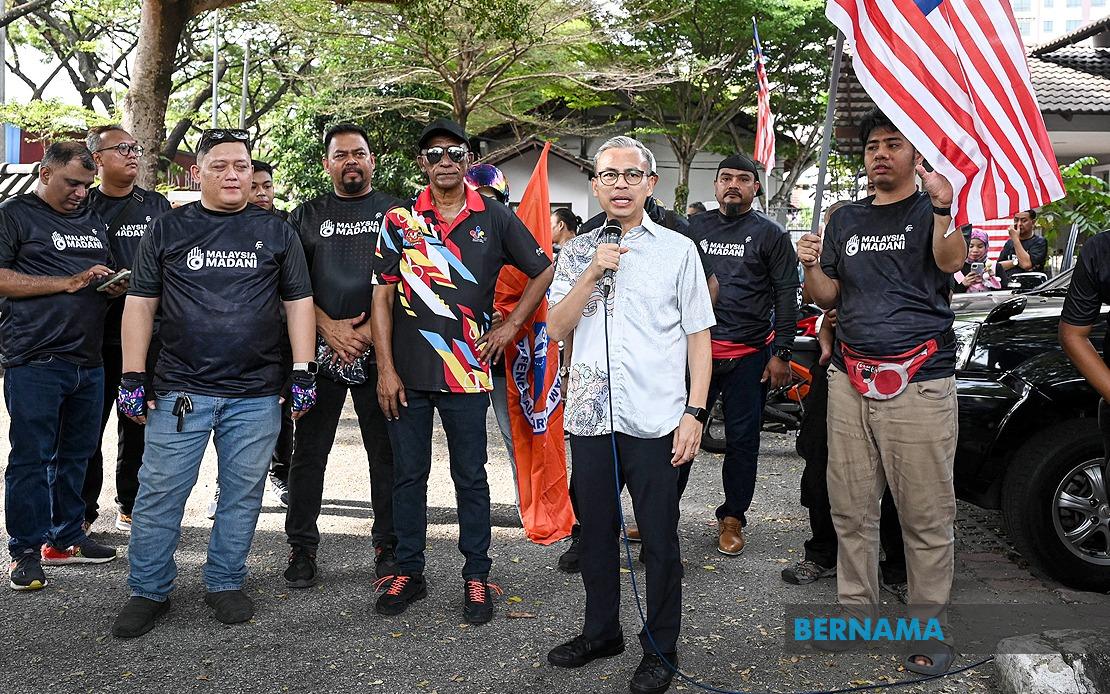
Nearly 300 motorcyclists gathered in Kuala Lumpur on August 30 to participate in the Lembah Pantai Kembara Merdeka Convoy, a community-driven initiative timed to energise celebrations marking the eve of Malaysia's independence anniversary. The large-scale motorcycle mobilisation underscored efforts by local leadership to translate patriotic sentiment into visible, grassroots action across the constituency.
Communications Minister Datuk Seri Fahmi Fadzil, who represents Lembah Pantai, positioned the convoy as a platform for demonstrating the cohesive bonds within a district characterised by religious, cultural and ethnic diversity. Speaking during the event, he articulated a vision of unity rooted in shared Malaysian identity rather than communal affiliation. His remarks reflected a broader political narrative emphasising inclusive nationalism at a time when concerns about polarisation occasionally surface in public discourse.
The minister's message centred on the tangible reality of inter-community relationships within Lembah Pantai. He noted that residents across different backgrounds routinely interact, build friendships and collaborate toward common objectives. By framing the convoy as a celebration of existing social bonds rather than an aspirational exercise, Fahmi sought to anchor patriotism in lived experience and demonstrated goodwill among neighbours. This approach carries particular resonance in urban constituencies where demographic composition necessitates functional coexistence and mutual cooperation.
The convoy's route was carefully structured to maximise community participation and visibility across multiple neighbourhoods. Beginning at Taman Seri Sentosa, the motorcade traversed toward Bangsar LRT station, pausing at five designated locations including Kampung Pasir, IWK Eco Park and Vista Angkasa in Kampung Kerinchi. This multi-stop design ensured that residents unable to participate in the full journey could still engage with the initiative and witness the patriotic display.
A symbolic element of the convoy involved distributing Jalur Gemilang flags at each pit stop to members of Resident Representative Councils and community representatives. This deliberate ceremony served dual purposes: it transferred custodianship of national symbols to grassroots organisations, and it created photographic and visual documentation of inter-community participation. Such gestures, while ceremonial, contribute to the institutional memory of local unity initiatives and provide tangible reference points for future community mobilisation.
Fahmi's subsequent remarks focused on sustaining momentum beyond the single-day event. He appealed to participants to view the convoy as the beginning of an ongoing commitment to collective action rather than an isolated occurrence. His emphasis on continuity through future programmes, community assistance initiatives and subsequent Merdeka celebrations suggested awareness that one-off events, however well-attended, require integration into broader civic rhythms to generate lasting impact on social cohesion.
The timing of the convoy, coinciding with Merdeka eve, carried particular weight. Independence Day remains the most significant annual occasion for national reflection and patriotic expression across Malaysia's diverse population. By anchoring the motorcycle convoy to this moment, organisers leveraged the heightened patriotic sentiment already present in the national calendar. For Lembah Pantai residents, participating in the convoy allowed them to express Malaysian pride while simultaneously affirming their own neighbourhood's multicultural character.
From a political perspective, such initiatives serve multiple functions. They provide visible demonstration of grassroots engagement and leadership responsiveness to constituents. They generate local media coverage that reinforces the sitting representative's profile and policy priorities. They create opportunities for community leaders and bureaucratic representatives to interact informally with residents, potentially addressing concerns or gathering feedback outside formal institutional channels. For younger participants especially, motorcycle convoys offer an appealing mechanism for civic participation that combines social activity with patriotic expression.
The success of attracting nearly 300 motorcyclists suggests robust community response to the initiative. In Malaysia's urban context, mobilising participation across different demographic groups requires overcoming practical barriers related to scheduling, transportation and awareness. The fact that nearly 300 individuals committed time and effort to ride together indicates either substantial grassroots enthusiasm or effective mobilisation through community networks, or likely both. This turnout provides Fahmi with evidence of constituent willingness to engage in patriotic community activities, data points he can reference when seeking support for future initiatives.
Looking beyond the immediate event, the Lembah Pantai Kembara Merdeka Convoy exemplifies how contemporary Malaysian political leadership attempts to nurture national unity at the community level. Rather than relying solely on top-down messaging or formal civic institutions, the approach leverages existing social infrastructure and grassroots enthusiasm. The motorcycle convoy format itself carries cultural resonance, particularly among younger urban Malaysians for whom motorcycle culture represents a significant leisure and social identity marker.
The initiative also reflects evolving thinking about how to make patriotism tangible and participatory rather than abstract. Flag-waving and anthem-singing remain important, but incorporating patriotic expression into activities that residents already enjoy—such as group motorcycle rides—may increase authentic engagement. This democratisation of patriotic expression, enabling citizens to celebrate national identity through personally meaningful activities, potentially strengthens emotional investment in Malaysia's continued unity and development.
Looking forward, the question facing Fahmi and other Lembah Pantai community leaders involves translating the goodwill and participation demonstrated by the convoy into concrete collaborative projects. Whether through neighbourhood watch programmes, community centres, interfaith dialogues or other initiatives, the bonds affirmed during the convoy require ongoing cultivation. The minister's explicit call for participants to join future assistance programmes and community activities suggests an intention to channel patriotic enthusiasm toward tangible social impact beyond symbolic gesture.

