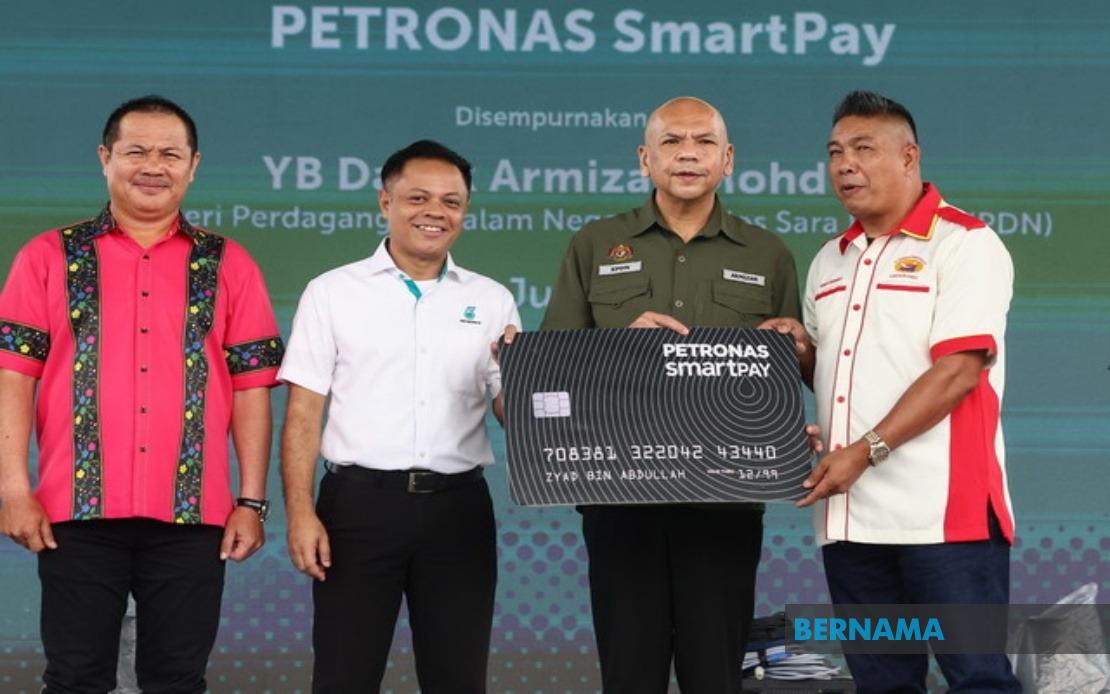
Malaysia's expansion of the Subsidised Diesel Control System (SKDS) has seen overwhelming participation from East Malaysia, with companies in Sabah, Sarawak and Labuan accounting for nearly seven in ten beneficiaries under the new commercial vehicle categories. Domestic Trade and Cost of Living Minister Datuk Armizan Mohd Ali disclosed that the three regions represent 67.9 per cent of all businesses that have registered since the scheme broadened on July 3, translating to 10,453 companies operating a combined fleet of 18,538 vehicles eligible for the government's diesel cost relief programme.
The substantially higher uptake in East Malaysia compared with Peninsular Malaysia highlights how regional businesses have seized the opportunity to access RM300 subsidies on diesel purchases for jeeps and pickups previously ineligible under the original SKDS framework. Since the July 3 expansion, 15,388 companies nationwide have enrolled across the jeep and pickup categories, representing a meaningful expansion of the subsidy's reach beyond traditional sectors. The concentration of registrations in Sabah, Sarawak and Labuan suggests that the extension addressed a genuine commercial need in these regions, where logistics and transportation are fundamental to economic activity across industries from agriculture to natural resources.
The SKDS operates through three distinct commercial sectors, with the newly expanded jeep and pickup category joining the existing public land transport and goods distribution segments. Under the restructured eligibility criteria, sole proprietorships and partnerships utilising these vehicle types for business purposes can now obtain fleet cards directly from petroleum retailers, enabling them to access cheaper diesel at pump stations nationwide. This mechanism removes individual transaction processing and streamlines the subsidy delivery, making administration simpler for both government agencies and participating businesses. The practical accessibility of the programme appears to have resonated particularly strongly with small and medium enterprises operating across East Malaysia.
Armizan's announcement comes as the government endeavours to ensure maximum participation from eligible enterprises. The Minister urged companies that satisfy registration requirements but have not yet applied to expedite their submissions through the MySubsidi online portal, indicating that the registration window remains open and that officials anticipate further uptake. This push suggests the government views the SKDS expansion as a policy mechanism with untapped potential, and administrators are keen to broaden participation beyond the current 15,388 enrollments. The relatively streamlined digital application process through MySubsidi appears designed to lower barriers to entry, particularly for smaller operators who might otherwise struggle with complex bureaucratic procedures.
However, the subsidy landscape in Malaysia operates across multiple overlapping schemes administered by different government agencies, creating complexity that extends beyond the commercial SKDS framework. The Ministry of Trade oversees subsidies for 35 categories of commercial vehicles through SKDS, while the Ministry of Finance manages parallel programmes—Budi Diesel and Budi Agri-Komoditi—targeting individual consumers and agricultural operators. This administrative fragmentation has prompted grassroots concerns about inconsistency in eligibility criteria and the apparent disparity in support offered to different beneficiary categories. Representatives from Sabah have urged standardisation of subsidy conditions, particularly regarding how individuals and households qualify for Budi95 petrol and Budi Diesel support.
The Minister acknowledged these concerns and indicated receptiveness to rationalising the framework across regions and customer segments. Armizan suggested that observations regarding subsidy standardisation should flow through established inter-governmental coordination channels between Sabah, Sarawak and relevant federal ministries, signalling that the government recognises the legitimacy of these complaints and views them as matters worthy of elevated discussion. The proposal to standardise eligibility criteria—potentially simplifying qualification to holding a valid driving license—reflects pragmatic recognition that the current mosaic of requirements may inadvertently exclude otherwise deserving beneficiaries or create confusion about entitlements.
The diesel subsidy discussion also touches on a related issue that has gained prominence in East Malaysia: vehicle registration requirements set by the Ministry of Finance. Current regulations requiring vehicles to be registered in individual names create practical complications for businesses wishing to structure ownership through company vehicles, a common arrangement particularly for sole proprietorships and partnerships. The suggestion that this registration requirement might be harmonised across states through federal-state coordination channels indicates sensitivity to how policy design in one domain can create unintended friction in commercial operations.
For Malaysian businesses, particularly small operators in Sabah and Sarawak managing transport-dependent activities, the SKDS expansion represents meaningful financial relief during a period of volatile global fuel prices. A RM300 monthly subsidy per vehicle, while modest relative to total operating costs for a fleet operation, accumulates significantly across dozens or hundreds of vehicles. For a sole proprietor operating five pickups in construction, agriculture or logistics, the cumulative annual benefit approaches RM18,000, a sum that can translate directly to improved profit margins or competitive pricing for customers. East Malaysia's higher registrations suggest these businesses understand the tangible value proposition and have moved quickly to formalise their participation.
The government's commitment to strengthen SKDS through ongoing coordination with the Ministry of Finance, state authorities in Sabah and Sarawak, and commercial oil companies demonstrates that subsidy administration has matured beyond ad-hoc crisis management toward systematic programme design. Regular stakeholder engagement and willingness to revisit eligibility criteria based on ground-level feedback indicate administrative maturity. Yet the underlying challenge—targeting energy subsidies efficiently while maintaining affordability for businesses and households across a geographically diverse nation with varying development stages—remains perpetually complex.
Moving forward, the substantial East Malaysian participation in the SKDS expansion offers both validation and cautionary signal. Validation, because it demonstrates that well-designed support mechanisms achieve rapid uptake when they genuinely address user needs. Cautionary, because the concentration in three regions raises questions about whether peninsular businesses face different constraints to registration, whether awareness campaigns reached all target audiences uniformly, or whether subsidy design itself inadvertently favours certain geographic or commercial structures over others. These questions merit investigation as the government seeks continuous improvement in subsidy targeting and administration.

