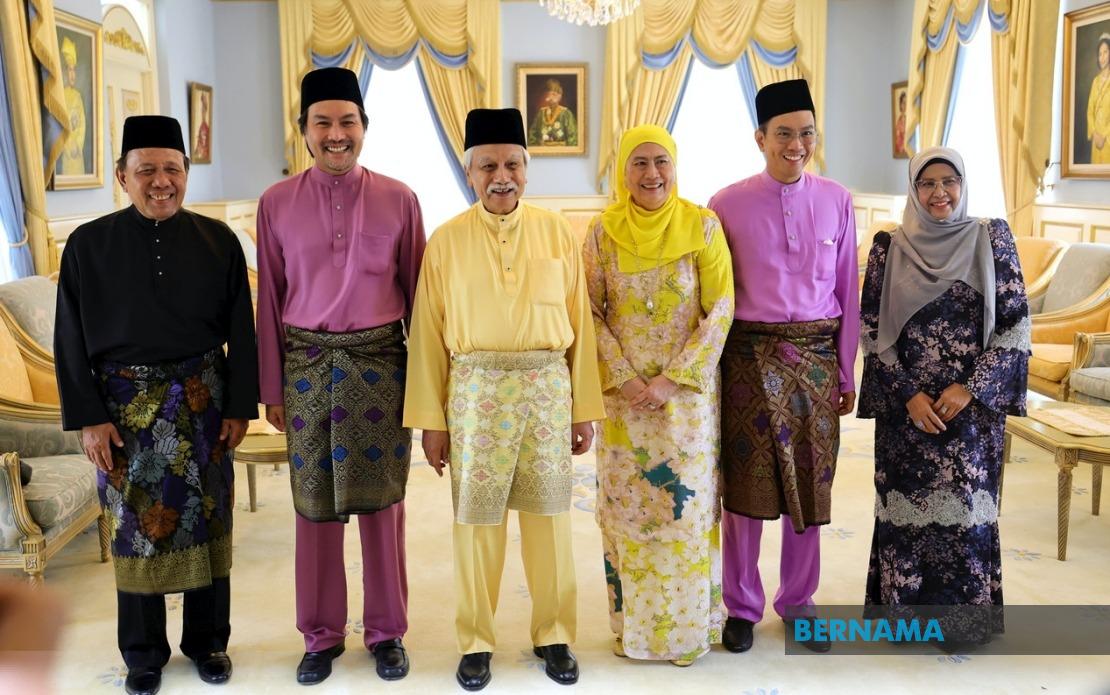
Newly appointed Negeri Sembilan Menteri Besar Datuk Ismail Lasim has signalled that the composition of the state's executive council should be settled within days, pending clearance from the Barisan Nasional hierarchy and the state's royal establishment. Speaking at his inaugural press conference following his swearing-in ceremony at Istana Besar Seri Menanti in Kuala Pilah, Lasim indicated that Friday represents the realistic deadline for presenting a finalised ministerial lineup, contingent on the pace of ongoing consultations. The Juasseh assemblyman emphasised that the formation of government requires coordination across multiple stakeholder groups, making the timeline ambitious but achievable if discussions proceed smoothly.
The procedural framework governing cabinet formation in Negeri Sembilan involves sequential layers of approval. Initial discussions are being conducted with the Barisan Nasional's senior decision-makers, after which the proposed list must be submitted to Tuanku Muhriz Tuanku Munawir for formal endorsement. This sequence underscores the constitutional role played by the state ruler in appointing executive councillors, a process that differs from federal arrangements and reflects the federal structure's protection of state-level autonomy. Lasim noted that the Sultan himself prefers expeditious resolution of these administrative arrangements, creating mutual pressure for rapid finalisation without compromising the consultative process essential to coalition governance.
Crucially, Lasim signalled his intention to engage directly with UMNO president Datuk Seri Dr Ahmad Zahid Hamidi to discuss the council's composition and the contentious question of whether Perikatan Nasional representatives should receive ministerial appointments. This indicates that despite the electoral alliance between Barisan Nasional and Perikatan Nasional in the state-level contest, questions remain unresolved about the depth of power-sharing in the incoming administration. The inclusion of PN assemblymen in the executive council is not a foregone conclusion and requires explicit negotiation with UMNO's national leadership, reflecting broader questions about coalition dynamics and whether PN holds genuine executive authority or merely participated as a junior partner.
On the structural dimension, Lasim indicated that the executive council's size remains under discussion, though he expressed a preference for maintaining the traditional ten-member configuration that has served the state administration previously. This preference appears rooted in practical governance considerations—a ten-member council balances the need for departmental coverage with administrative manageability. However, the expansion to include PN representatives could necessitate enlarging this structure, which would have implications for portfolio allocation and the distribution of state resources among different political segments. The eventual size of the council will thus reflect the outcomes of current negotiations rather than bureaucratic precedent alone.
The electoral context shaping these negotiations is significant for understanding the political pressures at play. In Negeri Sembilan's recent state election, contested across 36 seats involving 103 candidates, Barisan Nasional secured 18 seats whilst Perikatan Nasional won seven, enabling the two coalitions to command two-thirds of the State Legislative Assembly and form government with a substantial majority. This two-thirds threshold is particularly important in Malaysian state politics, as it provides protection against confidence votes and minority manoeuvres, insulating the government from legislative instability. The BN's seat count provides the numerical basis for government formation, and thus BN retains significant leverage in determining whether PN's participation in the executive council is merely symbolic or substantive.
For Malaysian observers and particularly Negeri Sembilan residents, the imminent cabinet announcement carries implications extending beyond ceremonial aspects of state governance. The distribution of portfolios—encompassing local government, economic development, education, and social services—will influence policy priorities and resource allocation during the coming term. Constituencies that elected BN representatives may expect their representatives to secure ministerial positions, whilst PN's negotiating position depends on whether the coalition can secure meaningful executive authority. The announcement will therefore serve as a test case for how post-election power-sharing agreements function when implemented at the subnational level.
Lasim's emphasis on the welfare and well-being of the people as the state government's primary pillar represents standard political rhetoric, yet it warrants scrutiny given the broader context of Malaysian coalition politics. The incoming administration inherits existing policy commitments and budgetary allocations, and will operate within the constraints imposed by federal legislation and intergovernmental arrangements. Whether the new cabinet prioritises continuity with previous administrations or charts a distinctly new direction will become apparent only after the lineup is announced and portfolios distributed. The composition itself—particularly the seniority and track record of appointed councillors—will signal the seriousness with which the government approaches the welfare mandate it is articulating.
The involvement of component parties within Barisan Nasional, specifically MCA and MIC alongside UMNO, adds another layer to these negotiations. Lasim's acknowledgement that state assembly members from all three BN component parties require consideration in cabinet formation reflects the coalition's federal structure and the political necessity of maintaining unity amongst parties with distinct constituencies. MCA's representation of the Malaysian Chinese community and MIC's role in appealing to the Indian Malaysian community means that the allocation of portfolios to these parties carries communal as well as administrative significance. A disproportionate allocation of posts to UMNO alone could generate grievances among coalition partners, undermining the unified government presentation that nascent administrations typically attempt to project.
The timeline Lasim has set suggests that some of these negotiations have progressed further than public statements indicate, or alternatively, that considerable urgency is being applied to compress what would ordinarily be a more leisurely process. The four-to-five-day window separating the announcement from his press conference allows for final consultations with party leadership at the state and national level, direct negotiations with the Sultan's office regarding formal appointment protocols, and any last-minute adjustments driven by unforeseen political complications. Should these discussions encounter unexpected obstacles—perhaps disagreements over PN's portfolio entitlements or contests between BN component parties over ministerial positions—the Friday deadline could slip, though Lasim's public commitment to this date creates political pressure for adherence.
For the broader Southeast Asian context, the Negeri Sembilan cabinet formation represents a microcosm of coalition governance challenges that characterise contemporary Malaysian politics. Unlike Westminster systems where the majority party typically exercises unilateral control over executive appointments, Malaysian federal and state governments frequently operate as multi-party coalitions requiring negotiated settlements of ministerial positions. The transparency with which Lasim is discussing these processes—acknowledging consultations with multiple actors rather than announcing a predetermined lineup—reflects both the actual complexity of coalition governance and the contemporary expectation that such arrangements be publicly justified rather than presented as fait accompli.
The coming announcement will likely receive intensive scrutiny from multiple quarters: federal UMNO leadership assessing whether state-level appointments reflect their preferred direction; component parties evaluating whether their contributions to coalition victory are proportionately recognised; Perikatan Nasional members analysing whether their seven seats translate into meaningful ministerial representation; and ordinary Negeri Sembilan residents attempting to discern which issues and constituencies the new government prioritises. In this sense, the cabinet composition functions not merely as an administrative arrangement but as a political statement about how power is distributed within Negeri Sembilan's emerging political order and how the competing interests within the ruling coalition will negotiate their respective positions.

