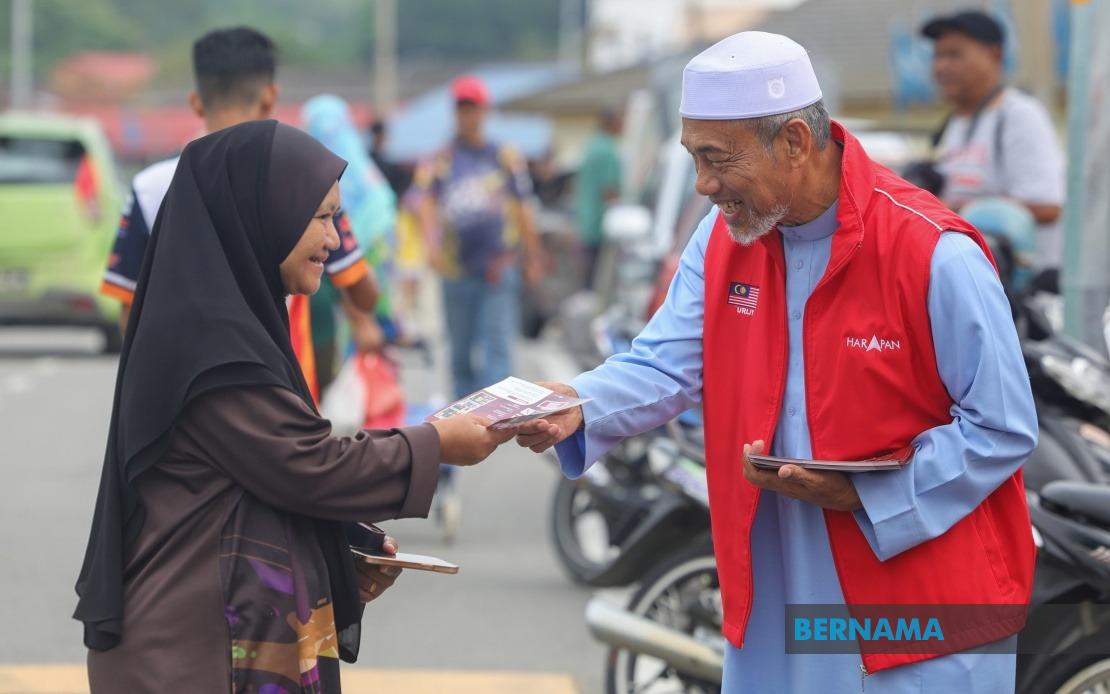
Political candidates across Negeri Sembilan have shifted into high gear on the second day of the official campaign period, deploying an array of traditional engagement strategies to connect directly with voters in their constituencies. With nearly two weeks remaining before the August 1 election, the campaign intensity has escalated markedly, reflecting the competitive nature of the contest and the determination of candidates from all major coalitions to secure electoral advantage through face-to-face interaction and community listening sessions.
The scale of campaign activity underscores how Malaysian electoral politics remain heavily dependent on ground-level engagement despite the proliferation of digital communication tools. Many candidates have organised schedules featuring up to nine separate programmes daily, including early morning prayers at mosques, breakfast sessions with residents, market walkabouts, and evening community dinners. This tempo of activity demonstrates the resource intensity of modern state-level campaigns and the premium placed on visibility and accessibility within voting communities.
Menteri Besar Datuk Seri Aminuddin Harun, contesting the Linggi seat, exemplifies this approach by anchoring his campaign in religious and community spaces. His morning began with prayers at Masjid Jamek Pasir Panjang, followed by breakfast engagement and systematic walkabouts across multiple residential areas including Pasir Panjang town, Taman Setia, Taman Kekatong, and two villages in the Telok Pelandok area. The Negeri Sembilan Pakatan Harapan chairman also prioritised outreach to the Indian community through dedicated meet-and-greet sessions, reflecting the multiethnic composition of his constituency and the necessity for PH to consolidate support across different demographic groups.
Aminaddin's campaign messaging emphasises the direct connection between grassroots interaction and effective governance. By framing his walkabouts as opportunities to understand constituent concerns and aspirations, he positions electoral engagement as foundational to responsive policymaking. His remarks about delivering development that benefits everyone and building a better future resonate with the service-delivery expectations that increasingly dominate Malaysian state and federal election discourse. The Pakatan Harapan strategy appears calibrated toward contrasting their governance approach with incumbent administrations, potentially leveraging any perception of effectiveness or responsiveness among undecided voters.
On the opposition benches, DAP secretary-general Anthony Loke is defending his Chennah state seat through equally intensive grassroots engagement. Loke's initial campaign activities included a market walkabout at Seremban Central Market, a venue typically associated with high voter density and informal political discussion. The DAP's traditional strength in urban and semi-urban constituencies often depends on mobilising networks through established community gathering spaces, and market interactions serve this strategic purpose while generating visible campaign presence.
PH candidates in other constituencies are applying similarly comprehensive campaign frameworks. Kamarul Ariffin Wafa, contesting Seri Menanti, has scheduled eight programmes that systematically cover different voter segments and community spaces, including the Pekan Ahad market and the Tanjong Ipoh area. Yaacob Mahmood, pursuing the Serting seat, has adopted what campaign strategists term an informal engagement model, combining breakfast meetings with business community interaction and Felda settlement visits. This approach acknowledges that voter concerns in rural and estate constituencies differ substantially from urban centres, requiring tailored communication addressing agricultural livelihood, economic opportunities, and service provision in underserved areas.
Barisan Nasional candidates are matching this campaign intensity. Datuk Seri Mohamad Hasan, popularly known as "Tok Mat," has utilised the BN Polling District Centre infrastructure in Taman Kelab Tuanku as a campaign base while engaging residents directly. His role as BN deputy chairman and incumbent Rantau assemblyman positions him as a senior figure whose campaign visibility may influence broader coalition performance. Similarly, Negeri Sembilan UMNO Liaison Committee chairman Datuk Seri Jalaluddin Alias has integrated youth mobilisation through sepak takraw tournaments with targeted outreach to Orang Asli communities, again reflecting the diverse demographic constituencies that comprise modern Malaysian electoral districts.
The timing of these intensified campaigns occurs within a specific institutional framework established when the Negeri Sembilan State Legislative Assembly was dissolved on June 5. The Election Commission's decision to set August 1 as polling day provided a defined twelve-day campaigning window, creating artificial scarcity around campaign time and amplifying the intensity of candidate activities. Early voting scheduled for July 28 adds pressure to campaign organisers, necessitating acceleration of voter contact before a portion of the electorate fulfils their electoral obligation through advance ballots.
The scale of voter engagement reflects substantial electoral stakes. The state election involves 889,490 registered voters, comprising 867,151 ordinary voters alongside 16,884 military personnel and spouses and 5,455 police personnel eligible for early voting. This electorate size, distributed across multiple constituencies with varying demographic compositions, requires differentiated campaign messaging and targeted resource allocation. Candidates attempting to address this electoral complexity within a compressed timeframe must prioritise geographic coverage and demographic reach, explaining the prevalence of multi-programme daily schedules across competing parties.
The grassroots campaign emphasis also reflects broader patterns within Malaysian electoral politics where local issues and direct candidate engagement often influence voter behaviour more substantially than national-level party positioning. By concentrating on breakfast meetings, market interactions, and community listening sessions, candidates attempt to establish personal relationships with voters and build understanding of constituency-specific concerns. This approach presumes that electoral decisions emerge from interpersonal trust and demonstrated attentiveness rather than purely partisan affiliation or policy platforms disseminated through mass media.
For Malaysian and Southeast Asian observers, the Negeri Sembilan campaign illustrates how electoral competition in mature democracies with established institutions continues to rely on resource-intensive ground mobilisation despite technological change. The campaign schedules reveal that political parties across the ideological spectrum—from PH's progressive coalition positioning through UMNO and BN's establishment orientation—maintain comparable campaign structures and engagement methodologies, suggesting convergence around effective electoral strategy rather than fundamental philosophical differences in campaign approach.
The coming two weeks will determine whether these intensive grassroots campaigns translate into electoral consolidation for incumbent administrations or generate momentum for opposition challenges. The concentration of activity and the systematic coverage of constituencies by candidates from multiple parties indicate that the August 1 outcome will reflect not abstract policy preferences but rather local assessments of candidate responsiveness, community engagement quality, and constituent relationship-building achieved through the precisely scheduled walkabouts, breakfast meetings, and direct interactions that now dominate Malaysian state electoral politics.

