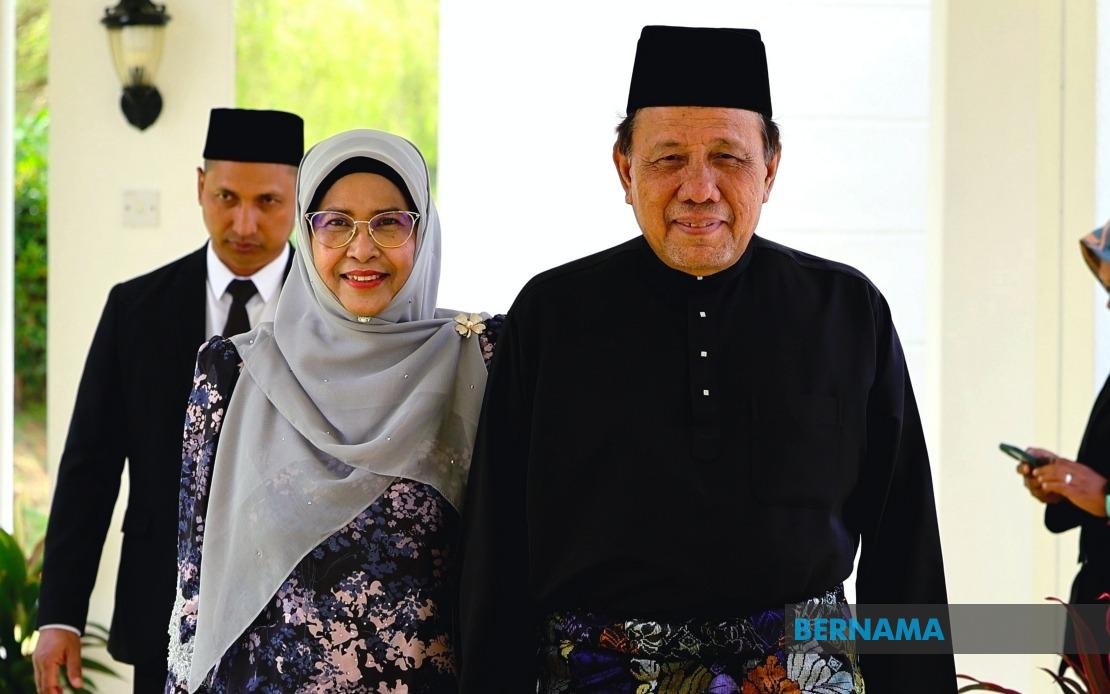
Negeri Sembilan has declared August 3 an occasional public holiday following the conclusion of the 16th state election on August 2, offering residents a chance to recover from the rigours of the electoral process. The announcement came from newly sworn Menteri Besar Datuk Ismail Lasim during his first press conference after taking oath of office before Tuanku Muhriz Tuanku Munawir at Istana Besar Seri Menanti in Kuala Pilah. The declaration represents both a gesture of gratitude to the electorate and an acknowledgement of the physical and emotional demands placed on communities during election campaigns and voting.
The decision to declare the holiday received formal approval from the Yang Dipertuan Besar of Negeri Sembilan, underscoring the traditional constitutional framework that governs executive decisions in the state. Ismail emphasised his appreciation for the royal consent granted not only for his appointment as Menteri Besar but also for the authority to declare this special break. In Malaysian constitutional practice, such gubernatorial appointments and major state decisions require the explicit blessing of the hereditary rulers, reflecting the ceremonial and substantive role these monarchs continue to play in state governance. The 67-year-old leader framed the holiday as a practical measure, noting that many people involved in the electoral process remained fatigued and deserved respite.
The 16th Negeri Sembilan state election concluded with results that reshaped the political landscape of the central Malaysian state. Barisan Nasional secured 18 seats in the State Legislative Assembly, while Perikatan Nasional captured seven of the 36 contested seats. This outcome enabled the two coalitions to collaborate in forming the state government while achieving a commanding two-thirds majority—a threshold that carries significant constitutional weight in state affairs, permitting the passage of legislation without cross-party support and granting authority over matters including constitutional amendments at the state level.
The election process involved 103 candidates competing across the 36 state constituencies, representing a substantial democratic exercise that mobilised campaign machinery, volunteer efforts, and extensive public engagement across Negeri Sembilan's diverse communities. The toll of such campaigns extends beyond the candidates themselves to encompass polling officials, observers, security personnel, and ordinary citizens who participate in the democratic ritual. Ismail's recognition of this collective fatigue reflects a pragmatic understanding of electoral dynamics in Malaysia, where state elections often involve intense community mobilisation and extended campaigning periods.
For Malaysian states, election outcomes frequently reshape coalition dynamics and administrative priorities. In Negeri Sembilan's case, the strong performance by Barisan Nasional, traditionally the dominant political force in Malaysian governance, combined with Perikatan Nasional's representation, creates a coalition government structure. Such arrangements require careful coordination and consensus-building between partner parties, with the Menteri Besar serving as the crucial bridge between these entities while managing the expectations of diverse constituencies and community groups throughout the state.
The swearing-in ceremony itself represents a formal transition of power, wherein executive authority transfers to newly elected representatives. Ismail's assumption of office followed constitutional protocols established within Negeri Sembilan's governance framework, where the appointment of chief minister requires royal endorsement. This ceremonial dimension of Malaysian politics, while sometimes perceived as purely symbolic, carries genuine constitutional significance and reinforces the rule of law and democratic institutions that structure political competition and succession.
The public holiday announcement carries broader implications for Negeri Sembilan's economic activity and social rhythm. While providing legitimate rest to weary voters and election workers, such declarations also affect business operations, transportation patterns, and scheduling across sectors dependent on government coordination. Retail establishments, financial institutions, and public services typically close during official holidays, requiring advance planning by both commercial entities and residents. The timing of this particular holiday—immediately following the election—suggests an intentional effort to allow the normal rhythms of state life to resume gradually rather than abruptly returning to standard operations.
Election cycles in Malaysian states generate significant administrative responsibilities beyond the voting itself. Electoral commissions must verify results, political parties must organise their transition into government or opposition roles, and civil service machinery must prepare for potential policy shifts and administrative reorganisation. The declaration of a post-election holiday provides breathing space for these transitions to occur without the pressure of immediate operational demands, allowing newly appointed officials like Ismail to settle into their roles and establish working relationships with their administrative teams.
From a Southeast Asian perspective, Malaysia's approach to post-election management reflects the region's broader patterns of democratic practice. While some nations experience fractious transitions or prolonged political uncertainty following elections, the Malaysian system—despite occasional controversies—generally provides for orderly transfers of power and formal recognition of electoral outcomes. Negeri Sembilan's choice to declare a restorative holiday represents a relatively benign and inclusive response to electoral completion, acknowledging the legitimacy of the process and the contributions of all participants.
The involvement of the royal institution in approving this holiday underscores the constitutional monarchy system that characterises Malaysian governance at both federal and state levels. While practical governance authority rests with elected representatives and appointed officials, the symbolic endorsement and formal consent of the ruler lends constitutional legitimacy to executive decisions. This distinctive feature of Malaysian politics, inherited from colonial constitutional arrangements and adapted into the post-independence framework, continues to shape how state-level authorities approach major decisions and communicate them to the public.
Moving forward, the political dynamics established through the election results will determine Negeri Sembilan's policy direction and budgetary priorities over the coming years. The strength of the coalition majority provides relative stability for implementing government programmes, though the need to maintain coordination between Barisan Nasional and Perikatan Nasional members will require ongoing political skill and consensus-building. The public holiday, in this context, marks not an ending but a transition point—the formal conclusion of campaigning and voting, and the beginning of governance under a new administration facing the substantial challenges of managing state resources, delivering public services, and responding to community needs across Negeri Sembilan's diverse regions.

