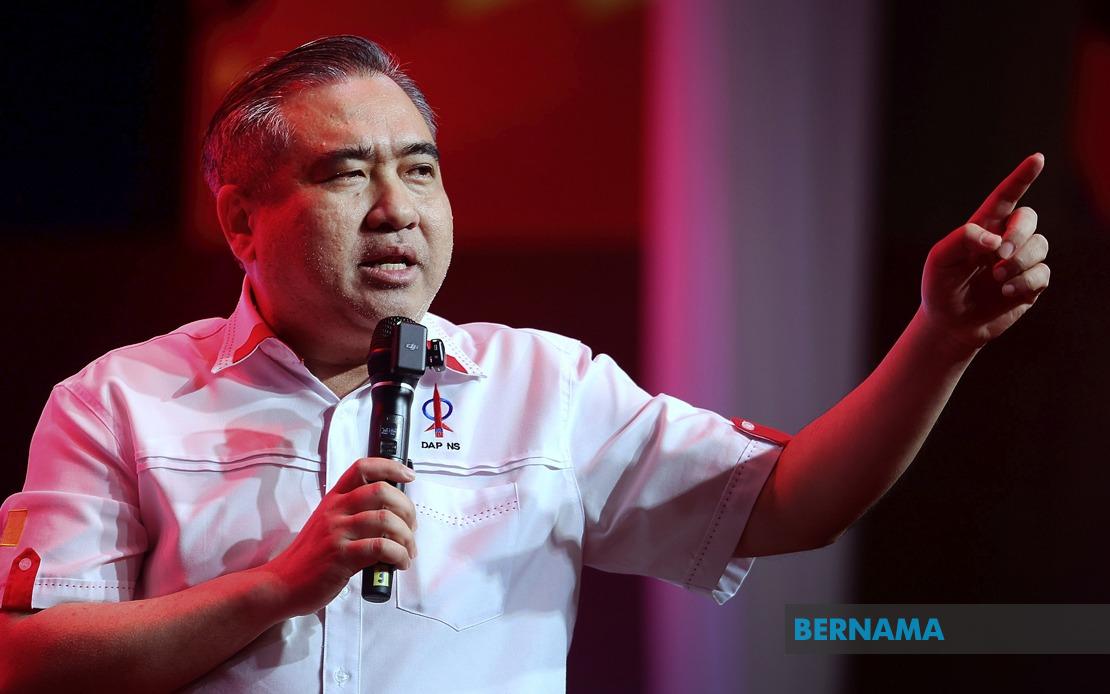
As the 16th Negeri Sembilan state election enters full campaign mode, DAP secretary-general Anthony Loke has drawn a clear line in the sand regarding campaign conduct, pledging to steer clear of personal attacks and instead pivot discussions toward substantive policy proposals. Speaking at a Pakatan Harapan dinner in Seremban on July 19, Loke articulated a philosophy that prioritises issues over invective, arguing that voters deserve to hear what competing parties genuinely intend to deliver rather than enduring volleys of personal criticism.
Loke's restraint reflects a deliberate strategic choice rooted in his dual role as both a Cabinet minister and opposition politician contesting the Chennah state seat. His position underscores a tension inherent in Malaysia's current political configuration under the Unity Government framework, where members of traditionally rival coalitions now sit together in federal Cabinet. By voluntarily forgoing opportunities to attack Cabinet colleagues—particularly those from Barisan Nasional—Loke demonstrates how the Unity Government arrangement has reshaped campaign culture and imposed new boundaries on political rhetoric that would have been unthinkable in previous electoral cycles.
The Transport Minister framed this disciplinary approach as an extension of Prime Minister Datuk Seri Anwar Ibrahim's guidance, issued the same day, that government officeholders should exercise restraint while campaigning and avoid launching broadsides against the federal administration. This top-down directive represents a calculated effort to prevent the Negeri Sembilan contest from becoming a proxy battle that could fracture the delicate power-sharing arrangement at national level. For Malaysian observers accustomed to combative state elections that amplify divisions within coalitions, this emphasis on measured conduct signals how deeply the Unity Government has altered political norms.
A particularly illuminating example of Loke's strategic forbearance concerns his decision not to campaign in the Rantau constituency, where Foreign Minister and Barisan Nasional deputy chairman Datuk Seri Mohamad Hasan is contesting. Rather than deploy his ministerial profile and DAP machinery to challenge a rival coalition heavyweight in what might otherwise be fiercely competitive terrain, Loke consciously absented himself to preserve harmony within the broader governmental framework. This choice prioritises institutional stability over electoral aggression—a calculation that would have been virtually inconceivable in pre-2023 Malaysian politics, when maximising seats was the paramount objective regardless of coalition implications.
Instead of dispersing his efforts across multiple battlegrounds, Loke concentrated his personal campaign engagement on the Chennah seat he is defending and DAP-held constituencies where his party maintains a realistic chance of victory or consolidation. He has also devoted resources to supporting Menteri Besar Datuk Seri Aminuddin Harun's campaign in the Linggi seat, effectively functioning as a utility player within the Pakatan coalition structure rather than a soloist pursuing narrow partisan advantage. This allocation of effort demonstrates how state elections now operate within a constrained environment where coalition management competes with seat acquisition as a governing priority.
Addressing criticism that his ministerial responsibilities might have caused him to neglect his constituency, Loke reframed his Cabinet position as an asset for Chennah residents rather than a liability. He highlighted concrete benefits flowing to the constituency through his access to federal channels, including allocations for Kampung MADANI implementation projects that would likely be unavailable to a backbench opposition representative. This argument—that ministerial office enhances rather than detracts from constituent service—represents a fundamental shift in how politicians in government positions must justify their electoral engagement, placing emphasis on tangible delivery rather than mere accessibility.
Loke's insistence that a dedicated full-time constituency team manages Chennah's affairs year-round and handles resident concerns attempts to neutralise the perennial charge that Cabinet ministers lose touch with grassroots issues. By compartmentalising his time between federal duties and local representation, Loke argues that both functions can proceed efficiently without conflict. Whether voters find this argument persuasive remains unclear, but it reflects an evolving defensive strategy for incumbent ministers seeking re-election in an environment where governance load is heavier than in previous administrations.
The broader context of Loke's stance carries significance for understanding how Malaysian electoral politics is recalibrating under unprecedented coalition arrangements. The Unity Government, which emerged from the 2022 general election and has since become the operational model for federal governance, fundamentally altered incentives facing politicians in government. Where previously state elections offered opposition figures opportunities to embarrass and weaken coalition rivals, such contests now potentially threaten institutional arrangements that provide governing politicians with real power and resources.
This shift has not eliminated political competition in Negeri Sembilan—indeed, the state election remains genuinely contested—but has redirected its tenor and intensity. Rather than all-out assault on rivals, campaigns increasingly emphasise what each component party will contribute to residents' welfare and how governing arrangements will be operationalised at state level. For Pakatan Harapan and Barisan Nasional figures operating within the Unity Government framework, state campaigns have become negotiations about seat distribution and coalition terms as much as contests for votes.
The Negeri Sembilan election takes place amid broader questions about whether the Unity Government model can sustain itself politically. State elections serve as important barometers of public sentiment and coalition stability. If Pakatan Harapan performs strongly, it may claim validation for government cooperation; conversely, poor results could embolden calls within parties for a return to more aggressive opposition positioning. Loke's commitment to disciplined, policy-focused campaigning thus carries implications extending beyond Negeri Sembilan to the national political configuration.
Voters in Negeri Sembilan will cast their ballots amid this unusual political backdrop. Early voting is scheduled for July 28, with the main polling day set for August 1. For residents of the state, Loke's campaign approach signals that this election will centre on which coalition can more credibly demonstrate competence in delivery of services, infrastructure, and economic opportunity rather than on personality-driven attacks and coalition blame games. Whether this represents a genuine elevation of campaign discourse or merely a temporary accommodation with political constraint remains to be seen.

