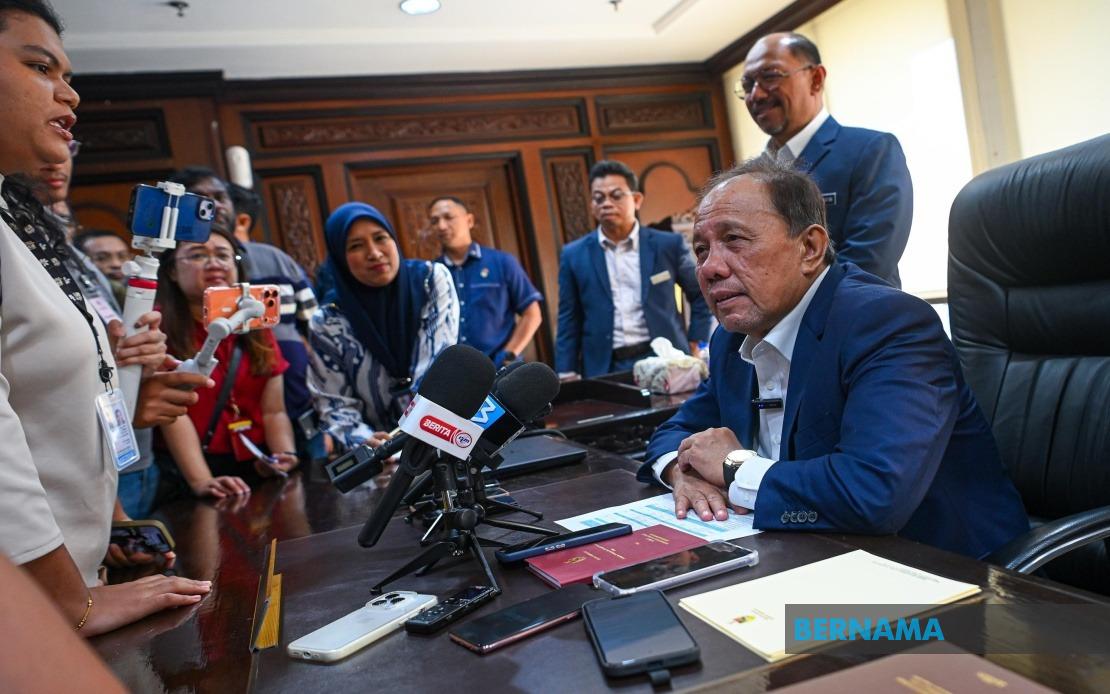
Menteri Besar Datuk Ismail Lasim has signalled that the Negeri Sembilan state administration is examining proposals to introduce Deputy Executive Council positions across several critical portfolios as a means of reinforcing governmental capacity and effectiveness. The newly installed leader, who assumed office on Sunday following his swearing-in before Tuanku Muhriz Tuanku Munawir, disclosed these plans during his first official day at Wisma Negeri, where he was formally received by State Secretary Datuk Mohd Zafir Ibrahim and senior department heads.
The proposal to establish these additional senior positions reflects an unconventional approach to state governance in Malaysia, where executive structures are typically fixed within defined frameworks. Ismail acknowledged that the existing allocation of Exco posts may be insufficient to accommodate all qualified representatives from the coalition partners, prompting consideration of this creative administrative solution. The deputy positions would be filled by assemblymen representing the component parties of the governing coalition—Barisan Nasional, PAS, and Parti Wawasan Negara—thereby broadening opportunities for political representation whilst maintaining the state's administrative hierarchy.
The scope and exact number of Deputy Exco appointments remain undefined at this stage, with Ismail indicating that further deliberation is necessary before finalising these decisions. This cautious approach suggests the government is balancing multiple competing interests: ensuring adequate representation for each coalition partner, maintaining administrative efficiency, and demonstrating inclusive governance to stakeholders across the state. The ambiguity surrounding these positions also provides flexibility should political circumstances or coalition dynamics shift in the months ahead.
Parallel to discussions about deputy positions, the appointment of Senior Exco members has similarly remained in flux. While Ismail confirmed that constitutional provisions exist for such appointments, their implementation had not yet been settled as of his statement to reporters. This dual uncertainty—regarding both senior and deputy layers of executive authority—underscores the complexity of balancing traditional institutional structures with contemporary political realities in a multi-coalition government.
The full composition of the Executive Council was anticipated to be unveiled by Friday or, at the latest, the following Monday, signalling that the government intended to resolve these administrative matters promptly. This timeline reflected urgency in establishing a complete and functional leadership team, essential for addressing constituent demands and implementing state policy initiatives effectively. The relatively swift announcement schedule also demonstrated the administration's commitment to demonstrating competence and clarity to both the public and civil service from its inception.
Ismail, representing the Juasseh state assembly district, represents a significant political figure within Negeri Sembilan. At 67 years old, he brings established experience to the position, though the specific background of his prior roles and contributions to state politics remains relevant context for understanding his leadership philosophy and administrative priorities. His appointment and the coalition's broader electoral victory provide a mandate for governance approaches that extend beyond conventional frameworks, justifying experimental structures such as the proposed Deputy Exco system.
The electoral landscape that produced this administration reflects substantial political realignment within Negeri Sembilan. The coalition of Barisan Nasional and Perikatan Nasional secured sufficient parliamentary representation to govern with a decisive two-thirds majority—18 and seven seats respectively—providing stable legislative backing for executive initiatives. This comfortable arithmetic contrasts sharply with Pakatan Harapan's outcome, which secured 11 seats but found itself in opposition, representing a notable swing from previous electoral configurations in the state.
The creation of Deputy Exco positions carries implications extending beyond Negeri Sembilan's immediate administrative needs. Should this model prove successful and yield enhanced governance outcomes, it may provide a template for other Malaysian states managing complex multi-coalition governments. The approach could address recurring challenges in federal states where legitimate political parties command support but face constraints within traditional executive structures. For Malaysian observers and analysts, the experiment merits close monitoring as an indicator of innovative responses to contemporary political pluralism.
For the civil service apparatus within Negeri Sembilan, the proposed restructuring necessitates careful planning regarding reporting lines, portfolio clarity, and operational protocols. The State Secretary and departmental heads welcome the new administration, yet must now develop frameworks ensuring that Deputy Exco appointments enhance rather than complicate administrative functionality. Ambiguity regarding decision-making authority or overlapping jurisdictions could impede rather than improve governance effectiveness, making implementation details as consequential as the broad principle.
The timing of these administrative adjustments—occurring during Ismail's first days in office—demonstrates that the new government prioritises addressing structural questions whilst political momentum and coalition solidarity remain strongest. Coalition partners' eagerness for representation and resource allocation typically intensifies over time, making early decisions about position distribution strategically advantageous. By visibly moving toward accommodating various political factions through Deputy Exco roles, the administration signals commitment to inclusive coalition governance, potentially forestalling tensions that might otherwise emerge.
Stakeholders across Negeri Sembilan, from business communities to civil society groups, will scrutinise whether additional executive positions translate into more responsive governance or merely create bureaucratic redundancy. The ultimate success of this initiative will be measured not through structural innovation alone, but through tangible improvements in service delivery, policy implementation, and constituent satisfaction. As the government formalises these arrangements over the coming weeks, clarity regarding each Deputy Exco's specific portfolio, authority, and accountability will become essential for public confidence in the administration's competence and seriousness.

