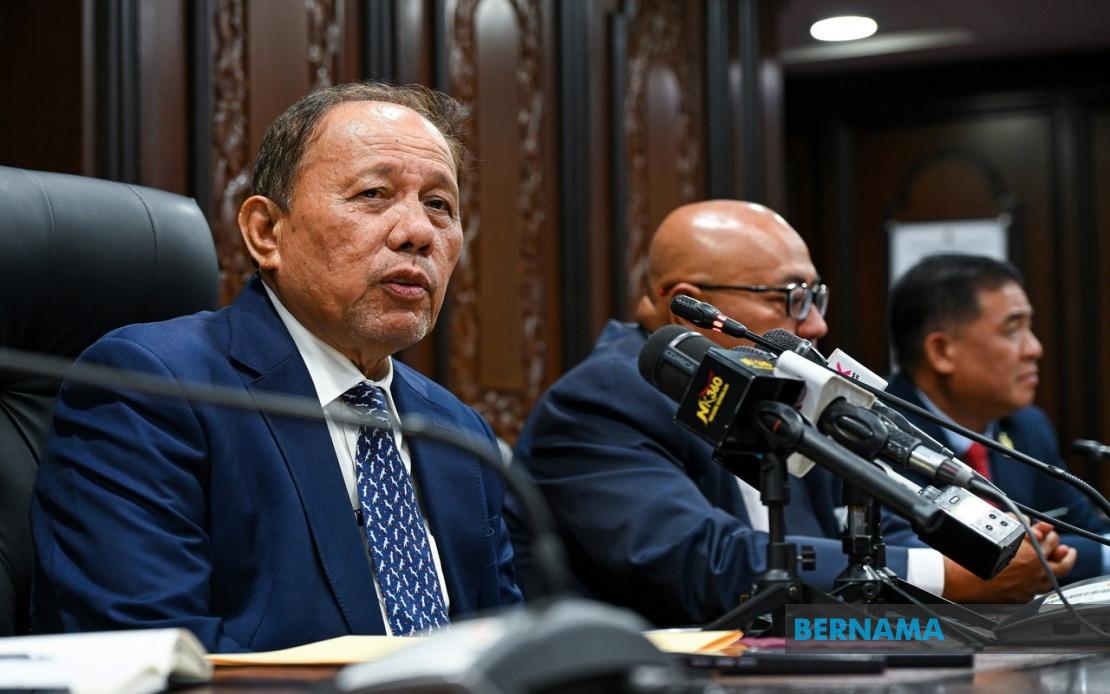
Negeri Sembilan residents will face no increase in residential assessment tax for the next five years, Menteri Besar Datuk Ismail Lasim announced in Seremban on August 10, signalling the newly-formed state government's commitment to providing immediate relief to homeowners grappling with rising living costs across Malaysia.
The freeze was formally approved during the State Executive Council's inaugural meeting, reflecting a deliberate pivot toward cost-of-living assistance at the state level. Although local authorities had been conducting preliminary assessments that could have led to tax adjustments effective January or July, the administration chose to shelve those plans entirely rather than implement a modest increase. The decision underscores how state governments, constrained by federal fiscal arrangements, increasingly use property taxation as a visible lever for public goodwill—a particularly potent tool in a political environment where household expenses have become a dominant election issue across the region.
For Malaysian homeowners, this development carries practical significance. Assessment tax, calculated on the estimated annual rental value of residential properties, typically funds local services including waste collection, street maintenance, and drainage systems. A prolonged freeze necessarily implies either fiscal constraint within municipal budgets or a deliberate choice to absorb rising operational costs without passing them to residents. Either scenario reflects the political calculus facing state administrations post-election, where manifesto pledges must be translated into executable governance within months rather than years.
The announcement also signals the Barisan Nasional coalition's broader positioning in Negeri Sembilan following the recent 16th state election. By prominently linking the tax freeze to the coalition's campaign promises, Ismail Lasim framed the decision not merely as administrative prudence but as ideological commitment. This messaging strategy proves essential in maintaining momentum among voters who delivered the coalition's electoral mandate, particularly in an era when state-level performance increasingly influences perceptions of the broader federal government.
Beyond the immediate tax relief, Ismail outlined the machinery of the new state administration. The first special session of the 16th Negeri Sembilan State Legislative Assembly will convene on August 18, during which all state assemblymen will take their oaths and the assembly will elect its Speaker and Deputy Speaker. The selection methodology reflects constitutional convention: the Speaker position will be filled by someone outside the assembly itself, typically representing cross-party credibility, whilst the Deputy Speaker must be drawn from sitting assemblymen. Announcing a identified candidate for Deputy Speaker while leaving the Speaker choice under consideration suggests potential negotiations with non-partisan stakeholders or deliberation around consensus-building.
The inaugural Exco meeting also served as Ismail's platform to establish administrative expectations. He emphasised that cabinet members must execute their portfolios with dedication, integrity, and professionalism whilst maintaining alignment with government direction. This framing—seemingly routine but carefully chosen—attempted to establish a collaborative rather than hierarchical tone, positioning the Exco as a unified team rather than a collection of individual fiefdoms. Such messaging matters in Malaysian state politics, where factional tensions within ruling coalitions can undermine governance credibility.
The five-year tax freeze also warrants contextual analysis for wider Southeast Asian implications. As inflation pressures persist across the region and Malaysia experiences elevated living costs, state-level decisions to absorb revenue pressures without raising tax burdens become reference points for other administrations. Negeri Sembilan's choice effectively set a benchmark; neighbouring Selangor, Pahang, and other Barisan-governed states will face implicit pressure to match or exceed this commitment, potentially cascading into broader municipal fiscal challenges.
From a public finance perspective, the frozen assessment tax represents a modest but meaningful concession. Negeri Sembilan's residential property base generates steady revenue typically used for local infrastructure. Maintaining nominal levels whilst costs rise implies either efficiency gains, reallocation from other budget lines, or strategic acceptance of deferred maintenance. For residents enjoying immediate relief, this trade-off remains invisible; for municipal planners, the constraint becomes increasingly apparent over the five-year horizon.
The timing of this announcement—merely days after the Exco's first meeting—demonstrated administrative efficiency and political acuity. Rather than allowing local authorities months to lodge revenue increase applications that would later face rejection, the government preemptively closed the debate, preventing headlines about rejected tax hikes and consolidating the positive narrative around cost-of-living relief. This approach reflects lessons learned from previous state administrations that allowed departmental tax applications to proceed before ministerial reversal, generating unnecessary controversy.
Looking ahead, the August 18 legislative session will formally establish the administration's institutional architecture. The appointment of non-Exco figures to the Speaker position suggests potential outreach beyond the ruling coalition's core, whilst the Deputy Speaker selection remains strategically opaque pending formal announcement. These choices, paired with the tax freeze, construct an opening narrative of inclusive, fiscally-conscious governance—messaging crucial for sustaining coalition unity and public confidence in the new administration's competence and accessibility.
The assessment tax freeze ultimately exemplifies how contemporary Malaysian state politics increasingly revolves around tangible, household-level interventions rather than grand policy declarations. By delivering immediate financial relief on a universally-understood item, Negeri Sembilan's government capitalised on a straightforward opportunity to embed its manifesto pledge into administrative reality, whilst simultaneously establishing benchmarks that will shape expectations for Malaysian state governments across multiple political constituencies over coming years.

