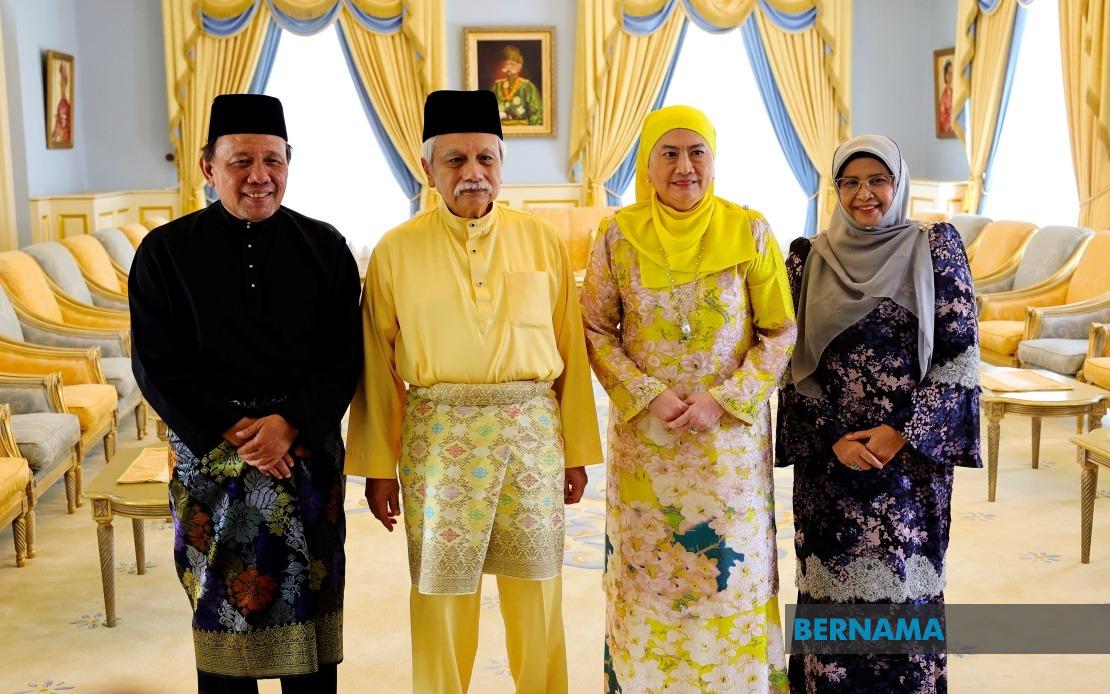
Datuk Ismail Lasim took the oath of office as Negeri Sembilan Menteri Besar on August 2 before the Yang Dipertuan Besar Tuanku Muhriz Tuanku Munawir at Istana Besar Seri Menanti, marking the formal transfer of leadership in the state administration. In his first major address following the swearing-in ceremony, the Juasseh assemblyman outlined a governance framework that places institutional respect and political continuity at its foundation, signalling both reverence for established structures and pragmatic continuity in policy implementation.
The new Menteri Besar's central message emphasised the indissoluble link between Negeri Sembilan's identity and its royal institution. Ismail framed safeguarding the monarchy as not merely a governmental responsibility but a civic obligation incumbent upon every citizen of the state. This positioning reflects a broader understanding within Malaysian governance of the constitutional and symbolic role the royal institution plays in legitimising state authority and ensuring stability across the federation. By characterising this protection as essential to maintaining cohesion between the monarchy and administrative apparatus, Ismail addressed the delicate political balance that characterises Malaysian federalism, where respect for traditional authority structures remains foundational to legitimate governance.
Ismail articulated his commitment through a two-fold framework grounded in cultural literacy and institutional reverence. Citizens must first comprehend Negeri Sembilan's distinctive customs and traditions—a recognition that the state possesses its own constitutional heritage separate from, though complementary to, national frameworks. Secondly, they must actively honour the royal institution through their conduct and civic participation. This articulation suggests that Ismail views institutional preservation not as passive veneration but as an active process requiring constant engagement and purposeful action from both government and populace. The emphasis on understanding before honouring indicates a sophisticated approach to institutional stewardship that avoids mere ceremonialism.
Conflict minimisation emerged as a practical corollary to institutional protection. Ismail acknowledged that preserving the royal institution requires proactive identification and resolution of potential tensions between customary arrangements and administrative necessities. This reflects recognition that rapid modernisation and bureaucratic expansion sometimes create friction with traditional prerogatives or ceremonial expectations. By positioning conflict resolution as integral to his governance mandate, Ismail signalled awareness that institutional respect requires more than rhetoric—it demands careful navigation of competing interests and genuine engagement with issues as they arise. This approach carries particular relevance for Malaysian states where customary law, Islamic jurisdiction, and secular administration intersect.
The Menteri Besar grounded his administrative philosophy in human-centric governance, positioning the people's interests and state stability as paramount considerations. This framing connects institutional protection to tangible outcomes: respect for royal structures is justified not merely through tradition but through its contribution to harmony that enables development and welfare provision. For Malaysian readers accustomed to seeing state legitimacy questioned, Ismail's linking of institutional reverence to practical benefits represents a common rhetorical strategy that attempts to reconcile modern democratic expectations with constitutional monarchy frameworks.
On federal-state cooperation, Ismail adopted a reassuring tone regarding Barisan Nasional's participation in Negeri Sembilan's governing coalition while maintaining Unity Government ties at the national level. His characterisation of this arrangement as requiring nothing unusual reflects confidence in the stability of Malaysia's current political configuration, where federal and state administrations operate under partially overlapping coalitions. However, this framing also subtly normalises what remains a complex constitutional arrangement—Negeri Sembilan's government operates under BN leadership while the federal government includes DAP and other PKR-led coalition partners. By downplaying perceived tensions, Ismail signalled his intention to maintain pragmatic inter-governmental relations despite ostensible ideological differences between his state's ruling coalition and federal partners.
Ismail's commitment to preserving predecessor policies that benefited constituents demonstrates political maturity and recognition that governance effectiveness supersedes factional credit-claiming. This stance carries particular weight given that transitions between administrations frequently trigger wholesale policy reversals. By pledging continuity where evidence supports a programme's success, Ismail positioned himself as results-oriented rather than ideologically rigid. Malaysian voters, often frustrated by political cycles that disrupt successful initiatives, frequently appreciate such commitments. Simultaneously, this approach prevents policy whiplash that can undermine investor confidence and institutional capacity.
The new Menteri Besar's emphasis on improvement over mere preservation suggests his intention to build upon existing foundations rather than simply maintain the status quo. This distinction carries practical importance: policies that were appropriate under previous leadership may require updating to address evolving circumstances, demographic changes, or technological developments. By indicating openness to enhancement, Ismail signalled his administration would not be paralysed by inherited arrangements but would exercise discernment about which elements required refreshing.
Ismail's inaugural address reflects broader patterns within Malaysian state governance following leadership transitions. His simultaneous emphasis on institutional respect, administrative continuity, and federal cooperation suggests a leader attempting to govern within established constitutional frameworks while retaining flexibility for substantive policy adjustments. For Negeri Sembilan specifically, this approach may facilitate smoother relations with the Yang Dipertuan Besar compared to administrations perceived as relegating royal prerogatives to ceremonial status. The combination of respect for tradition with pragmatic modernisation positioning has become the dominant discourse among state-level administrators seeking legitimacy across diverse constituencies.

