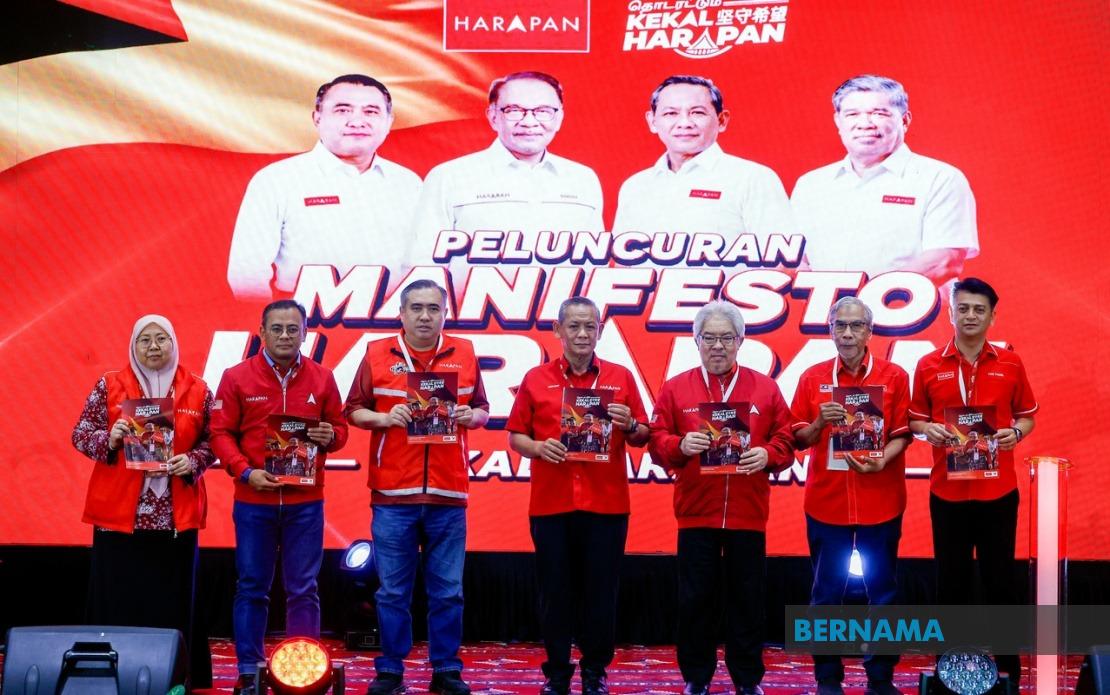
Pakatan Harapan is positioning its Negeri Sembilan state election campaign around substance rather than promises, with coalition leadership arguing that the party's manifesto reflects realistic commitments grounded in proven governance. Datuk Seri Aminuddin Harun, who serves as both Menteri Besar and state PH chairman, unveiled the coalition's election platform at a press conference in Seremban on July 20, emphasizing that the manifesto represents an evolution of existing programmes rather than a departure into untested territory.
The strategic reframing comes as PH seeks to consolidate its hold on the state after eight years in office. Rather than adopting the conventional opposition tactic of promising sweeping new initiatives, the coalition is leveraging its administrative record as its primary campaign asset. Aminuddin articulated this approach clearly, noting that the party has shifted its focus from the implementation phase of the previous term to a consolidation and enhancement phase for the next five-year cycle. This positioning reflects a maturation of PH's electoral strategy in Negeri Sembilan, where the coalition appears confident enough to defend its track record rather than chase headline-grabbing new commitments.
The manifesto, formally titled 'Negeri Sembilan Kekal Harapan' (Negeri Sembilan Stays With Harapan), encompasses ten core policy commitments across sectors likely to matter to voters in the state. The thematic emphasis on continuity with improvement suggests PH believes its strongest selling point is demonstrating competent stewardship rather than radical change. For a governing coalition seeking re-election, this approach carries both advantages and risks—it appeals to voters satisfied with the status quo while potentially disappointing those seeking transformative policies.
Aminuddin's messaging underscores a philosophical difference between governing and opposition politics. During PH's transition to power at the federal level in 2018, the coalition campaigned heavily on reform and anti-corruption platforms. In Negeri Sembilan, where PH has governed throughout that period, the coalition now frames governance as an ongoing process of refinement. This distinction matters for understanding how established coalitions calibrate their campaigns in state contests where they hold executive power.
The emphasis on building "a strong foundation for Negeri Sembilan that can benefit future generations" introduces a longer-term governance perspective into electoral discourse. Rather than focusing narrowly on the five-year election cycle, Aminuddin is suggesting that PH's initiatives are part of generational infrastructure development—economic, social, and institutional. This framing attempts to position the coalition above short-term political competition and appeals to voters concerned with sustainable development rather than immediate gratification.
For Malaysian voters accustomed to increasingly polarized electoral rhetoric, PH's Negeri Sembilan strategy represents a different conversational tone. The manifesto's focus on implementation rather than aspiration reflects lessons learned from the 2018 federal election campaign, where PH made numerous commitments that proved difficult to execute within the complexities of federal governance. By centering the Negeri Sembilan campaign on programmes already underway and evaluated, the coalition reduces the credibility gap between campaign promises and government delivery.
Aminuddin's own candidacy in the Linggi state seat provides a personal dimension to this broader strategy. As the incumbent Menteri Besar seeking re-election in a specific constituency, he embodies the continuity narrative that PH is promoting statewide. His willingness to contest a seat and subject himself to local electoral competition—rather than seeking a safer administrative position—signals confidence in the coalition's standing with voters in his constituency.
The Negeri Sembilan election assumes significance within Malaysia's broader political landscape as a test of PH's performance-based campaigning. While federal politics remains dominated by questions of coalition stability and ministerial accountability, state-level contests offer clearer opportunities to evaluate government effectiveness in delivering services and managing state budgets. A strong PH showing in Negeri Sembilan would validate the coalition's shift toward implementation-focused messaging and demonstrate that voters reward competent governance over rhetoric.
Opposition parties contesting the same election face a different strategic calculation. Typically, challengers benefit from emphasizing failures and proposing alternatives; however, in a state where PH governs, opposition effectiveness depends on persuading voters that existing programmes are inadequate or misdirected. This dynamic creates an asymmetry in campaign narratives, with the governing coalition defending its record while opponents must construct compelling criticism of tangible outcomes.
The manifesto launch timing and messaging also reflect PH's apparent confidence in maintaining its coalition coherence in Negeri Sembilan. Recent years have tested PH's stability at the federal level, with internal tensions and defections affecting public perception of the coalition's unity. By presenting a unified state campaign centered on programmatic delivery, PH leadership in Negeri Sembilan seeks to project an image of institutional stability and focused governance.
Looking ahead, the success of PH's delivery-focused campaign in Negeri Sembilan may influence how Malaysian political parties approach future state elections. If voters respond positively to substantive promises rooted in demonstrated capacity, other governing coalitions may adopt similar strategies. Conversely, if opposition parties successfully counter that current programmes are inadequate or inequitable, the campaign narrative could shift back toward aspirational promises versus critical evaluation.
The Negeri Sembilan election ultimately offers Malaysians an opportunity to assess whether governance quality and administrative performance can compete effectively against more traditional forms of electoral mobilization. Aminuddin's insistence that the manifesto represents deliverable commitments rather than political rhetoric reflects a calculated bet that voters increasingly value demonstrated competence over campaign promises.

