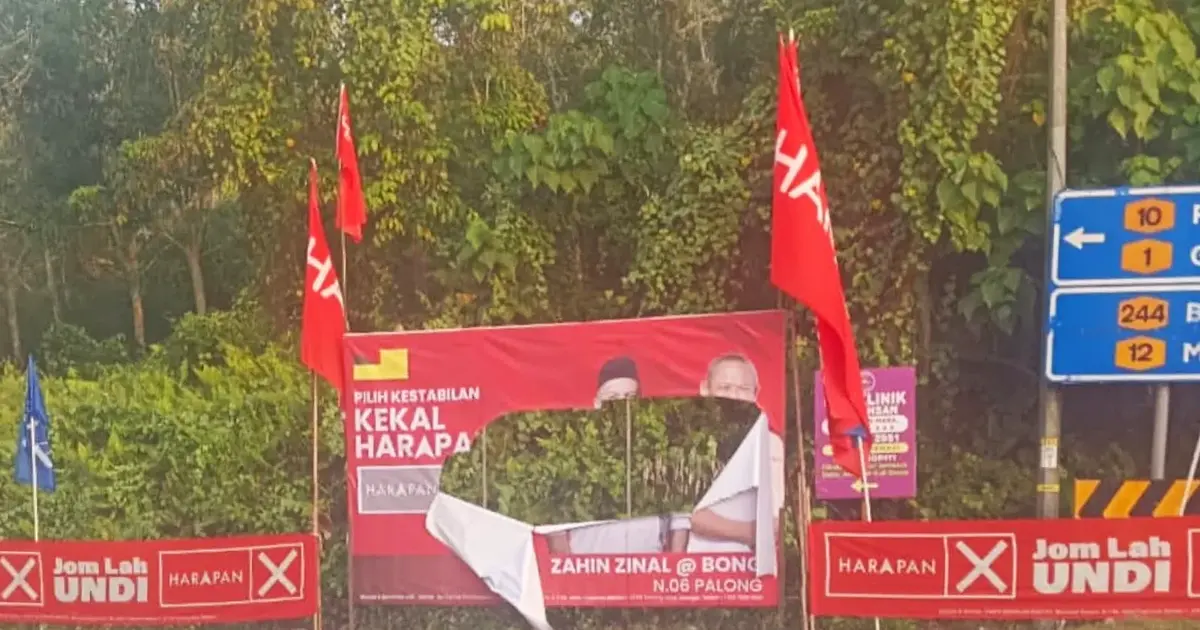
Law enforcement authorities in Negeri Sembilan have launched investigation papers into fourteen separate incidents classified as election-related offences, marking a significant enforcement effort during the electoral period. The cases represent a broad spectrum of misconduct that has drawn police attention across the state, encompassing acts that range from symbolic political vandalism to the destruction of campaign infrastructure.
Among the documented incidents are cases involving the intentional burning of party flags, a form of protest that carries particular symbolic weight in Malaysian electoral politics. Such actions, while sometimes framed as expressions of political dissent, fall under legislation that protects campaign materials and party symbols during election periods. The decision to investigate these cases reflects a stricter enforcement posture aimed at maintaining order throughout the electoral process.
The investigation papers also cover multiple instances of campaign banners being vandalised or destroyed across the state. These banners, which form a visible part of the political landscape during campaigns, serve as key promotional tools for contesting parties and candidates. Their defacement—whether through tearing, spray-painting, or removal—deprives candidates of important outreach mechanisms and is treated as a breach of electoral conduct regulations.
Additionally, authorities have opened cases related to damaged or defaced billboards that displayed campaign messaging. Billboards represent significant campaign investments, particularly for well-resourced political entities, and their destruction affects the visual presence of contesting parties in public spaces. The inclusion of billboard vandalism in the investigation roster indicates police are taking a comprehensive approach to protecting campaign infrastructure across different media formats.
The enforcement action reflects broader concerns about maintaining electoral integrity and ensuring that the election environment remains orderly and fair for all participating parties. Malaysian electoral law contains specific provisions designed to protect campaign materials and prevent disruption of the political process through vandalism or destruction of property used for electoral purposes. These statutes exist to ensure that candidates can conduct their campaigns without facing sabotage or intimidation.
Police investigation into election-related offences is a standard feature of Malaysian elections, with enforcement agencies typically increasing vigilance during campaign periods. The fact that fourteen papers have been opened in Negeri Sembilan suggests a concentrated pattern of incidents rather than isolated occurrences. This concentration may indicate heightened tensions during the electoral period or increased public awareness prompting more complaints to police.
The breakdown between flag burning and campaign material vandalism reveals distinct motivations and methods underlying these offences. Flag burning typically represents ideological opposition or protest, often occurring in areas of strong partisan feeling, while billboard and banner vandalism may stem from competitive campaign dynamics or attempts to reduce rival visibility. Both categories, however, fall under regulations designed to preserve the sanctity of the electoral process.
From a regional perspective, Malaysia's approach to policing election-related offences demonstrates the importance placed on maintaining democratic order and preventing campaigns from descending into violence or widespread property destruction. Neighbouring Southeast Asian nations face similar challenges in managing electoral periods, making the enforcement patterns in Negeri Sembilan potentially instructive for regional election management practices.
The investigation outcomes will likely set precedents for how Malaysian authorities interpret and apply election-related offence statutes. Depending on charging decisions and subsequent legal outcomes, these cases could establish clearer boundaries around what constitutes acceptable political expression during campaigns versus unlawful conduct. Such legal clarity is valuable for political actors seeking to conduct spirited campaigns while remaining compliant with electoral regulations.
For voters and political observers, the police action signals that enforcement mechanisms remain active during elections to prevent disorder. This assurance is important for public confidence in the electoral process, particularly in a diverse society where different communities may have varying comfort levels with confrontational campaign tactics. The presence of visible law enforcement effort can help deter potential violators and reinforce that campaign conduct standards apply uniformly to all participants.
The investigation papers opened in Negeri Sembilan reflect patterns seen in previous Malaysian elections, where vandalism and symbolic political protest during campaigns have prompted police responses. However, the specific number and nature of cases in this instance will depend on factors including the competitiveness of the electoral context in the state, population density in contested areas, and the effectiveness of complaint mechanisms that bring incidents to police attention.
Going forward, the resolution of these fourteen cases will influence how political parties and candidates approach campaign conduct in future elections. Clear legal consequences for vandalism and flag desecration may encourage more careful campaign management and stronger protection of campaign materials by parties themselves. The police action thus serves both an immediate enforcement function and a longer-term messaging purpose regarding expectations for electoral behaviour.

