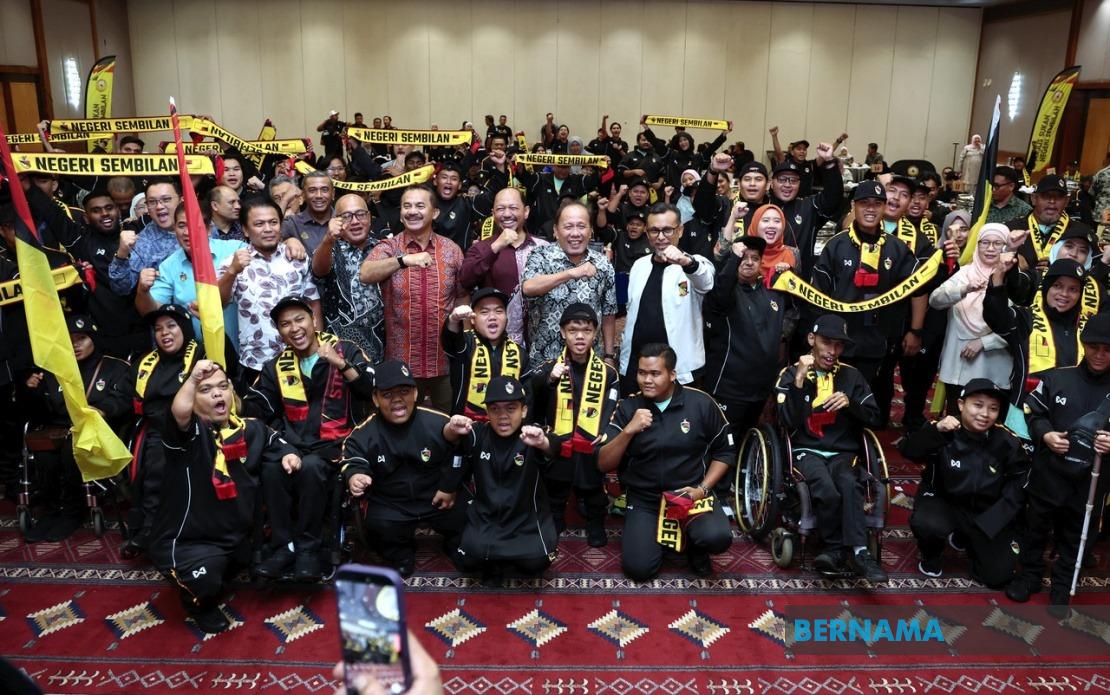
Negeri Sembilan has set an ambitious goal of capturing 12 gold medals as it prepares to field 80 para athletes at the 2026 Para Malaysia Games in Selangor, with competition commencing on September 5. The target reflects the state's determination to bounce back after experiencing a difficult campaign at the recently concluded SUKMA 2026, which ended earlier this week. Menteri Besar Datuk Ismail Lasim unveiled the medal target during a flag handover ceremony attended by state sports officials, emphasising that the figure represents more than just a numerical aspiration but rather embodies the collective dedication and preparation that has gone into the athletes' training regime.
The disappointment of the regular SUKMA 2026 has served as a catalyst for renewed focus on the para sports contingent. Negeri Sembilan's performance at the standard Games proved underwhelming, with competitors securing only seven gold medals from an overall haul of 48 medals. This contrasts sharply with the state's showing two years earlier at SUKMA 2024, when Negeri Sembilan athletes returned with 19 gold medals and a combined 56 medals across all categories. The disparity between these performances underscores the volatility that exists in competitive sports and the importance of maintaining consistent standards across different events and athlete populations.
For the Para SUKMA competition, state leadership has conveyed considerable optimism regarding the 12-gold-medal objective. Ismail Lasim stressed that para athletes possess an extraordinary competitive spirit capable of restoring confidence in Negeri Sembilan's sporting prowess through commendable performances in Selangor. The target has been carefully calibrated based on assessments of athlete readiness and previous tournament results. At the 2024 Para SUKMA Games held in Sarawak, Negeri Sembilan's para athletes demonstrated their capabilities by winning 14 gold medals alongside 19 silver and 20 bronze medals, establishing a benchmark that suggests the current 12-gold target represents a measured adjustment to anticipated competitive conditions.
The state administration has committed to supporting medal-winning athletes through a tangible incentive scheme, acknowledging the financial pressures that para athletes often face and reinforcing the government's investment in disability sports development. This approach recognises that para athletes frequently encounter additional costs related to specialised equipment, training facilities, and support services compared to their able-bodied counterparts. By introducing medal bonuses, Negeri Sembilan sends a clear message that para sporting achievement receives recognition and reward equivalent to achievements in mainstream competitions.
The 80-strong contingent represents a significant commitment of human and financial resources by the state. Preparation for Para SUKMA typically involves months of specialised coaching, training camps, and technical development, requiring coordinated effort from multiple agencies. The Negeri Sembilan Sports Council, working alongside the State Youth and Sports Development Action Committee, has overseen these preparations. Datuk Mustapha Nagoor, who chairs the youth and sports development action committee, and council director Marhizah Abdul Razak were present at the ceremony, symbolising the multi-level government coordination required to field a competitive contingent.
From a regional perspective, the Para SUKMA Games represent an important platform for showcasing disability sports talent within Malaysia and across Southeast Asia. The events provide para athletes with competitive experience, opportunities to set personal records, and visibility that can attract sponsorship and media attention. For states like Negeri Sembilan, performing well at Para SUKMA contributes to the broader national narrative around inclusive sports development and demonstrates commitment to harnessing talent regardless of physical ability. The Games also serve as selection events for potential national team representation at regional and international competitions.
The timing of the Para SUKMA Games immediately following the regular SUKMA competition creates unique challenges and opportunities for states. Athletes and coaching staff must rapidly transition focus from one competition to another, whilst managing physical and mental fatigue. However, the sequential scheduling also allows states to maintain competitive intensity and momentum. For Negeri Sembilan, having just completed SUKMA 2026, the para contingent enters Para SUKMA with fresh competitive rhythm, though the state's overall sporting infrastructure and morale will be influenced by the underwhelming regular Games performance.
The Selangor location for Para SUKMA 2026 holds strategic significance as the host state typically mobilises extensive resources for sporting infrastructure and logistics. As Malaysia's most economically developed state and administrative hub, Selangor's capacity to deliver world-class competition facilities and efficient organisation sets high standards for participating contingents. For Negeri Sembilan athletes, competing in well-resourced venues with strong crowd attendance can provide motivational benefits, though it also intensifies competitive pressure and expectations from other states fielding larger or traditionally stronger para sports programmes.
Achieving the 12-gold-medal target would represent meaningful progress in Negeri Sembilan's para sports trajectory and would partially offset the disappointment of SUKMA 2026. The goal appears realistic when measured against recent historical performance, though several variables including injury, illness, judging decisions, and unexpected performances from competing athletes will influence final outcomes. The state's leadership has positioned the target as achievable through dedicated preparation rather than aspirational, suggesting internal assessments indicate genuine medal-winning capacity across the para athlete roster.

