Negeri Sembilan's 16th state election, scheduled for August 1, is shaping up as a contest that reflects the evolving complexity of Malaysia's political landscape. The state election will pit some of the country's most prominent political figures against one another across 36 constituencies, featuring contest configurations that range from direct two-way races to unprecedented five-sided battles. This diversity of contest structures reveals fundamental shifts in how Malaysian voters are fragmenting their political allegiances and how opposition and splinter parties are increasingly challenging the traditional dominance of larger coalitions.
The most striking feature of this election is the dramatic reversal in the prevalence of straight fights. Only 11 of the 36 seats will see direct contests between two candidates, representing a stark decline from the 27 straight fights recorded in the previous 2023 state election. This erosion of bipolar contests underscores how the political terrain in Negeri Sembilan has become significantly more crowded and contested. The vacuum left by declining two-way races has been filled overwhelmingly by three-cornered contests, which have surged from just seven in 2023 to a projected 21 seats in the upcoming poll. This shift carries profound implications for campaign strategy, voter mobilization, and ultimately, the distribution of power in the state assembly.
The emergence of four-cornered and five-cornered contests represents an even more dramatic transformation. Two constituencies will feature four-way fights, while two others—Nilai and Sri Tanjung—will witness five-cornered contests, a phenomenon entirely absent from the previous state election. These multi-sided contests reflect the entry of smaller political parties and independent candidates into territories previously dominated by the Pakatan Harapan and Barisan Nasional duopoly. Bersatu, the Islamist Berjasa, the Socialist Party, and the Indigenous Party have all secured candidate placements in various constituencies, suggesting a deliberate strategy to test their electoral viability in a state where they previously had minimal representation.
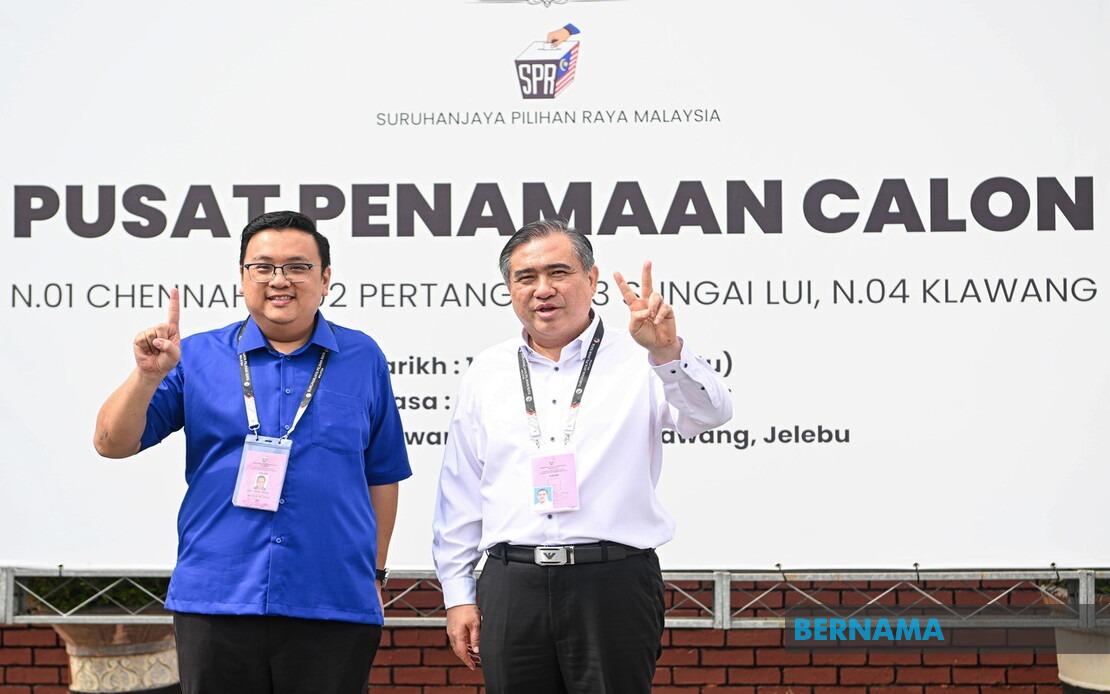
Among the remaining straight fights, several feature personalities of national significance whose outcomes could reverberate beyond Negeri Sembilan's borders. In Chennah, DAP secretary-general and Transport Minister Anthony Loke will represent Pakatan Harapan against Barisan Nasional's Siow Kong Choon. Similarly, the Rantau constituency will pit UMNO deputy president and Foreign Minister Datuk Seri Mohamad Hasan against PKR's Dr Azizul Hakim Mahdi. These direct contests suggest that despite the overall fragmentation trend, certain races remain strategically important enough for major parties to concentrate their resources and deploy their most recognizable figures.
The three-cornered contests reveal the complex dynamics unfolding within Negeri Sembilan's political alignment. In Linggi, Negeri Sembilan Menteri Besar Datuk Seri Aminuddin Harun of PKR will defend his seat against both a Barisan Nasional challenger and a Bersatu candidate, reflecting the sustained challenge posed by the Muhyiddin-led party to Pakatan Harapan's dominance in the state. The Pertang and Klawang seats similarly illustrate how Bersatu has positioned itself as a significant disruptive force, running candidates that could split votes across the political spectrum. This strategy appears designed to maximize Bersatu's bargaining position in post-election coalition negotiations, regardless of whether it achieves substantial seat gains.
The four-cornered contests in Jeram Padang and Rahang showcase the entry of even more marginal political actors into Negeri Sembilan's electoral arena. In Jeram Padang, incumbent Datuk Mohd Zaidy Abdul Kadir of Barisan Nasional faces challenges not only from Pakatan Harapan and Bersatu but also from the Parti Orang Asli Malaysia, suggesting emerging efforts to mobilize indigenous constituencies. The Rahang seat presents an equally crowded field, with the Socialist Party making an appearance alongside the more established parties. These developments indicate that Negeri Sembilan voters will have unprecedentedly diverse choices, though the fragmentation also raises questions about whether such proliferation serves voter interests or merely diffuses electoral coherence.
The two five-cornered contests in Nilai and Sri Tanjung represent the true frontier of Malaysia's ongoing political realignment. In Nilai, incumbent J. Arul Kumar of Pakatan Harapan will contend with opponents from Barisan Nasional, Bersatu, the Islamic fringe party Berjasa, and an independent candidate. Similarly, in Sri Tanjung, incumbent Datuk Dr G. Rajasekaran faces a lineup that includes both Barisan Nasional and Bersatu challengers, alongside competitors from the Socialist Party and two independent candidates. The presence of independent candidates in these contests suggests grassroots frustration with established parties and a willingness among some voters to explore alternatives outside traditional party structures.
This fragmentation phenomenon carries important implications for Malaysian electoral dynamics more broadly. In Peninsular Malaysia, where Negeri Sembilan serves as a microcosm of broader political realignment, the rise of multi-cornered contests signals that no single party or coalition can take electoral dominance for granted. For Barisan Nasional, the surge in three-cornered and multi-sided contests potentially dilutes its vote in constituencies where it might otherwise achieve victories through direct confrontation. Similarly, Pakatan Harapan faces the challenge of maintaining coalition discipline while addressing competition from splinter parties that claim to represent progressive or alternative perspectives. The data suggests that smaller parties view Negeri Sembilan as a testing ground for electoral viability ahead of future federal contests.
The Electoral Commission has determined that early voting will occur on July 28, with the main polling day set for August 1. The election will involve 889,490 registered voters across all categories, including 867,151 ordinary voters, 16,884 military personnel and their families, and 5,455 police officers. This voter base represents the electorate that will determine whether the anticipated fragmentation translates into actual seat distributions or whether voters ultimately consolidate behind traditional choices at the ballot box. The turnout and voting patterns in Negeri Sembilan will provide significant insights into whether Malaysia's voters are genuinely embracing political fragmentation or whether they will ultimately revert to bipolar contestation.
The structural changes evident in Negeri Sembilan's electoral configuration reflect broader trends reshaping Malaysian politics following the 2022 federal elections and subsequent political realignments. The rise of Bersatu as a disruptive force, the consolidation of opposition within Pakatan Harapan, and the emergence of micro-parties and independent candidates all suggest that Malaysia's voters are increasingly willing to experiment with political alternatives. For observers tracking Southeast Asian electoral trends, Negeri Sembilan offers a revealing case study of how established party systems respond to voter fragmentation and how smaller political actors leverage electoral contests to build organizational presence and policy influence. The August 1 election will ultimately determine whether Negeri Sembilan's political landscape continues to mirror these broader fragmentation patterns or whether voters will reverse course toward simpler, more predictable two-coalition contests.

