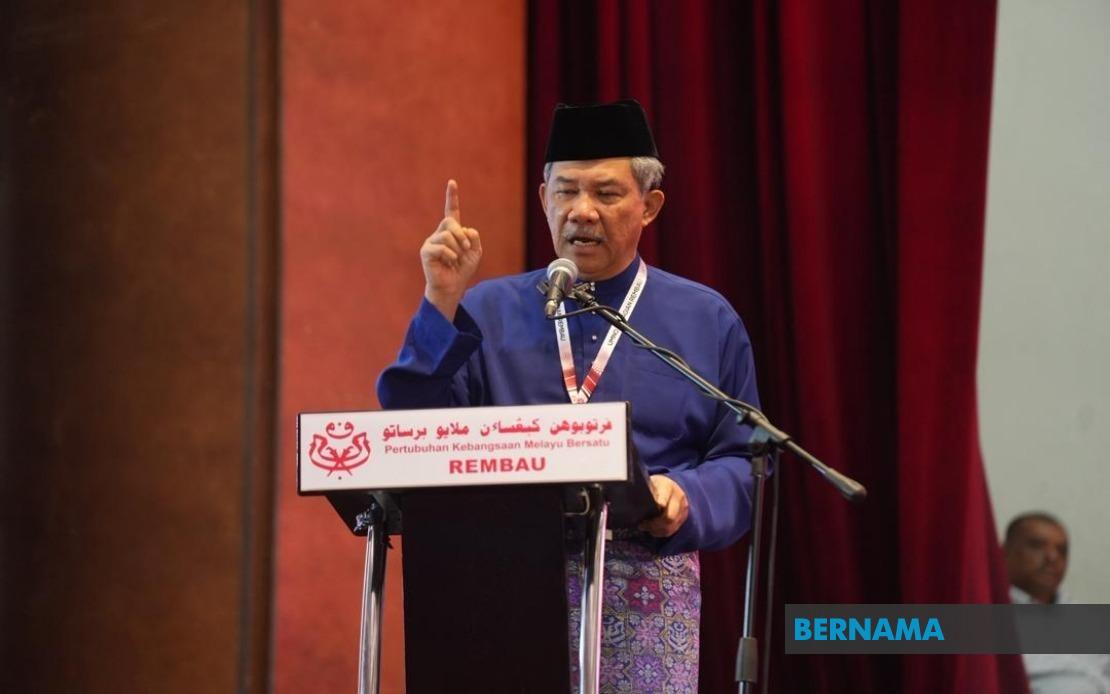
Barisan Nasional Deputy Chairman Datuk Seri Mohamad Hasan has voiced optimism regarding the readiness of 10 freshly appointed members to the Negeri Sembilan State Executive Council, asserting they possess the necessary competence to render effective assistance to the state's chief executive and discharge their assigned responsibilities with distinction. Mohamad, who represents the Rantau constituency, delivered these remarks in Seremban on August 7, shortly after the newly sworn-in officials completed their oath-taking ceremony before the Yang Dipertuan Besar of Negeri Sembilan, Tuanku Muhriz Tuanku Munawir, at Istana Besar Seri Menanti.
The elevation of these officials carries particular significance for Negeri Sembilan's administrative apparatus, as the state navigates the challenges of governance in an increasingly complex political environment. The composition and capability of a state's executive council directly influences the effectiveness of policy implementation and public service delivery. Mohamad's public endorsement appears designed to reassure both the state legislature and the broader public that the newly constituted council has been carefully selected to handle the multifaceted demands of contemporary governance.
Central to Mohamad's characterisation of the exco's role is the concept of intermediation—the notion that council members function as crucial conduits between the machinery of government and the communities they serve. He elaborated that this bridging function operates bidirectionally, requiring exco members to communicate government initiatives to citizens while simultaneously channelling grassroots concerns, observations, and recommendations back into the policymaking apparatus. This two-way communication mechanism, if executed effectively, could mitigate the disconnect that frequently emerges between administrative decisions taken at state level and their reception at community level.
Mohamad emphasised that transparent and comprehensive explanation of government policies represents a core responsibility for each exco member. In the Malaysian context, where public perception of governance frequently hinges on effective communication, this emphasis carries practical importance. State governments across Southeast Asia increasingly recognise that even well-designed policies may falter if citizens lack adequate understanding of their rationale, mechanics, or benefits. For Negeri Sembilan specifically, this communication imperative becomes particularly acute given the state's geographic and demographic diversity, with both urban centres and rural constituencies requiring tailored approaches to policy explanation.
Equally significant is the information-gathering dimension that Mohamad outlined. He stressed that exco members bear responsibility for systematically accumulating community-level data encompassing grievances, difficulties, creative proposals, and collective perspectives. This intelligence-gathering function, when institutionalised properly, could inform evidence-based adjustments to state administration and enhance targeted interventions addressing specific regional needs. Such systematic collection of public input also provides a mechanism through which elected representatives can demonstrate responsiveness to constituents, potentially strengthening public confidence in state institutions.
Mohamad highlighted another procedural necessity: the importance of exco members receiving comprehensive briefings from the government departments and agencies operating under their respective portfolio areas. This preparation is fundamental to ensuring that council members grasp both the technical operations and strategic objectives of their assigned domains. In practice, Malaysian state administrations have sometimes encountered difficulties when newly appointed officials lack sufficient familiarisation with departmental frameworks before assuming their positions, potentially leading to execution delays or policy misalignment.
Maintaining robust working relationships between exco members and government departments emerged as another key element in Mohamad's assessment. The smooth translation of policy from conception into implementation fundamentally depends on constructive collaboration between political appointees and permanent administrative staff. In Malaysian governance structures, tensions occasionally arise when these relationships become strained, leading to bureaucratic friction that impedes service delivery. Mohamad's emphasis on relationship maintenance suggests awareness of this institutional vulnerability.
The August 7 oath-taking ceremony itself represents a formal and ceremonial milestone in Negeri Sembilan's political calendar. The requirement that exco members take their oaths before the Yang Dipertuan Besar underscores the constitutional framework within which state governance operates and reinforces the principle that executive authority ultimately derives from constitutional sources rather than purely from partisan political arrangements. This ceremonial dimension, while sometimes viewed as procedural formality, carries symbolic weight in affirming institutional legitimacy.
Beyond the substantive matters concerning the newly constituted exco, Mohamad also addressed the potential for state elections in Melaka. He clarified that responsibility for initiating such elections rests with the Melaka Chief Minister, whose prerogative it is to petition the state's constitutional head for dissolution of the legislative assembly. This distinction between different states' political trajectories reflects the federalised nature of Malaysian governance, where individual states retain considerable autonomy over election timing within constitutional bounds. The Melaka situation, while distinct from Negeri Sembilan's current circumstances, illustrates the dynamic and occasionally unpredictable character of Malaysian state-level politics.

