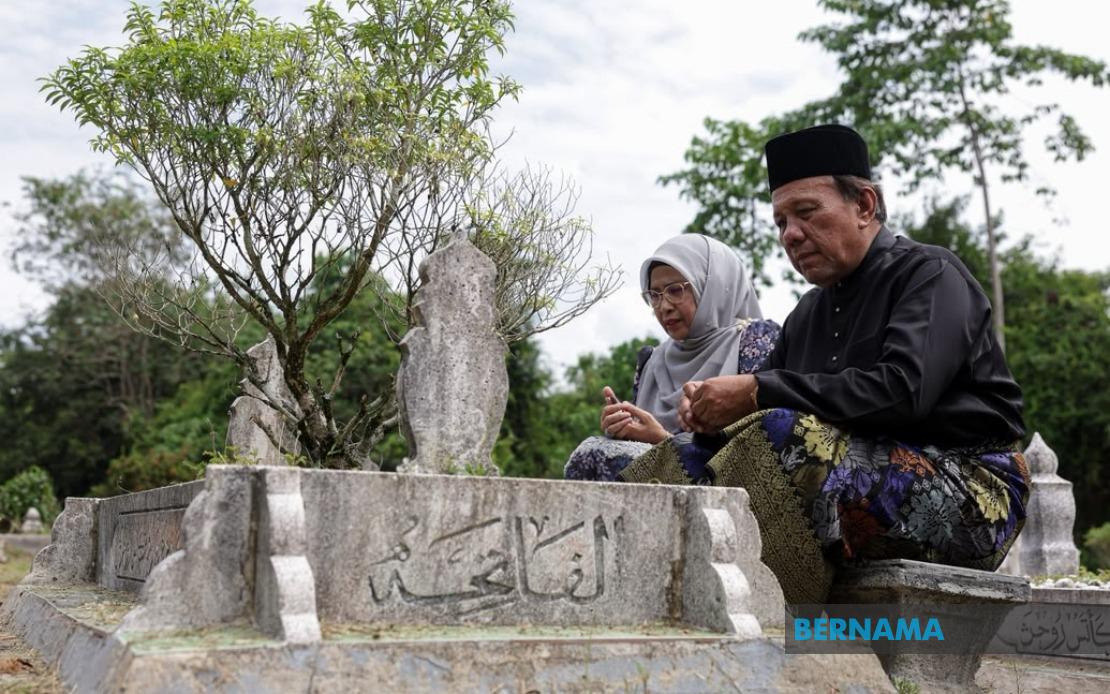
Datuk Ismail Lasim wasted little time honouring his family after assuming the highest executive position in Negeri Sembilan. On the same day he took the oath as Menteri Besar before Tuanku Muhriz Tuanku Munawir at Istana Besar Seri Menanti, the newly elected leader travelled to Kuala Pilah accompanied by his wife Datin Noraishah Othman to visit the graves of his late parents at the Tebing Tinggi Muslim cemetery. The gesture reflected a personal moment of reflection and gratitude at a significant turning point in his political career.
Ismail's swift pilgrimage to the cemetery underscored the cultural and spiritual importance many Malaysian leaders place on family acknowledgement during major life transitions. His parents, the late Lasim Yaman and the late Bedah Othman, have since passed on, with his father dying on March 5, 2020, at the advanced age of 97, and his mother preceding him in death on September 16, 2014. The visit suggested that despite the demands of his new office, family remains central to Ismail's personal values and leadership philosophy.
Ismail's elevation to the Menteri Besar position followed his successful contest of the Juasseh state seat in yesterday's 16th Negeri Sembilan state election. His electoral victory contributed to a broader regional outcome that reshaped the state's political landscape through the combined strength of two major coalitions. The election results delivered a decisive mandate that would determine governance priorities for the coming term.
Barisan Nasional's strong performance in the election secured 18 of the 36 state assembly seats, while their coalition partner Perikatan Nasional captured seven seats. This combined total of 25 seats provided the two-coalition partnership with a commanding two-thirds majority in the state assembly, a threshold that grants considerable legislative power and stability to the incoming administration. The supermajority position would enable the government to pursue its agenda without fear of disruption and to initiate constitutional changes if deemed necessary.
The configuration of political forces in Negeri Sembilan reflects broader patterns emerging across Malaysian states following recent electoral cycles. The alignment between Barisan Nasional and Perikatan Nasional demonstrates how coalitional politics has evolved beyond traditional bipolar competition, with multiple blocs competing and potentially cooperating based on electoral outcomes. For Negeri Sembilan, this arrangement suggests a period of relative political stability as both partners navigate shared governance responsibilities.
Ismail's appointment as Menteri Besar represents continuity in the leadership structure of the state while also marking a significant personal achievement. His background and electoral mandate from Juasseh constituents provided the foundation for his elevation to the top executive post. The state assembly's composition, with the coalition's two-thirds majority, means he will have substantial flexibility in forming his cabinet and setting policy directions without constant worry about legislative challenges to his authority.
The timing of his cemetery visit on his inauguration day carries symbolic weight within Malaysian cultural and Islamic traditions. Many Malaysians view such acts of filial piety as expressions of gratitude to those who shaped one's character and values, and Ismail's immediate decision to visit his parents' resting places demonstrated the personal dimension of his leadership transition. This aspect of his conduct may resonate with voters and constituents who value family-oriented values in their leaders.
Negeri Sembilan's political development under this new administration will likely reflect the priorities and personality of Ismail's leadership. With solid parliamentary support from the coalitional arrangement, the state government can focus on implementation of policies rather than engaging in constant political manoeuvring. The two-thirds majority provides particular significance for initiatives requiring constitutional changes at the state level, should the government deem such measures necessary during its tenure.
The state election outcome also signals how Malaysian voters in Negeri Sembilan view current political trajectories and governance performance. By delivering the coalitional partnership a commanding majority, voters expressed confidence in the Barisan Nasional and Perikatan Nasional platforms and candidates. Understanding this mandate will be critical for Ismail as he shapes his administration's policy agenda and cabinet selections in coming days.
Looking ahead, Ismail's leadership will be tested by state-level challenges ranging from economic development and infrastructure to education and social services. The strong mandate provides opportunity but also demands for visible progress and responsive governance. His initial gesture of visiting his parents' graves suggested a leader conscious of deeper values guiding his public responsibilities.
For the broader Malaysian political context, Negeri Sembilan's election outcome and governance formation contribute another data point in understanding how coalitions are restructuring Malaysian politics at the state level. The comfortable two-thirds majority means Ismail's administration can govern with focus on delivery rather than constant political survival concerns, potentially allowing for longer-term strategic planning in the state.

