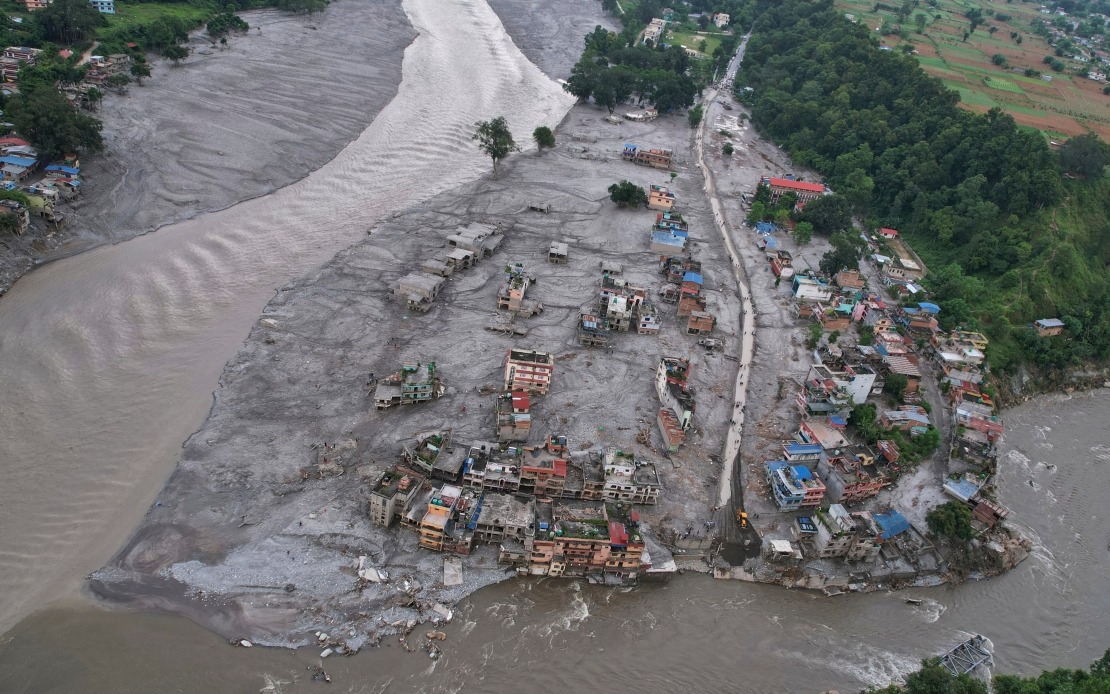
Nepal is proceeding cautiously in its response to catastrophic flooding that swept through its central and northern districts, signalling it will evaluate the full scope of the disaster before committing to additional international search and rescue support beyond that already accepted from four countries. The decision reflects the overwhelming scale of the emergency unfolding across the Himalayan nation, where Wednesday's deluge along the Bhote Koshi and Trishuli rivers has created a complex humanitarian crisis stretching resources and coordination capacity.
Currently, Nepal is receiving search and rescue assistance from Australia, China, India and South Korea — all nations with substantial personnel engaged in hydropower projects affected by the flooding. The selectivity of these partnerships underscores a strategic approach by Kathmandu to leverage existing on-the-ground presence and bilateral ties during this critical phase. According to Mohd Firdaus Azman, charge d'affaires at the Malaysian Embassy in Kathmandu, Nepalese authorities have explicitly communicated that they will first conduct a comprehensive assessment of requirements before opening doors to additional SAR missions from other countries.
Malaysia stands among the roster of nations offering disaster relief, with Prime Minister Datuk Seri Anwar Ibrahim confirming that Kuala Lumpur is actively coordinating aid delivery to Nepal. This coordination encompasses not merely material assistance but potentially the deployment of the Malaysian Special Search and Rescue Team, a highly trained unit with expertise in complex rescue operations. The offer reflects Malaysia's established role in regional humanitarian response and its capacity to contribute meaningfully to large-scale emergencies.
The scale of the immediate crisis illustrates why Nepal's cautious approach to additional international involvement carries practical logic. Over 900 workers remain trapped at 11 hydropower facilities, many situated in underground powerhouses and tunnels where rescue operations demand specialised equipment and expertise. These workers, predominantly from Nepal but including significant numbers of foreign nationals, represent a concentrated population requiring immediate intervention. The geographic isolation and engineering complexity of hydropower sites present formidable obstacles to conventional rescue methodology.
Casualty figures convey the disaster's magnitude: at least 633 confirmed deaths across Nepal and China as of Saturday, with nearly 3,000 people reported missing. Among the missing are hundreds of foreign nationals, creating additional coordination challenges as multiple countries mobilise diplomatic and consular resources. This casualty toll places the flooding among the region's most significant natural disasters in recent years, comparable in destructiveness to major earthquakes and other geophysical events that periodically devastate South Asian nations.
Malaysia's involvement takes on particular importance given the country's substantial diaspora in Nepal and the broader Southeast Asian stake in regional stability. The Malaysian Foreign Ministry reported that 55 Malaysians in Nepal remained uncontactable as of Saturday evening, alongside 36 Malaysians in China. These figures underscore the interconnectedness of the region's economies and labour markets, where Malaysian workers and professionals operate across South Asia in diverse sectors ranging from hydropower to hospitality and services industries.
Nepal's decision to sequence its acceptance of international assistance reflects the evolving nature of modern humanitarian coordination. Rather than accepting all offers indiscriminately, which would create logistical confusion and resource duplication, Kathmandu is employing a phased approach that prioritises effectiveness. This methodology has become standard practice among nations experiencing mass-casualty disasters, as coordinating authorities recognise that unmanaged international response can hinder rather than facilitate rescue operations.
The four nations already contributing SAR capabilities possess institutional advantages in the Nepalese context. Their citizens working at hydropower sites provide immediate personnel with knowledge of facility layouts and working conditions, facilitating more targeted rescue efforts. Furthermore, Australia, China, India and South Korea maintain established diplomatic and military-to-military relationships that enable rapid deployment authorisation and operational coordination without the preliminary relationship-building required for partners with less developed institutional ties.
From a Southeast Asian perspective, the Nepalese crisis underscores vulnerability patterns affecting the region's mountain nations and territories. As climate patterns shift and extreme weather events increase in frequency and intensity, the capacity of smaller nations to respond unilaterally becomes progressively strained. The flooding demonstrates how disasters transcend borders, affecting foreign nationals and creating ripple effects across regional labour markets and diplomatic relationships. Malaysia's positioning as an active responder rather than a passive observer reflects broader regional understanding that collective resilience requires proactive engagement during emergencies affecting neighbouring countries.
The humanitarian dimensions extend beyond immediate rescue operations into longer-term recovery and reconstruction. Once Nepal completes its situational assessment and determines capacity constraints, additional international assistance may prove invaluable in managing displaced populations, addressing public health concerns, and rebuilding damaged infrastructure. Malaysia's offer of assistance therefore represents a commitment potentially extending well beyond the initial crisis phase into sustained partnership during recovery efforts.
For Malaysian observers and policymakers, the unfolding situation reinforces the importance of maintaining disaster preparedness capabilities and sustaining regional cooperation frameworks. The Malaysian Special Search and Rescue Team's expertise, developed through experience in domestic emergencies and international deployments, represents an asset valuable not only to Nepal but to the broader Southeast Asian community. How Nepal ultimately structures its acceptance of additional assistance may establish useful precedents for future regional disasters, potentially informing protocols that other countries adopt when coordinating international humanitarian response.

