Nepal's capital city has become a place of profound grief and uncertainty following a devastating flash flood that struck the country's northern border region on August 26. The calamity has claimed more than 500 lives, with hundreds more unaccounted for and rescue operations stretching across the Bhotekoshi river system and its downstream tributaries. The true human cost of the disaster continues to mount as search teams recover bodies and families conduct agonising searches through hospitals, morgues, and makeshift identification posts throughout Kathmandu.
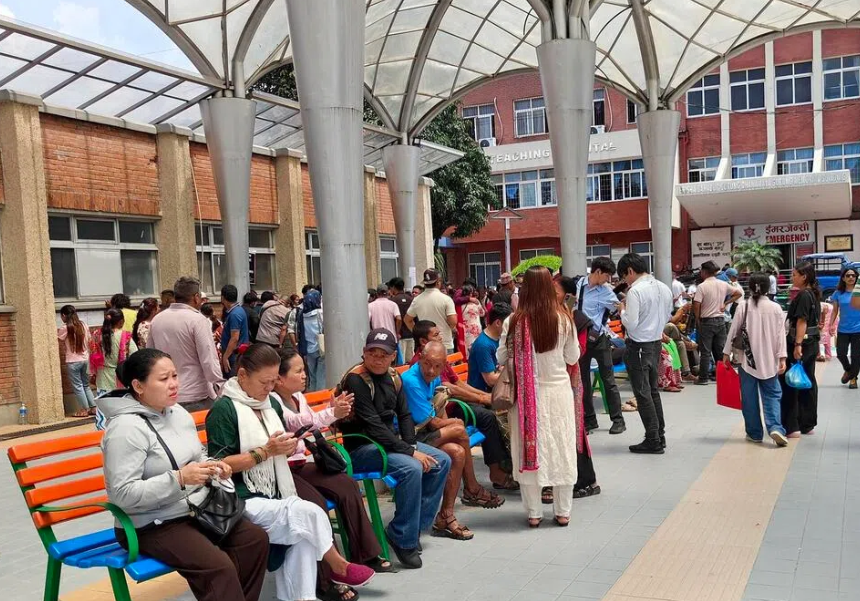
The most haunting symbol of the tragedy has emerged at the gates of Tribhuvan University Teaching Hospital (TUTH), one of Kathmandu's two major public health facilities. A wall displaying photographs of unidentified deceased bodies serves as a grim gathering point for hundreds of family members desperately seeking any trace of their missing relatives. The images, disturbing as they are, represent the only hope many families have of learning the fate of those who vanished when the floodwaters swept through Nepal's border districts. By August 28, the list of those reported missing had grown to more than 1,500 individuals, a number that continues to expand as more people fail to make contact with their families.
Among those conducting the heartbreaking search is 36-year-old Dolma Tamang, who has spent three consecutive days moving between hospitals in Kathmandu searching for her sister and brother-in-law. The couple was travelling through Rasuwa district on a truck transporting goods from the Chinese border when the catastrophic flood struck on the morning of August 26. Their mobile phones have remained inaccessible since that fateful morning, leaving Tamang with no word on their condition or location. The emotional toll of the search has been overwhelming, as she methodically examines photographs and hospital records in pursuit of any scrap of information. "It has been very difficult; my tears have run dry," she shared with observers, capturing the profound exhaustion and despair felt by thousands of relatives engaged in similar quests.
The disaster has also claimed the lives or left unaccounted for numerous foreign nationals, underscoring the international dimensions of the tragedy. Nine citizens of Singapore have been reported missing, whilst approximately 288 Indian nationals remain unaccounted for. A group of Indian pilgrims from Tamil Nadu arrived in Kathmandu on August 28 after learning that members of their travel party, who were returning from the sacred Kailash-Mansarovar pilgrimage, had gone missing near the severely damaged Gyirong border crossing between Nepal and Tibet. The pilgrimage route passes through Rasuwa district, which bore the brunt of the flood's destructive force. The Nepal Tourism Board confirmed that whilst 121 foreign tourists had been rescued as of August 28, including 85 Indians and 16 Chinese nationals, many others remained untraced.
The scale of the search and rescue operation reflects the magnitude of the disaster. More than 4,400 police personnel have been deployed across affected areas, complemented by personnel from the Nepali Army and Armed Police Force. Search teams have located survivors trapped under debris, trapped in tunnels, and buried beneath the rubble of destroyed structures. The government maintains a website where names of those rescued are continuously updated, providing desperate families with a thread of hope. However, the sheer number of missing persons and the challenging terrain have meant that recovery efforts proceed slower than many would wish, with rescue teams often working against deteriorating conditions and environmental hazards.
On the morning of August 28, rescue operations were temporarily suspended due to concerns that a barrier lake—formed by debris damming the river—could rupture and unleash another devastating flood. This potential secondary disaster added another layer of anxiety to an already terrifying situation. By evening, officials determined there was no immediate danger from the barrier lake, and rescue operations resumed, though the broader situation remained precarious and unpredictable. The possibility of additional flooding has forced authorities and search teams to remain vigilant whilst balancing the urgency of finding survivors and recovering bodies.
The capacity of medical facilities has become a critical constraint as the recovery effort progresses. Hospitals throughout the affected districts have begun running out of space in their morgues, unable to accommodate the rapidly accumulating number of deceased bodies. In Chitwan district, which lies downstream from the epicentre of the flood and extends toward the Indian border, 186 bodies had been recovered by August 28 afternoon. Yet the district's hospitals could collectively accommodate only thirty to fifty bodies in their existing morgue facilities, creating an unprecedented logistical crisis. Chitwan, ordinarily known for its national park and wildlife, has been devastated with roads choked by debris and silt, transforming the landscape into an obstacle course for relief operations.
The international community has responded with humanitarian assistance and offers of support. India dispatched forty-seven tonnes of aid via military transport aircraft, including temporary shelters, blankets, hygiene kits, solar lamps, medicines, and food packets. New Delhi has additionally offered prefabricated truss bridges to replace the dozens of small and large bridges destroyed by the flooding. However, Nepal's Prime Minister Balen Shah has declined offers from China, India, and other nations to deploy foreign search and rescue teams. This decision reflects lessons learned from Nepal's experience following the devastating 2015 earthquake, when the presence of multiple international rescue teams created coordination complications and operational inefficiencies. Instead, the Nepali government has requested financial assistance channelled through a single unified mechanism, with the intention to seek international support for reconstruction and rehabilitation efforts through established agencies and governmental channels.
The personal stories of those searching for missing family members reveal the emotional landscape of the disaster. Thirty-five-year-old Bikesh Shrestha came to TUTH seeking information about his cousin Rakesh Shrestha but found himself unable to confront the photographs of unidentified bodies. "I had to turn my eyes away," he recounted, struggling to maintain composure whilst simultaneously hoping against hope for his cousin's unlikely survival. Similarly, twenty-three-year-old Sushila Shrestha searches for her twenty-one-year-old brother Bir Bahadur Shrestha, a driver who was transporting goods toward the Chinese border when the flood struck Rasuwa district. Despite the absence of any news regarding his whereabouts, Sushila clings to the conviction that silence might indicate survival rather than tragedy. "I am convinced he will return; he has to return," she stated with determination that masks profound uncertainty.
The tragedy has prompted international family members to converge on Kathmandu in search of their loved ones. Relatives from India and the United Kingdom have begun arriving by air to join the desperate search efforts. A man from Coimbatore travelled from New Delhi on August 28 to support his friend already in Kathmandu, who was searching for his wife and son. Upon arrival, he offered stoic encouragement to his friend, acknowledging the uncertainty ahead. The Gyirong border crossing, where many of these missing pilgrims were located, suffered severe damage from mudslides and floodwaters, with viral footage reflecting the horrifying magnitude of the natural disaster.
As the recovery operation continues, Nepal faces the challenge of managing not only the immediate humanitarian crisis but also the longer-term reconstruction needs. The flood has destroyed critical infrastructure, displaced thousands, and strained medical and administrative systems beyond their normal capacity. International observers note that the effectiveness of the response will depend substantially on whether Nepal can maintain coordinated operations whilst managing international assistance, processing the mounting identification challenges, and beginning the psychological and physical reconstruction that will inevitably follow. The hospital walls displaying photographs of the unidentified dead will remain a haunting reminder of the tragedy until each victim is identified and laid to rest, providing grieving families with the closure they desperately seek.

