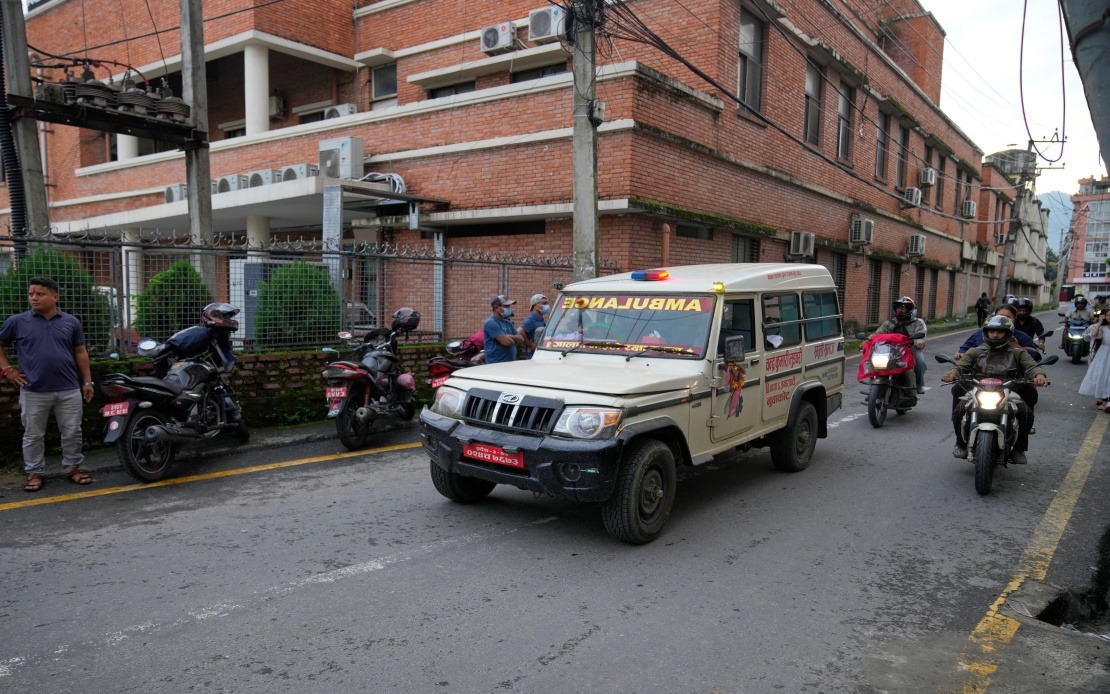
A major humanitarian crisis is unfolding across Nepal following Wednesday's catastrophic flooding that authorities now estimate has killed approximately 550 people. The disaster was triggered by the sudden collapse of a Himalayan glacier, which unleashed torrential flooding through the Bhote Koshi and Trishuli river valleys. By Friday evening, rescue teams had successfully extracted 121 foreign nationals from the affected regions, though hundreds of people remain unaccounted for and the full scope of the tragedy continues to emerge as search operations intensify.
The rescued foreigners represent a diverse cross-section of international travellers and workers caught in the path of the flooding. Indian nationals accounted for the largest group among those saved, numbering 85 individuals, followed by 16 Chinese citizens and nine South Koreans. Smaller contingents included two Americans, two Russians, and two Italians, with single rescues recorded for travellers from Belgium, Bulgaria, Portugal, Spain, and Switzerland. This geographic spread underscores how the disaster affected multiple international communities, many of whom were engaged in tourism activities or working on regional infrastructure projects when the flooding struck.
Among the rescued Indians were 63 workers employed on the Trishuli hydropower project, who were accounted for as safe, plus an additional 21 individuals who have been transported back to India. However, Indian Ministry of External Affairs spokesman Randhir Jaiswal revealed that contact with 320 Indian nationals has been lost, raising concerns about the potential death toll among Indian citizens. The situation is complicated further by the presence of approximately 100 people holding Indian passports but travelling under other nationalities, many of whom were believed to be undertaking the Kailash Mansarovar pilgrimage in China's Xizang region at the time of the disaster. Indian authorities reported that around 400 Indian nationals within the Chinese region have been confirmed safe, yet uncertainty persists regarding those unaccounted for.
Nepalese authorities are grappling with overwhelming logistical challenges in managing the aftermath of the disaster. The search and rescue effort extends across multiple downstream areas as teams continue hunting for both survivors and bodies. Hospital facilities in the heavily affected Chitwan and Pokhara regions have become severely strained, with capacity limitations forcing authorities to struggle in identifying victims and securing appropriate storage facilities for recovered remains. The scale of the crisis has stretched Nepal's emergency response infrastructure to its limits, creating an urgent need for external support and coordination.
Recognising the severity of the emergency, Nepal Prime Minister Balendra Shah convened a Cabinet meeting on Friday to assess the situation and coordinate the government's response. In a symbolic gesture of national solidarity, Shah and his Cabinet colleagues pledged to contribute one month's salary each to the Prime Minister's Natural Disaster Relief Fund, directing these resources toward supporting ongoing flood-relief and recovery operations. This decision reflects both the gravity of the crisis and the Nepalese government's commitment to mobilising domestic resources for affected communities.
Regional neighbours have responded swiftly to Nepal's plight with concrete assistance. India has already dispatched two consignments of humanitarian aid totalling 47.5 tonnes, with a third relief flight scheduled to depart on Friday carrying additional supplies and equipment. Pakistan's Prime Minister Shehbaz Sharif also contacted his Nepalese counterpart to express solidarity and inform him of emergency relief assistance being prepared for dispatch to Nepal. These coordinated efforts from neighbouring nations demonstrate the region's collective recognition of the disaster's severity and the imperative for rapid cross-border cooperation.
The disaster has claimed victims not only in Nepal but also across the border in China, where the downstream impacts of the flooding have affected communities in Xizang. This transnational dimension of the tragedy underscores the shared vulnerability of Himalayan populations to glacial hazards and the importance of regional coordination in disaster management and response. The collapse of the glacier represents a dramatic manifestation of environmental stresses in the region, with implications for both immediate humanitarian concerns and longer-term climate adaptation strategies.
For Malaysian and Southeast Asian observers, this disaster carries important lessons regarding disaster preparedness and regional cooperation frameworks. Nepal's experience demonstrates how rapidly geological events can overwhelm national capacities and create international rescue scenarios. The involvement of citizens from multiple nations requiring diplomatic coordination for information sharing and repatriation highlights the complexity of contemporary humanitarian crises. Southeast Asian nations, which face comparable risks from flooding, landslides, and other natural hazards, may draw insights from how Nepal's government and regional partners are mobilising response mechanisms during this critical period.
The ongoing search and rescue operations will likely continue for several days as authorities work to locate survivors in remote downstream areas and recover the remains of those deceased. The full scale of the disaster will only become clear once rescue teams have thoroughly searched all affected regions and identified missing persons. For now, the focus remains on saving lives, providing immediate humanitarian relief, and beginning the long process of recovery and reconstruction that will define Nepal's path forward in the weeks and months ahead.

