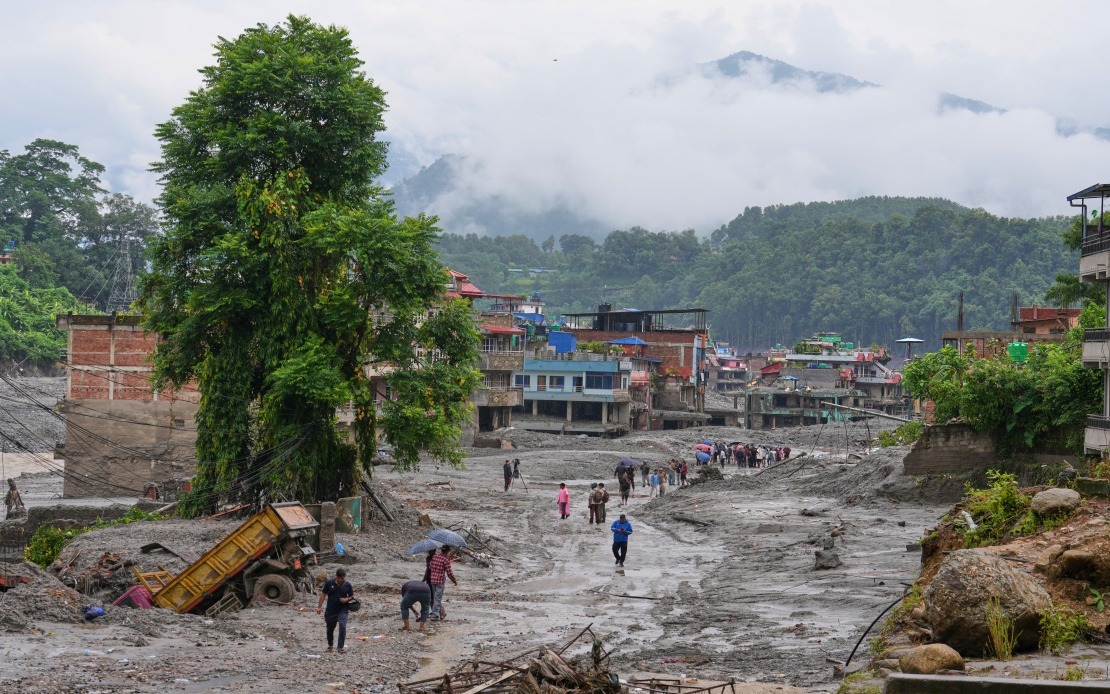
Nepal faces an escalating humanitarian crisis following devastating mudslides that have claimed at least 675 lives, according to the National Disaster Risk Reduction and Management Authority. As of Saturday evening, rescue operations continued across multiple districts, though the scale of the catastrophe remains difficult to fully grasp as nearly 2,500 individuals remain unaccounted for amid the mountainous terrain.
The disaster has drawn international attention partly because of the significant number of foreign tourists caught in the affected areas. Nepal's Department of Tourism reported that 753 tourists had lost contact as of Saturday afternoon, comprising 589 foreign nationals and 164 others. This aspect underscores how natural disasters in the Himalayan nation can rapidly assume regional and global significance, disrupting travel routes and stranding visitors exploring popular trekking destinations and tourist circuits.
Three districts—Rasuwa, Nuwakot, and Dhading—have emerged as the epicenter of the devastation. These regions, situated in central Nepal, are mountainous and characterized by challenging terrain that complicates rescue and recovery efforts. The districts' remoteness and steep topography mean that search teams face logistical nightmares, with many affected villages potentially isolated from main thoroughfares by landslides and debris.
The Kathmandu District Administrative Office has pivoted toward mobilizing community resources, issuing an urgent appeal for relief supplies from various organizations, institutions, businesses, and private citizens. This grassroots approach reflects the reality that formal state capacity alone cannot address the scale of need. The distribution network targets the hardest-hit areas, attempting to channel assistance to survivors in Rasuwa, Nuwakot, and Dhading with speed.
For Malaysian observers, this tragedy carries particular resonance. The monsoon patterns that trigger such mudslides in Nepal share meteorological similarities with those affecting Southeast Asia. Malaysia has experienced its own devastating landslides in recent years, notably the Highland Towers incident of decades past and periodic incidents in Selangor and other areas. Understanding Nepal's response mechanisms and the vulnerabilities exposed by such disasters offers valuable lessons for infrastructure planning and disaster preparedness across the region.
The involvement of substantial numbers of tourists also highlights risks within regional tourism infrastructure. Many Southeast Asian nations similarly depend heavily on trekking expeditions and mountain tourism, attracting international visitors to challenging terrain. The mudslide crisis reminds stakeholders that weather forecasting systems, early warning protocols, and evacuation procedures require constant refinement, particularly during monsoon seasons when precipitation intensifies.
Nepal's vulnerability to such disasters stems from multiple compounding factors. Rapid urbanization, deforestation, and climate variability have altered natural water drainage patterns in many mountain regions. Additionally, construction in marginal areas and inadequate building codes in some districts increase susceptibility to catastrophic failures when heavy rains arrive. These structural vulnerabilities mirror challenges confronting other South and Southeast Asian nations grappling with rapid development alongside environmental degradation.
The missing persons figure of 2,498 suggests that recovery operations will extend for weeks or months. In mountainous terrain, locating bodies becomes exponentially more difficult as debris spreads across vast areas and recovery teams navigate treacherous conditions. The psychological toll on families and communities awaiting news of loved ones cannot be overstated, particularly for tourist families monitoring developments from abroad.
Coordination between Nepal's disaster authority, tourism department, and local administrative offices demonstrates an institutional response framework, though questions inevitably arise about preparedness measures undertaken before the event. Whether weather alerts were disseminated adequately to guides and tourists, whether evacuation procedures existed beforehand, and whether structural mitigation investments preceded the disaster will likely feature in post-crisis analyses.
The regional context matters considerably. Nepal's tourism sector depends substantially on international visitors, particularly trekkers exploring routes to the Everest region and other high-altitude destinations. A prolonged crisis affecting tourist flows could have economic ramifications extending beyond immediate humanitarian concerns. Insurance claims, tour operator liability assessments, and insurance industry responses will unfold as the situation clarifies.
For Malaysia and other ASEAN nations, this event reinforces imperatives for strengthening cross-border disaster response coordination. While Nepal primarily coordinates with Indian authorities given geographic proximity, international mechanisms for sharing expertise, resources, and recovery protocols prove invaluable. Regional meteorological services benefit from shared data when understanding monsoon behavior and precipitation predictions.
The immediate priority remains finding missing persons and supporting survivors. However, the broader implications for infrastructure resilience, urban planning standards, and environmental protection across the Himalayan region and Southeast Asia deserve sustained attention. How Nepal responds to this tragedy—whether through improved building codes, reforestation initiatives, better early warning systems, or tourism safety protocols—will influence how neighboring countries approach their own vulnerability reduction strategies.

