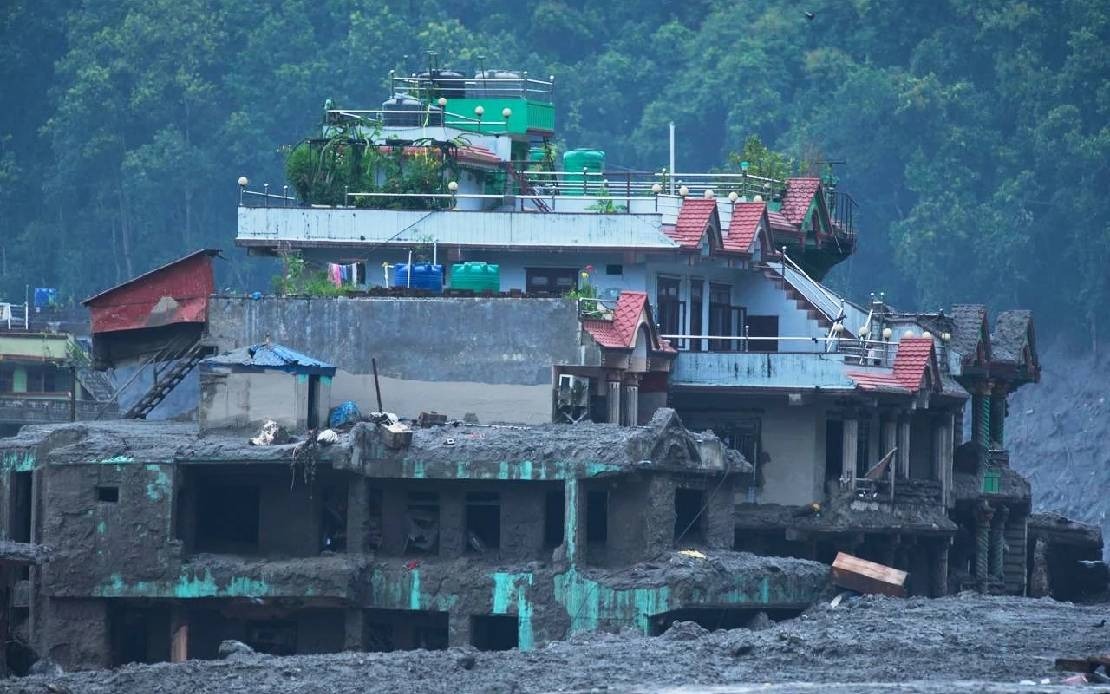
Nepal has turned to the international community for emergency technical support and substantial financial reconstruction aid in the aftermath of a catastrophic flood triggered by glacier collapse along its border with Tibet. The disaster, which struck on Wednesday, has claimed at least 626 lives in Nepal and seven in China's Tibet region, with nearly 3,000 people still unaccounted for across both countries. The impoverished Himalayan nation of 30 million people is grappling with unprecedented destruction that authorities estimate will require between US$4 billion and US$5 billion to rebuild, according to Finance Minister Swarnim Wagle.
The disaster unfolded when a glacier collapse released a massive torrent of rock, ice, mud and debris that cascaded through mountain river systems with devastating force. The deluge obliterated infrastructure in its path, destroying buildings, bridges and power generation facilities across the affected regions. The scale of the destruction reflects the raw power of such natural phenomena in the fragile Himalayan ecosystem, where climate change and environmental degradation are increasingly destabilizing high-altitude ice and rock formations. Rescue operations, which began immediately after the catastrophe, faced mounting challenges as the complex terrain and harsh mountain weather hampered accessibility to affected areas.
Search and rescue activities were suspended on Saturday due to deteriorating weather conditions, with heavy rain and dense fog preventing helicopter operations and ground-based rescue teams from accessing remote locations. Narendra Pariyar, the district administrator for the severely impacted Rasuwa district, explained that authorities were forced to pivot towards arranging land transport to evacuate rescued survivors to Kathmandu, the capital. This logistical shift underscores the operational constraints facing disaster responders in mountainous terrain, where alternative supply routes must be established when primary transportation corridors are destroyed. The suspension marked the second halt in rescue efforts, with operations having been briefly interrupted on Friday when an emergency lake formed across the Nepal-China border began threatening to overflow into Nepal's river systems.
The missing persons crisis presents another dimension of the disaster's complexity. Approximately 2,426 people remain unaccounted for in Nepal, while Chinese authorities report at least 554 missing in Tibet's Gyirong County, including roughly 540 foreign nationals—many of whom were Hindu pilgrims from India undertaking religious journeys in the region. The presence of numerous international visitors has complicated identification efforts and raised diplomatic considerations for Nepal as it coordinates with India and China on recovery operations. The three-day gap between the disaster and ongoing recovery operations has introduced grim realities for identification specialists, as decomposition of recovered remains has progressed significantly, necessitating DNA analysis and forensic procedures beyond basic visual identification.
Challenges with body identification and management have created substantial logistical and humanitarian concerns. Of 49 bodies initially brought to Maharajgunj Medical Campus in Kathmandu, authorities had identified only seven by Saturday, leaving dozens of remains unclaimed. Families of the missing have gathered at the hospital, attempting to identify relatives by examining photographs of recovered bodies displayed on gates and boundary walls—a heartbreaking visual testament to the disaster's scale. District administrators in Chitwan have announced protocols for handling unidentified remains, including DNA sample collection and burial in designated open spaces after completing legal formalities, measures driven by urgent health concerns and the risk of epidemic outbreaks in affected communities.
Nepal's Foreign Minister Shisir Khanal has articulated the country's specific technical requirements to international partners. Rather than requesting general search and rescue manpower, Nepal emphasized its need for specialized expertise in tunnel rescue operations for individuals trapped in collapsed structures, restoration of transport and communication infrastructure where bridges were destroyed, advanced body identification techniques, DNA testing capabilities, and appropriate body storage facilities for extended periods. These targeted requests reflect Nepal's assessment of gaps in its domestic disaster response capacity—areas where international technical expertise and equipment could provide decisive advantages. Khanal noted that formal requests for such specialized assistance had already been transmitted through diplomatic channels to capable nations.
India has emerged as Nepal's primary regional partner in the immediate relief response, dispatching three flights carrying approximately 60 tonnes of humanitarian material to Kathmandu, including blankets, medicines, food supplies, and water purification tablets. New Delhi has committed to deploying a specialized tunnel rescue team and medical personnel to supplement Nepal's own resources, while India's disaster response force stands ready to assist. Additionally, India has offered prefabricated bridge systems and technical teams to accelerate the restoration of critical transportation linkages severed by the flood. This comprehensive assistance package reflects India's strategic interest in regional stability and the deep humanitarian ties binding the two nations, particularly given the significant Indian pilgrim population affected by the disaster.
China's response, while less detailed in public statements, has indicated willingness to contribute to Nepal's recovery. Beijing has called for emergency aid to affected areas and proposed international rescue cooperation frameworks, though specifics regarding Chinese material or personnel contributions remain unelaborated. The downstream effects of the disaster on Tibet and the shared hydrology of the Nepal-Tibet border region create mutual interests in coordinated response efforts. Chinese authorities are simultaneously managing their own rescue operations, with over 500 missing persons in Gyirong County commanding significant domestic resources and attention.
The formation of a substantial lake across the Nepal-China border following the flood has emerged as a secondary hazard complicating the overall disaster trajectory. This emergency reservoir, which prompted rescue suspension on Friday when overflow threatened downstream communities, has gradually stabilized according to satellite imagery analysis conducted by China's state broadcaster CCTV. The water is reportedly flowing slowly through natural drainage pathways, gradually reducing the reservoir level. However, officials have warned that additional upstream lakes formed during the catastrophe remain under close observation, with complete drainage essential before authorities can declare the immediate flood risk fully contained. This monitoring effort adds another layer of technical complexity to Nepal's disaster management operations.
Finance Minister Wagle's preliminary reconstruction estimate of US$4 billion to US$5 billion represents an initial assessment pending comprehensive damage surveys still underway across affected districts. This figure is extraordinary for Nepal's economy, representing a substantial portion of the nation's annual gross domestic product and far exceeding typical government budgetary allocations. The reconstruction challenge extends beyond mere physical rebuilding to encompass restoration of agricultural systems, livestock populations, irrigation infrastructure, and local economic activities in rural mountain communities. International development agencies and bilateral donors will likely be approached for reconstruction financing, potentially through concessional loans and grants structured to accommodate Nepal's limited fiscal capacity.
The glacier collapse triggering this disaster carries broader implications for climate change impacts across the Himalayas and South Asia. Scientists have increasingly documented glacier destabilization throughout the region, with warming temperatures reducing ice stability and increasing the frequency of such catastrophic releases. Nepal, positioned along the world's highest mountain range, faces compounded vulnerability from both direct climate impacts and downstream effects of glacial change affecting water systems serving hundreds of millions across South Asia. This disaster may catalyze discussions about climate adaptation infrastructure, early warning systems, and regional cooperation mechanisms for managing transboundary water hazards in the complex hydrology of the Himalayan region.
The international response to Nepal's disaster illuminates broader questions about capacity building in developing nations confronting natural hazards. While Nepal possesses basic disaster management infrastructure and personnel, the scale of this particular catastrophe has revealed gaps in specialized technical capabilities—tunnel rescue, forensic identification, and advanced logistics coordination. Strengthening these capabilities through technology transfer, training programs, and equipment provision could enhance Nepal's resilience to future disasters. Regional cooperation frameworks involving India, China, and Nepal might establish shared protocols and pre-positioned resources for managing transboundary disasters, creating institutional mechanisms to coordinate faster and more effective responses when disasters inevitably recur in this geologically dynamic region.

