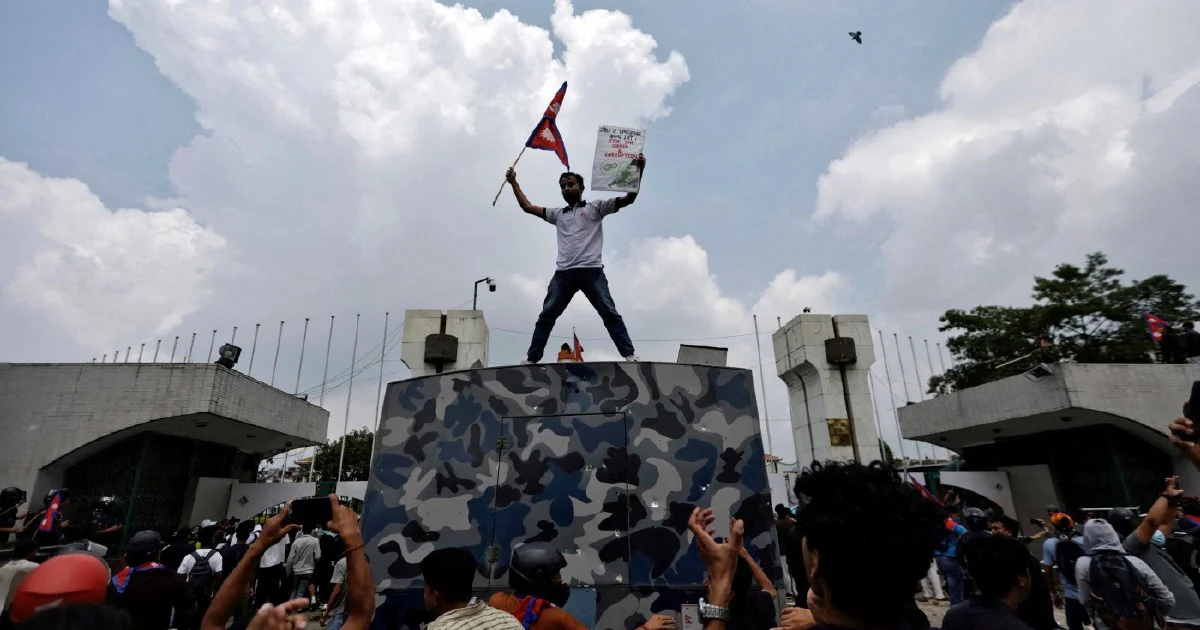
Police in Kathmandu took into custody Bishnu Prasad Paudel, who previously held the position of finance minister, on Monday evening following allegations of illicit financial transfers. The arrest represents a significant moment in Nepal's ongoing efforts to confront financial misconduct, occurring as the country's youth-dominated administration intensifies its examination of wrongdoing attributed to earlier government regimes.
The former minister's detention comes amid a broader transformation within Nepal's political landscape. The current administration, characterised by substantial Gen Z participation and influence, has prioritised rooting out institutional corruption as a central policy objective. This arrest signals the government's willingness to pursue high-profile figures from preceding administrations, a strategy intended to demonstrate accountability and rebuild public confidence in state institutions that many view as compromised by decades of patronage networks.
Money laundering charges carry serious implications in Nepal's legal framework, reflecting growing international pressure on South Asian nations to strengthen financial crime enforcement. The allegation suggests suspicious movement of funds through formal banking channels or other financial mechanisms designed to obscure their origin or destination. Such cases typically involve investigation into whether legitimate business earnings were commingled with illegally obtained wealth, or whether funds obtained through corruption were processed to appear legitimate.
For regional observers, the case illuminates patterns evident across South Asia where newly ascendant political movements frequently use anti-corruption initiatives to consolidate power. Nepal's trajectory mirrors experiences in neighbouring jurisdictions where successive administrations have targeted predecessors' officials through criminal prosecution. The approach carries both legitimising benefits—demonstrating commitment to reform—and significant political risks if perceived as selective or weaponised against opponents rather than applied through impartial institutions.
The arrest occurs within a context of renewed governance scrutiny in Nepal. The Himalayan nation has grappled persistently with opacity in government finances, weak institutional oversight mechanisms, and pervasive informal economies that complicate revenue collection and financial monitoring. International organisations have repeatedly flagged deficiencies in Nepal's anti-money laundering infrastructure, particularly regarding detection and investigation capacities that remain underfunded and understaffed relative to the scale of suspected illicit flows through the country.
Bishnu Prasad Paudel's professional background places this case within Nepal's complex political economy. Former finance ministers occupy pivotal positions that provide access to large capital flows, budget allocations, and relationships with financial institutions. Such positions create vulnerability to allegations of corruption precisely because distinguishing legitimate decision-making authority from improper enrichment requires sophisticated forensic accounting and institutional independence that Nepal's investigative bodies have historically struggled to demonstrate.
The timing of the arrest reflects deliberate strategic choices by the current administration regarding how intensively to pursue historical grievances. Rather than pursuing simultaneous cases against numerous former officials—which might appear chaotic or vindictive—authorities appear to be sequencing prosecutions, selecting prominent targets whose cases generate public attention while building investigative capacity. This measured approach aims to establish credibility for the anti-corruption agenda without overwhelming judicial systems already burdened by substantial case backlogs.
For Malaysia and other Southeast Asian economies, Nepal's corruption-fighting narrative carries cautionary lessons. While genuine institutional reform requires consistent legal action against wrongdoing, the danger emerges when prosecutorial authority becomes politicised, weaponised against opponents rather than applied neutrally. Malaysia's experience with anti-corruption initiatives—including high-profile cases like those surrounding 1Malaysia Development Berhad—demonstrates how such proceedings can advance genuine accountability only when independent institutions maintain genuine autonomy from political interference.
The financial crimes allegedly involved in this case likely extended beyond Nepal's borders. Cross-border money laundering typically involves transit jurisdictions and financial centres where Nepali expatriates maintain accounts and businesses. Regional cooperation mechanisms, including arrangements with Indian, Thai, and other banking authorities, become essential for investigators attempting to trace fund movements. The capacity to conduct such transnational investigations remains uneven across South Asia, creating opportunities for suspects to exploit jurisdictional gaps.
Sector-specific concerns emerge from this case regarding Nepal's banking industry. Financial institutions operating in Kathmandu maintain responsibility for implementing customer due diligence procedures and reporting suspicious transactions to authorities. Alleged breaches in these obligations suggest systemic weaknesses in compliance frameworks, potentially implicating bank managements whose institutions facilitated transfers later characterised as suspicious. Regulatory bodies overseeing financial conduct face pressure to demonstrate institutional capacity before confidence in systems recovery materialises.
The broader implications extend to Nepal's standing within international financial governance frameworks. Nations perceived as havens for illicit capital or as lacking adequate anti-money laundering regimes face potential sanctions, including exclusion from international banking networks and heightened scrutiny of financial transactions. Nepal's government therefore confronts simultaneous pressures: domestically, to pursue corruption aggressively; internationally, to demonstrate improvement in financial crime prosecution while avoiding appearance of politically selective prosecution.
Moving forward, the Paudel case will likely establish precedents affecting subsequent investigations into alleged corruption within previous administrations. Success in prosecution, defined by convictions supported by rigorous evidence withstanding appellate challenge, would strengthen government credibility. Conversely, cases that collapse or appear politically motivated would reinforce public cynicism regarding whether Nepal's institutions have genuinely transformed or merely shifted which factions control prosecutorial mechanisms. The distinction between these outcomes carries implications extending well beyond individual culpability.