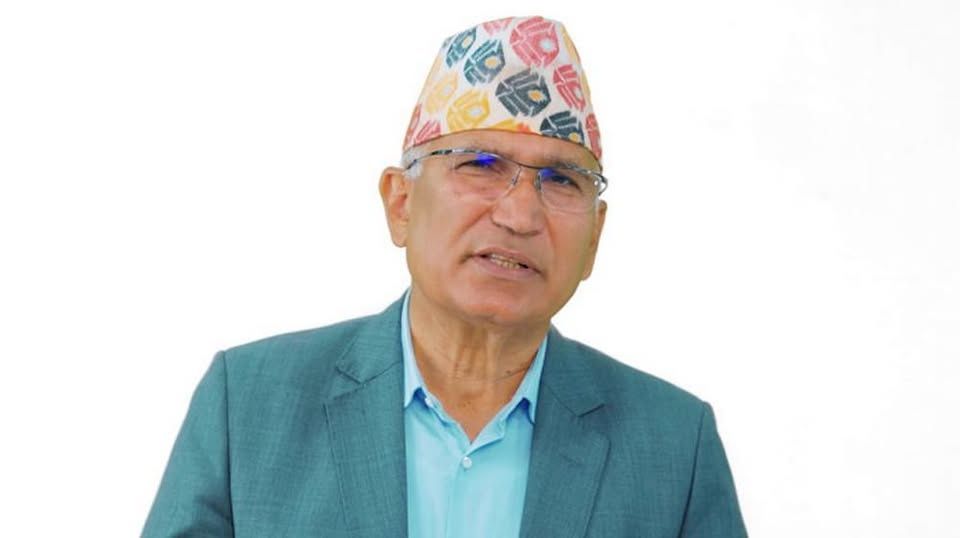
Nepal's police arrested former finance minister Bishnu Paudel on Monday in connection with money-laundering allegations, according to an announcement by law enforcement officials on Tuesday. The arrest represents an escalation of the anti-corruption campaign launched by newly elected Prime Minister Balendra Shah, a musician-turned-politician who won his mandate partly on promises to tackle widespread graft that had festered under previous administrations.
Paudel, who serves as vice-chair of the Communist CPN-UML party, was a prominent figure in the government led by former Prime Minister KP Sharma Oli. That administration came to an abrupt end during the tumultuous September uprising, when public anger over endemic corruption, economic hardship, and heavy-handed governance boiled over into sustained street protests. The police department has signalled its intention to conduct a thorough investigation into Paudel's alleged involvement in transferring illicit funds, part of a broader effort to pursue accountability for financial improprieties.
The arrest arrives amid a contentious period in Nepali politics. Prime Minister Shah, who secured his position in March following the upheaval of the previous year, has moved swiftly against figures associated with the Oli administration. This includes the detention of Oli himself and former Interior Minister Ramesh Lekhak in March, shortly after Shah assumed office. Both men were interrogated regarding their purported role in the violent 2025 crackdown against protesters, though they were released after two weeks without formal charges. Both have consistently denied any responsibility for the bloodshed.
Oli and his party have characterised the latest arrest as a calculated political manoeuvre designed to weaken their influence. Oli publicly denounced the action as a "political stunt" and levelled accusations that Shah's government is behaving with authoritarian tendencies. The criticism reflects deep divisions in Nepal's political landscape, where suspicions persist that anti-corruption prosecutions may be weaponised against opposition figures. Such allegations underscore challenges facing transitional justice efforts in post-conflict or post-uprising contexts, where distinguishing genuine accountability from political vendettas becomes complicated.
The CPN-UML party has adopted a measured public response while maintaining an undercurrent of defiance. Party spokesperson Niraj Acharya stated that the party would respect legal procedures and that party leaders stand ready to face judicial scrutiny. However, Acharya simultaneously accused the government of practicing discriminatory enforcement, suggesting that similar misconduct by officials associated with Shah's coalition has escaped equivalent prosecution. This counter-narrative, whether substantiated or not, demonstrates how anti-corruption campaigns can become entangled in partisan conflict, potentially undermining public confidence in the impartiality of justice institutions.
The 2025 uprising that catalysed this political transformation began with public backlash against a temporary social media ban, but rapidly evolved into a broader indictment of governmental dysfunction. The protests exposed simmering resentment over years of corruption, economic stagnation, and perceived elite indifference to ordinary citizens' struggles. The security forces' response proved catastrophic, with at least 76 people killed and more than 2,500 injured over a 48-hour period of intense violence. That death toll shocked the nation and accelerated calls for the government's removal, ultimately propelling Shah, despite his unconventional background as a recording artist, into the premiership.
The Paudel case forms part of a broader crackdown on financial crimes. Nepal's anti-corruption watchdog, the Commission for Investigation of Abuse of Authority, has separately filed charges against 16 individuals in a major graft scandal. The defendants include the chief of the passport department, and are accused of orchestrating an alleged $66 million embezzlement scheme centred on the procurement of e-passport systems. Such high-value corruption cases, involving state resources and infrastructure development, have long plagued Nepal and siphoned funds desperately needed for development and service delivery.
For Malaysia and other Southeast Asian nations, Nepal's experience offers instructive parallels and contrasts regarding post-uprising governance transitions. Like Malaysia, Nepal has grappled with corruption at senior levels and experiences periodic public pressure for accountability. However, Nepal's trajectory highlights the vulnerability of anti-corruption initiatives to politicisation when institutional safeguards remain weak. Independent judiciaries, insulated from executive influence, and autonomous prosecution agencies are essential to ensure that graft investigations command public legitimacy. The persistence of doubts about whether Nepal's current campaign represents genuine reform or political settling of scores suggests that institutional strengthening must accompany any anti-corruption drive.
Prime Minister Shah's government faces a delicate balancing act. Demonstrating serious commitment to rooting out corruption is essential for maintaining the legitimacy that the September uprising bestowed upon his mandate. Public patience for structural change is finite, and failure to deliver visible results against entrenched graft could reignite disillusionment. Conversely, pursuing prosecutions perceived as selective or vindictive risks fracturing the political consensus necessary for broader reforms. The precedent set by how Nepal handles cases like Paudel's, and whether convictions are secured through credible evidence and due process, will shape whether the anti-corruption momentum translates into durable institutional transformation or dissipates into another cycle of political point-scoring.