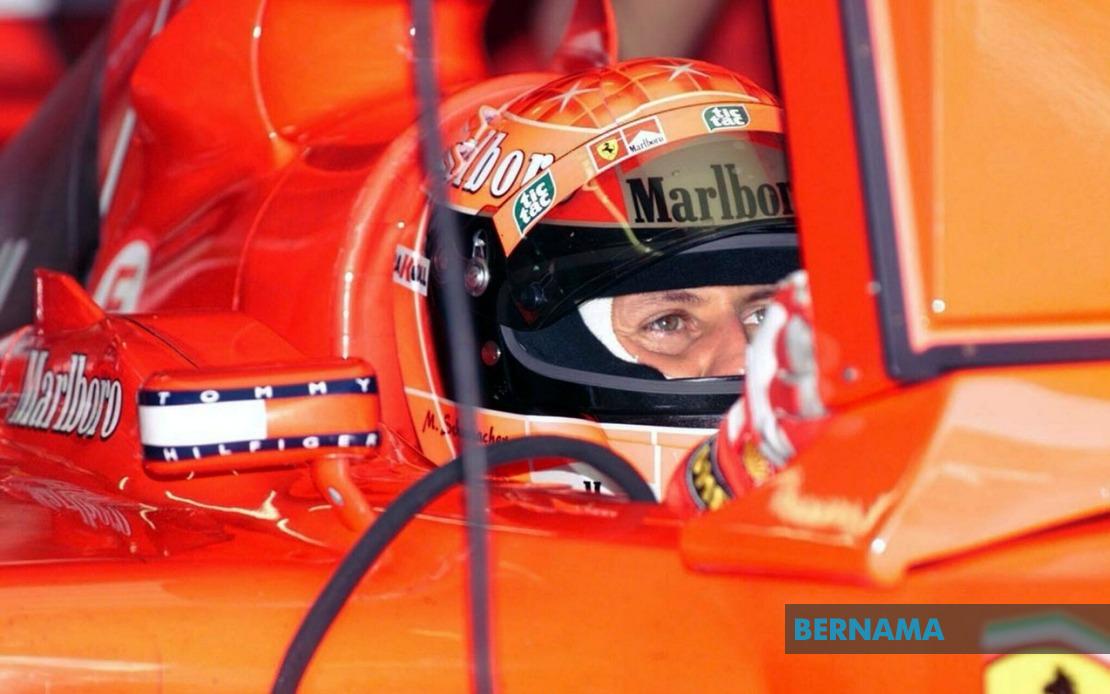
Netflix has announced plans to premiere a documentary centred on German Formula One champion Michael Schumacher on October 2, providing fresh perspective on one of motor racing's most consequential and turbulent seasons. The streaming platform's production, developed in collaboration with Schumacher's wife Corinna, delves into the dramatic events of 1994 when the then 25-year-old claimed the first of his record-equalling seven world titles.
The documentary takes viewers through Schumacher's remarkable ascent from an outsider position in the sport to the pinnacle of Formula One achievement. His journey that year encapsulates both the pinnacle of racing excellence and the darker complexities that often accompany intense competition at the highest level. The narrative explores how a relatively unknown German driver managed to overcome significant obstacles and scepticism to emerge as world champion, an achievement that would define his career and fundamentally reshape public interest in motorsport within Germany and beyond.
The 1994 season itself remains one of the most contentious in Formula One history, encompassing multiple dimensions of drama that extended far beyond typical competitive rivalry. Schumacher's Benetton team faced persistent allegations of technical rule violations throughout the championship campaign, with critics and rival teams questioning whether the vehicle gained unfair advantages through its technical innovations. These controversies overshadowed many of his performances that year and would continue to generate debate among motorsport enthusiasts for decades afterward.
Beyond the sporting disputes lay genuine tragedy that shocked the racing world. The season witnessed fatal accidents involving two prominent figures: Roland Ratzenberger, a driver competing in his second Formula One race, and Ayrton Senna, the three-time world champion widely regarded as one of the greatest drivers in history. Both deaths occurred during a single weekend at the San Marino Grand Prix, an unprecedented catastrophe that cast a shadow over Schumacher's championship achievement and fundamentally influenced how the sport approached safety measures.
The documentary assembles an impressive roster of figures who participated in or observed these pivotal events firsthand. Corinna Schumacher provides intimate family perspective on the pressures and triumphs of that extraordinary year. Flavio Briatore, who served as Benetton's team principal, offers direct testimony regarding the technical decisions and strategic choices his team made. Bernie Ecclestone, the commercial chief who shaped Formula One into a global phenomenon, provides context on the sport's trajectory during this period. David Coulthard, who competed against Schumacher and narrowly missed winning the championship, brings a fellow competitor's viewpoint. Willi Weber, Schumacher's then-manager, rounds out the interviews with insights into the driver's personal circumstances and career management.
The 1994 championship finale in Adelaide, Australia proved particularly decisive and remains controversial. Schumacher's Benetton collided with Damon Hill's Williams during the race, an incident that secured Schumacher the title by a single point. The collision itself has been endlessly analysed and debated, with interpretations ranging from a racing accident to a calculated tactical manoeuvre. This narrow, contested victory epitomises the entire season's contentious nature and explains why Schumacher's 1994 championship, though legitimate according to official records, has never ceased generating discussion and disagreement.
The documentary also examines the emergence of "Schumi-mania" in Germany during this period. Schumacher's success catalysed unprecedented enthusiasm for Formula One within the German-speaking world, transforming motorsport from a niche interest into mainstream cultural phenomenon. His nationality, combined with his aggressive driving style and championship success, resonated powerfully with German audiences who had previously lacked a national figure to champion in the sport. This surge in domestic interest would prove consequential for the broader European motorsport landscape and for Ferrari's later commercial expansion.
Currently at 57 years old, Schumacher has remained largely absent from public life since suffering a severe head injury during a skiing accident in 2013. That incident transformed him from one of sport's most visible and commercially active figures into a private individual, with only occasional family statements regarding his condition being released to the public. This documentary represents one of his family's rare collaborative engagements with media, suggesting their desire to preserve and shape the narrative surrounding his sporting achievements before they fade from living memory.
The timing of this Netflix release carries significance for Malaysian and Southeast Asian audiences, as Formula One continues expanding its presence throughout the region. The sport now hosts multiple events across Asia, and interest in its history and iconic figures remains substantial. Schumacher's dominance during the late 1990s and early 2000s established many of the competitive standards and commercial frameworks that contemporary Formula One still operates within. Understanding his rise through this documentary provides valuable context for comprehending modern Formula One's structure, rivalries, and business model that directly influences races hosted in the region.
The 1994 season serves as a watershed moment in Formula One history, representing the transition from one era to another. Schumacher's championship marked the beginning of Ferrari's resurgence as a competitive force and established him as the defining driver of his generation. By revisiting these events through archival footage, contemporary interviews, and dramatic reconstruction, Netflix's documentary offers both long-time Formula One enthusiasts and newer audiences the opportunity to understand the complex factors that converged during this pivotal year in motorsport history.

