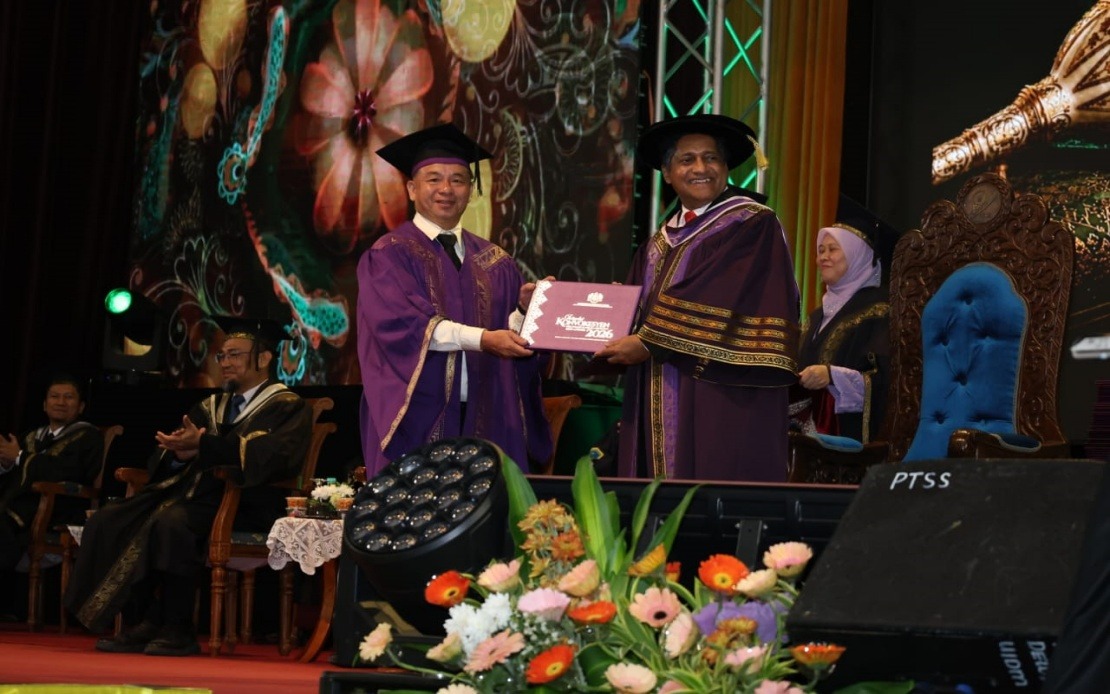
Heng Meng Lai has shattered the notion that education is an exclusively young person's pursuit. At the age of 57, he crossed the stage at Seberang Perai Polytechnic's 2026 Convocation Ceremony to receive his Diploma in Electrical and Electronic Engineering, becoming the oldest graduate in the institution's history. His achievement at the Bukit Mertajam campus marks a significant milestone, not merely for an individual pursuing deferred ambitions, but for a society increasingly recognising lifelong learning as a fundamental right.
Heng's path to academic qualification spanned nearly five decades of interruption and perseverance. The dream of furthering his education had sustained him through years of work and family obligations that took precedence. Growing up as the third of seven siblings, he experienced formative hardship early in life when his father passed away when he was only nine years old. This loss thrust his mother into the role of sole breadwinner, working long hours in a sewing factory to keep the family afloat. These circumstances, rather than extinguishing his aspirations, became the very fuel driving his determination to improve his circumstances through education whenever the opportunity finally presented itself.
When that opportunity eventually arrived, Heng's choice of specialisation was rooted in practical experience. His work background in electronics factories had exposed him to the machinery, processes, and technical challenges within the electrical and electronics sector. This workplace exposure cultivated a genuine curiosity about the field, moving him beyond abstract interest to concrete vocational purpose. By selecting Electrical and Electronic Engineering, he was aligning his diploma with hands-on experience accumulated across decades, creating a complementary relationship between academic knowledge and industry familiarity that many younger graduates lack.
Navigating a polytechnic classroom as a student dramatically older than peers presents unique psychological and social challenges that Heng had to overcome. The age differential could easily have become a source of alienation or self-consciousness, yet his experience at PSP proved surprisingly inclusive. The institution's lecturers provided continuous support and patient guidance, actively working to help him adapt to the learning environment. Importantly, Heng reports that he never experienced marginalisation from either educators or classmates despite the obvious generational gap. This speaks volumes about PSP's institutional culture and inclusive approach to education, extending welcoming arms to non-traditional students who might otherwise feel out of place.
Heng's student journey also reveals a deeper conviction that intellectual development transcends chronological boundaries. In his own reflections, he emphasised that learning genuinely has no age limit—a statement grounded not in motivational platitude but in lived experience. The completion of his diploma at 57 represents validation of this principle in tangible form. By persisting through his studies alongside younger cohorts, demonstrating academic competence, and earning his qualification, he has provided concrete evidence that institutions and society can successfully accommodate learners across the full spectrum of ages.
Looking forward, Heng's ambitions extend beyond his current achievement. He intends to return to the workforce to consolidate and apply the technical knowledge and practical skills acquired through his diploma studies. This pragmatic approach—gaining qualification, returning to employment to implement learning, then pursuing further advancement—reflects a deliberate strategy for sustainable career development rather than academic collection for its own sake. His stated intention to subsequently pursue a Bachelor's degree demonstrates that the completion of his diploma has not satisfied his educational appetite but rather whetted it, opening pathways to continued advancement he may not have previously envisioned.
Institutional recognition of Heng's significance has been forthcoming. Mohd Ruzi Hamzah, the director of Seberang Perai Polytechnic, characterised Heng's achievement as a source of institutional pride, acknowledging that he has made history whilst simultaneously completing his qualification. More broadly, Hamzah contextualised Heng's trajectory—from storekeeper to production line supervisor to diploma holder—as exemplifying a fundamental principle: that education constitutes a right available to all people regardless of age or background. This framing moves beyond celebrating an individual success to articulating an institutional commitment and national aspiration.
Malaysia's policy commitment to lifelong learning, which PSP's director referenced, represents a strategic investment in human capital development across the lifespan. As manufacturing economies become increasingly knowledge-intensive and global competition for skilled labour intensifies, the capacity to upgrade qualifications and acquire new competencies across career spans becomes economically vital. Heng's completion of technical training in electrical engineering at 57 potentially adds productive capacity to Malaysia's skilled workforce in a sector facing persistent shortages. His diploma qualifies him for employment at different skill levels and wage brackets than his previous roles, demonstrating how education functions as a mechanism for economic mobility even later in working life.
The broader implications of stories like Heng's extend into demographic and labour market territory increasingly relevant across Southeast Asia. With populations ageing across the region and extended working lives becoming necessity rather than choice, polytechnics and vocational institutions must increasingly accommodate older learners seeking skills upgrading. Malaysia's recognition through PSP's actions and statements that such accommodation strengthens both institutional relevance and national economic capacity positions the country ahead of peers in adapting educational provision to demographic reality.
Heng's journey also challenges prevailing cultural narratives around age and capability that persist across Asian societies. In many contexts, reaching middle age carries implicit expectations of settled status and reduced ambition. By pursuing and completing formal qualification at 57, Heng disrupts these assumptions, demonstrating that capability, motivation, and growth potential need not decline with years. For other individuals contemplating educational pursuits after decades of deferral, his success at Seberang Perai Polytechnic provides both inspiration and practical proof that institutions exist willing to facilitate such aspirations.

