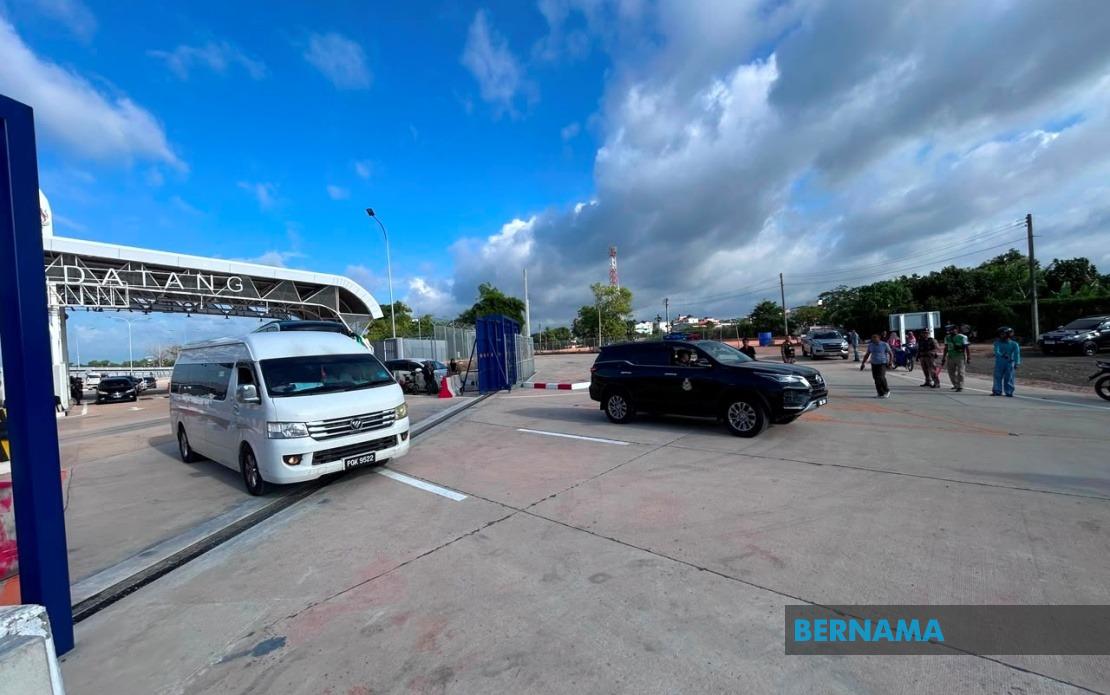
A freshly inaugurated road corridor connecting Malaysia's Bukit Kayu Hitam Immigration, Customs, Quarantine and Security (ICQS) Complex with Thailand's Sadao Customs, Immigration and Quarantine (CIQ) Complex commenced operations on July 11, marking a significant infrastructure milestone for regional connectivity. The facility, which opened its gates to the public at 6 am, represents a coordinated effort between Kuala Lumpur and Bangkok to modernise one of Southeast Asia's busiest land borders, particularly crucial given the substantial volume of daily commuter traffic, commercial vehicles, and tourist movements that traverse this vital crossing point.
The strategic importance of this infrastructure upgrade cannot be overstated for Malaysian travellers and businesses. The Bukit Kayu Hitam-Sadao corridor serves as the primary overland gateway between Malaysia and Thailand, experiencing acute congestion episodes particularly during school holidays, weekends, and public holidays when leisure travel peaks. By introducing a dedicated, purpose-built routing system, the new road aims to distribute traffic flow more efficiently across multiple pathways rather than funnelling vehicles through a single bottleneck, thereby reducing wait times and enhancing the overall cross-border experience for the hundreds of thousands who use this passage annually.
Prime Minister Datuk Seri Anwar Ibrahim and Thai counterpart Anutin Charnvirakul jointly officiated the opening ceremony, underscoring the bilateral significance of the project. The infrastructure initiative reflects both governments' commitment to deepening economic and social ties through improved mobility and trade facilitation. For Malaysia, where approximately 3.7 million Malaysians visit Thailand annually and vice versa, reducing friction at border points translates directly into economic benefits through enhanced tourism, cross-border commerce, and labour mobility in border communities like Perlis and Satun provinces.
Early feedback from users reveals encouraging signs regarding the road's functionality. Mohd Faizal Ahmad, a 42-year-old motorist from Penang, noted that the reconfigured route offers superior organisation compared to the previous system. He highlighted that during peak holiday periods, when school closures send thousands of families southward toward Thai beach destinations, the new arrangement should substantially curtail travel delays and make the journey considerably less stressful for families with children. Such observations from regular travellers matter significantly, as they provide ground-level validation of whether infrastructure investments achieve their stated objectives.
The physical separation of heavy vehicles from passenger cars represents a critical design feature gaining praise from commercial operators. Wan Muhammad Shahid Wan Mohd Desa, a 28-year-old lorry driver, explained that previously the Bukit Kayu Hitam ICQS to Danok route required heavy vehicles to share lanes with light vehicles entering the Sadao CIQ, creating cascading congestion that affected both categories. The new configuration introduces dedicated lanes for truck traffic, allowing these larger vehicles to proceed through customs formalities without impeding passenger car flows. For Malaysia's logistics sector, which increasingly relies on Thailand as both a source market and a transit point for goods heading to Laos, Cambodia, and Myanmar, such efficiency gains reduce transportation costs and delivery timelines.
Thai nationals who regularly cross the border similarly expressed satisfaction with the upgraded facilities. Mat Li Daman, a 59-year-old Thai frequent traveller, emphasised that the new Sadao CIQ complex offers markedly improved spatial design and comfort compared to its predecessor. The expanded facility accommodates documentation procedures more smoothly, including vehicle entry declarations that previously created procedural bottlenecks. For Thailand's tourism sector, which depends substantially on Malaysian visitor spending, and for Thai nationals seeking employment or conducting business in Malaysia, improved border infrastructure reduces friction and encourages increased cross-border activity.
The broader context of this infrastructure project relates to Malaysia's strategic positioning within the Greater Mekong Subregion and ASEAN connectivity initiatives. Enhanced cross-border infrastructure aligns with the Vision 2025 framework and subsequent policy documents emphasising land transportation corridors as vital for regional economic integration. The Bukit Kayu Hitam-Sadao route forms part of the North-South Economic Corridor linking Malaysia with Thailand and beyond, making it relevant not merely for bilateral traffic but for multilateral supply chains spanning the region. Improved efficiency here generates positive spillover effects for businesses and travellers throughout Southeast Asia.
The project also addresses longer-term competitiveness concerns for Malaysia's northern regions. Perlis and Kedah, as border states, can capitalise on improved cross-border infrastructure to develop industrial parks, trade hubs, and tourism facilities that leverage proximity to Thailand. When border crossing procedures become more streamlined, administrative overhead decreases, making these locations more attractive for businesses seeking to establish regional headquarters or manufacturing facilities serving both Malaysian and Thai markets. This infrastructure investment therefore extends beyond immediate congestion relief into broader economic development strategies for Malaysia's less densely developed northern states.
Operational efficiency gains translate into environmental and social benefits as well. Reduced vehicle idling and congestion decreases air pollution around the border complex and improves air quality in Bukit Kayu Hitam and nearby Thai communities. Shorter crossing times mean less stress-related health impacts on drivers and passengers, and reduced fuel consumption by vehicles sitting in queues. These externalities, though often overlooked in infrastructure assessments, compound into meaningful quality-of-life improvements for border communities and regular commuters.
Looking forward, the success of this corridor depends on sustained coordination between Malaysian and Thai border authorities regarding customs procedures, vehicle documentation standards, and peak-time management protocols. Both nations maintain different import regulations, safety standards, and quarantine procedures, meaning that physical infrastructure improvements alone cannot optimise the crossing without corresponding procedural harmonisation. Ongoing dialogue between the Bukit Kayu Hitam ICQS and Sadao CIQ operations teams will be essential to identifying emerging bottlenecks and implementing corrective measures. Regular meetings at technical and policy levels, building on the goodwill demonstrated at the opening ceremony, will help ensure this investment delivers sustained benefits rather than temporary relief.

