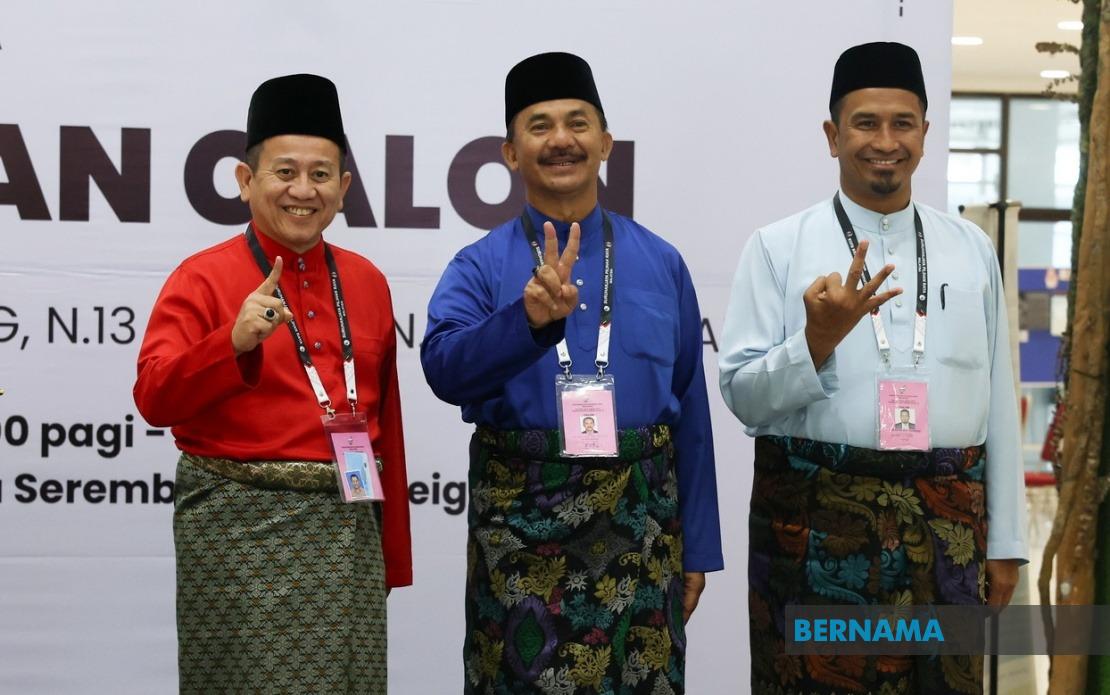
The 16th Negeri Sembilan State Election is being shaped by a striking wave of fresh political entrants who will compete alongside seasoned incumbents for control of the state assembly. Across the 36 State Legislative Assembly seats, a total of 103 candidates from various parties and independent candidates have registered to contest following the close of nominations on July 18, creating what promises to be a notably competitive electoral contest that spans established coalitions and emerging political forces.
Pakatan Harapan has committed its full electoral apparatus to the contest, fielding candidates in all 36 seats with a notably ambitious recruitment strategy that includes 24 first-time candidates balanced against 12 returnees. This composition reflects the coalition's deliberate effort to present voters with choices that blend fresh perspectives with institutional continuity. Among the coalition's established faces is Negeri Sembilan PH Chairman Datuk Seri Aminuddin Harun, who is recalibrating his electoral strategy by vacating the Sekamat seat he previously held to contest the Linggi constituency instead, a manoeuvre that signals internal party reorganisation aimed at optimising the coalition's performance across key battlegrounds.
The presence of nationally prominent figures reinforces PH's competitive positioning in the state contest. DAP Secretary-General and Transport Minister Anthony Loke is mounted in the Chennah DUN seat, leveraging his national profile and ministerial responsibilities to anchor the coalition's campaign messaging. His participation underscores how state-level elections increasingly draw high-profile national politicians seeking to demonstrate their continued relevance at the grassroots level and to build political capital within their component parties ahead of future national contests.
Barisan Nasional has adopted a somewhat more conservative approach to candidate selection, fielding 25 candidates across the state with 13 new entrants complementing 12 experienced contenders. This numerical restraint compared to PH reflects BN's historically stronger incumbency position in Negeri Sembilan, where the coalition retains residual electoral advantages from previous cycles. Mohamad Hasan, UMNO Deputy President and Foreign Minister, anchors BN's campaign by defending his Rantau DUN seat, projecting continuity of representation and signalling the coalition's determination to retain executive authority in the state.
Within the Barisan Nasional slate, strategic positioning emerges as a key competitive element. Datuk Ismail Lasim, who won the Senaling DUN seat in the previous state election, is repositioning himself by contesting the Juasseh constituency instead, suggesting either internal party assessments of shifting electoral patterns or organisational decisions to deploy experienced candidates in seats deemed vulnerable or strategically important. Similarly, Negeri Sembilan Barisan Nasional Chairman Datuk Seri Jalaluddin Alias is mounting a defence of the Pertang DUN seat which he captured in the 2023 state election, consolidating BN's control of constituencies already in its column.
Perikatan Nasional is participating with considerably reduced scope, contesting only 11 of the 36 available seats through its multi-party structure encompassing PAS, Gerakan, Parti Wawasan Negara, and the Malaysian Indian People's Party. This limited engagement reflects PN's peripheral status in Negeri Sembilan electoral politics and signals the coalition's strategic focus on other state contests deemed more promising for electoral gains. The narrower candidacy also suggests that PN components are preserving organisational resources for electoral contests in states where they command greater structural influence and voter resonance.
Pribumi Bersatu Malaysia merits particular attention given its shift in electoral branding and candidate strategy. The party is fielding 24 candidates using its own organisational logo in this Negeri Sembilan contest, representing a significant departure from its previous participation under the broader Perikatan Nasional banner during the 2023 state election. This rebranding strategy carries symbolic weight, potentially signalling either internal repositioning within Malaysia's fractious coalition politics or calculated attempts to distinguish Bersatu's identity from its PN partner parties. Among Bersatu's slate, Information Chief Datuk Tun Faisal Ismail Aziz represents newly recruited political talent, while Negeri Sembilan Bersatu Chairman Hanifah Abu Bakar epitomises the party's retention of established figures trusted to defend existing territorial bases, specifically the Labu DUN seat.
The electoral participation extends beyond Malaysia's major coalitions, with smaller formations and independent candidates adding texture to the competitive landscape. Parti Berjasa, Parti Orang Asli Malaysia, and Parti Sosialis Malaysia are each fielding single candidates, while four independent candidates are contesting, collectively representing grassroots political ambitions, niche ideological positions, and localised grievance mobilisation that characterises state-level electoral contests in Malaysia. This fragmentation, while unlikely to alter the overall outcome, demonstrates how state elections attract diverse political voices seeking platforms for advocacy or constituency service.
The candidate roster reflects pronounced generational variation that carries broader implications for state governance. The oldest candidate is PH's Datuk Abd Latiff A Tambi at 70 years old, contesting the Gemencheh DUN seat and embodying the established political class. Conversely, Bersatu's Leevineshwaraan Murugan, competing for the Sri Tanjung DUN seat at just 23 years old, represents the younger demographic increasingly entering electoral politics in Malaysia. This generational spread suggests that voters across Negeri Sembilan will encounter choices between experienced hands versed in institutional politics and energetic newcomers articulating contemporary concerns around economic opportunity, governance transparency, and generational equity.
The electoral timeline creates tactical considerations for candidates and voters alike. The Election Commission has designated July 28 for early voting, allowing those unable to vote on the principal election day to participate in advance, while August 1 is fixed as the formal polling day. This scheduling provides campaign teams approximately two weeks to mobilise voters following the nomination closure, a compressed timeframe that advantages well-resourced political machines capable of rapid voter contact and messaging deployment while potentially disadvantaging grassroots and independent candidates with limited organisational infrastructure.
For Malaysian and Southeast Asian observers, the Negeri Sembilan election crystallises ongoing patterns in Malaysia's democratic contest. The integration of new political talent alongside established figures reflects ruling coalitions' efforts to rejuvenate their electoral appeal while maintaining institutional continuity. The competitive presence of multiple coalitions—Pakatan Harapan, Barisan Nasional, Perikatan Nasional, and smaller parties—demonstrates how Malaysia's political landscape remains genuinely contestable at state level despite national dominance patterns. The generational composition of candidates signals evolving voter demographics and expectations, with younger candidates potentially reshaping political discourse around development priorities, technological adaptation, and social welfare provision.
The outcome of this election will provide crucial insight into voter sentiment regarding coalition performance, with particular attention to whether Pakatan Harapan can consolidate state-level authority following its national electoral victory, whether Barisan Nasional's incumbency provides enduring structural advantages, and whether Perikatan Nasional can expand influence beyond its core heartlands. The substantial infusion of new candidates across all major coalitions suggests that Malaysian political parties recognise electoral competition requires continuous generational renewal and strategic candidate deployment, ensuring that state contests remain vibrant forums for democratic choice rather than foregone institutional outcomes.

