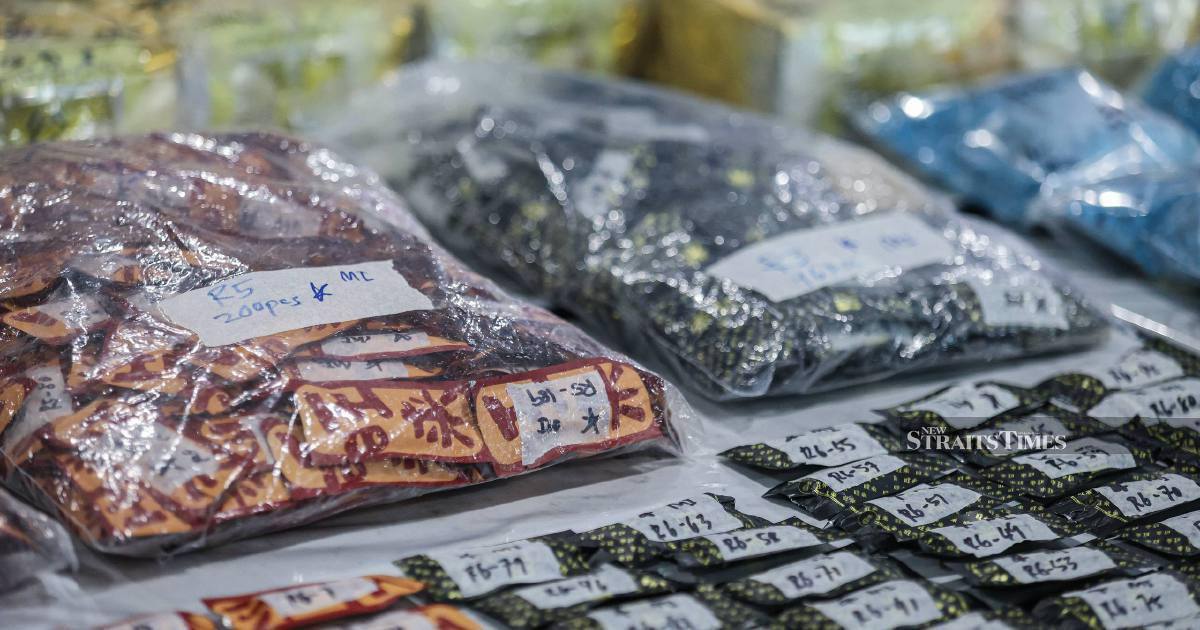
Law enforcement authorities in Johor Baru have apprehended two brothers suspected of orchestrating a large-scale maritime drug smuggling operation, with the haul exceeding RM6.85 million in estimated street value. The Malaysian Maritime Enforcement Agency (MMEA) made the arrests on Sunday following an intelligence-led operation that intercepted the smugglers at sea while they were allegedly en route to a neighbouring nation. The seizure highlights the continued efforts by Malaysia's maritime enforcement bodies to disrupt drug trafficking networks operating through regional waters, a critical vulnerability given the country's extensive coastline and proximity to major trafficking routes.
The drugs seized in this operation have been identified as 'Piu Piu', marking its emergence as a new synthetic substance circulating in Southeast Asian illicit drug markets. This nomenclature—seemingly innocuous and possibly derived from popular culture references—represents a concerning trend in how traffickers brand and market novel psychoactive substances to evade detection and appeal to younger consumers. The appearance of previously unknown drugs under street names reflects the dynamic nature of the regional drug trade, where criminal syndicates rapidly adapt formulations and distribution strategies to maintain market share and circumvent regulatory frameworks. Intelligence agencies across the region have noted accelerating cycles of drug innovation, with new compounds arriving faster than authorities can develop detection protocols and regulatory responses.
The seizing of such large quantities at the maritime frontier underscores the strategic importance that trafficking networks assign to sea routes when moving contraband. Unlike land borders, which feature fixed checkpoints and concentrated enforcement presence, maritime smuggling offers traffickers greater flexibility, lower interdiction rates, and plausible deniability through the vast expanses of regional waters. Smugglers exploit the jurisdictional complexities of international maritime zones, where enforcement authority becomes ambiguous and coordination between neighbouring nations' agencies remains essential but occasionally inconsistent. The MMEA's successful interception demonstrates Malaysia's commitment to maintaining maritime security, yet the sheer volume of attempted smuggling attempts suggests law enforcement remains engaged in a perpetual game of maritime catch-and-mouse against well-resourced criminal organisations.
The involvement of two family members in this operation reflects common trafficking network structures in the region, where familial ties provide operational cohesion, reduced communication vulnerabilities, and established trust mechanisms. These networks often operate across multiple jurisdictions, with family cells handling different segments of the supply chain—procurement, transportation, distribution, and money laundering. Malaysian law enforcement has consistently identified kinship-based smuggling groups as particularly resilient, since family relationships create natural barriers to informants and reduce the likelihood of cooperation with authorities. The MMEA's ability to intercept these individuals suggests intelligence gathering and surveillance capabilities targeting known trafficking families, though the recurring appearance of such operations indicates the effectiveness of enforcement interventions remains constrained by resource limitations and the profitability of the trade.
From a regional perspective, this seizure carries implications for the broader Southeast Asian drug crisis. The RM6.85 million valuation represents substantial financial loss for trafficking organisations, yet trafficking group resilience and the consistency of smuggling attempts suggest such seizures function as operational costs rather than existential threats. Criminal syndicates maintain multiple trafficking routes, redundant supply sources, and diversified commodity offerings—meaning the loss of any single shipment triggers activation of backup networks rather than cessation of operations. The emergence of 'Piu Piu' as a marketed substance indicates organised crime's penetration of the synthetic drug development and distribution ecosystem, moving beyond traditional opiates and amphetamines into the designer drug marketplace where profit margins and consumer demand remain exceptionally high.
The maritime setting of this interception provides intelligence value extending beyond the immediate seizure. Coastal enforcement operations generate data on trafficking patterns, timing cycles, and operational methodologies that agencies can incorporate into predictive models and strategic resource allocation. However, the sustainability of such intelligence gathering depends on adequate funding, training, and technological capacity—areas where many Southeast Asian maritime agencies face constraints. Malaysia's MMEA represents one of the region's more capable maritime law enforcement bodies, yet even well-resourced agencies acknowledge that systematic monitoring of territorial and international waters requires investments that often compete with other national security priorities.
The case also reflects Malaysia's position within global and regional drug control frameworks. As a signatory to international drug control treaties and a significant transit point for trafficking moving through Southeast Asia toward global markets, Malaysia faces external pressure from consuming nations and international bodies to maintain enforcement intensity. Simultaneously, Malaysia experiences domestic drug demand, with local markets consuming seized substances and generating revenue that fuels continued trafficking operations. This dual exposure—as both a transit hub and domestic market—creates operational pressures on enforcement agencies tasked with managing multiple fronts simultaneously.
Looking forward, the identification and naming of 'Piu Piu' as a distinct substance marks its incorporation into regional law enforcement taxonomies and regulatory frameworks. Authorities across Malaysia, Singapore, Thailand, and other ASEAN nations will likely exchange information regarding this drug's chemical composition, effects, and market distribution patterns. Rapid information sharing through regional platforms such as the ASEAN Secretariat and bilateral law enforcement channels enables coordinated regulatory responses, though the speed of innovation in synthetic drug development often outpaces regulatory classification processes. The RM6.85 million seizure thus represents not merely an isolated bust but a data point in the ongoing struggle to maintain border security and public health across Southeast Asia's maritime domain.

