Education Minister Fadhlina Sidek has sought to reassure teachers and educators that Malaysia's School Pupil Protection Policy represents a collaborative framework rather than a mechanism to hold the profession solely accountable for student safety. In a clarification issued on August 14, Fadhlina emphasised that the policy establishes transparent guidelines for multiple stakeholders to follow when child protection concerns emerge, creating what she termed a "clearer framework" that defines who must act and when.
The underlying concern prompting this reassurance reflects widespread apprehension within the teaching profession that the new regulations would transform educators into frontline investigators required to gather evidence before reporting suspected abuse or neglect. Fadhlina moved to dispel this misconception by explicitly stating that teachers need neither complete factual documentation nor certainty before escalating matters. Instead, the policy encourages immediate reporting to school administrators upon receiving complaints or forming reasonable suspicion—a distinction that substantially lowers the threshold for intervention and theoretically removes the burden of proof from individual educators.
The policy represents an ecosystem approach that distributes responsibilities across multiple layers of the education system and beyond. The Ministry of Education, State Education Departments (JPN), and District Education Offices (PPD) form the internal structures through which reports flow and coordinate responses. Critically, the framework also integrates external agencies including the Royal Malaysia Police (PDRM) and the Social Welfare Department (JKM), ensuring that investigations and interventions fall within the appropriate professional domain. This compartmentalisation aims to prevent the common pitfall where schools become overwhelmed by cases that should be handled by law enforcement or welfare specialists.
Fadhlina's emphasis on preventing repeated trauma during case handling reflects growing awareness in Malaysia of how children can suffer compounded harm through poorly coordinated interventions. When multiple agencies investigate the same incident independently or inconsistently, victims may endure multiple interviews and disclosures, each potentially retraumatising them. By establishing coordinated pathways for case management, the policy seeks to ensure that once a report reaches the system, it triggers a single, coherent response where the most appropriate agency takes the lead and others provide supporting functions. This model has gained traction internationally as best practice in child protection.
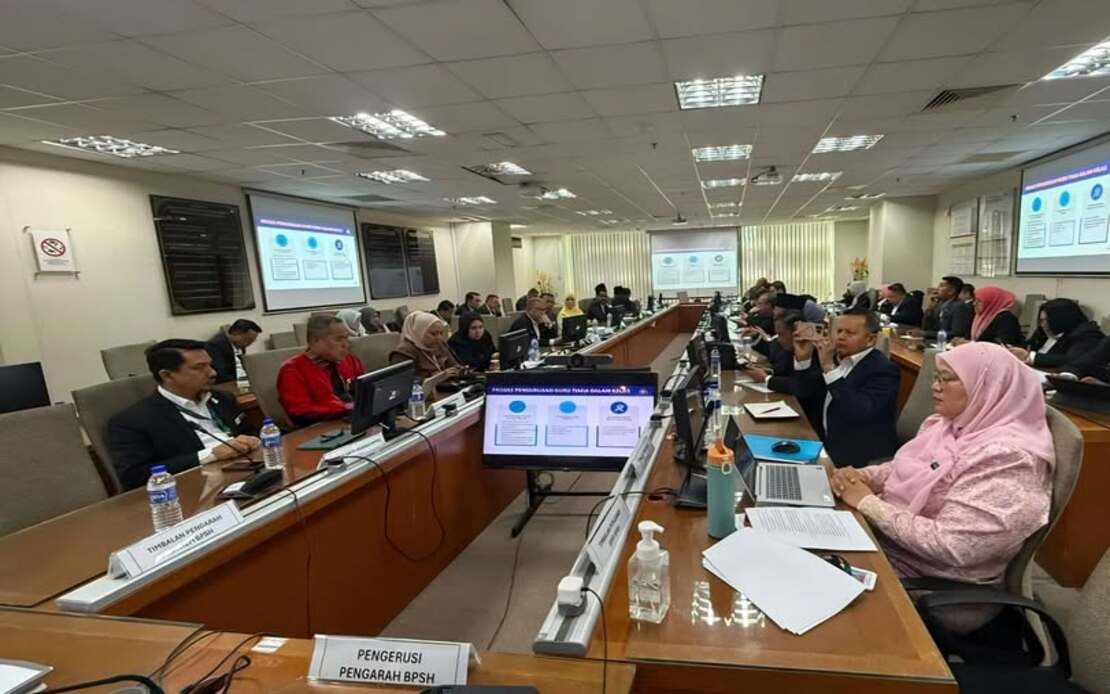
The Ministry has already undertaken extensive consultation to shape educator understanding of the policy's intent and mechanics. Engagement sessions have been conducted with the National Union of the Teaching Profession (NUTP), a key stakeholder representing teachers' interests, as well as the Human Rights Commission of Malaysia (SUHAKAM), the United Nations Children's Fund (UNICEF), and numerous non-governmental organisations working in child welfare. These dialogues serve a dual purpose: gathering feedback to refine implementation while building a constituency of informed advocates who can explain the policy to their members and constituents.
Fadhlina's acknowledgment that "a single document will not answer every question" reflects realistic expectations about policy implementation in a complex, decentralised system like Malaysian education. With approximately 400,000 teachers working across thousands of schools serving diverse communities, uniform understanding cannot be achieved through documentation alone. The commitment to continued briefings and engagement sessions suggests the Ministry recognises that institutional change requires sustained communication, not merely regulatory announcements. Teachers must gain not just technical knowledge of procedures but also confidence in their judgment and security in their professional standing when reporting concerns.
A significant concern underlying teacher hesitation involves potential legal liability and professional consequences for those who report. Fadhlina has directly addressed this by assuring that the Ministry will provide legal assistance where appropriate and necessary, signalling that teachers acting in good faith within the policy's framework will not be abandoned if allegations prove complex or contested. This commitment to institutional backing represents a crucial safeguard against the chilling effect where educators might choose silence over the perceived risk of being blamed or sued.
The policy's emphasis that it is not designed to identify scapegoats or assign fault carries particular weight in the Malaysian context, where institutional accountability mechanisms have sometimes been used to deflect responsibility onto individual actors rather than addressing systemic failures. Teachers' unions and professional bodies have historically expressed concern that child protection protocols could become tools for shifting blame downward rather than creating genuine safety improvements. Fadhlina's explicit disavowal of this approach suggests recognition of these legitimate anxieties and an intention to build trust rather than enforce compliance through fear.
The practical implications for Malaysian schools remain contingent on how thoroughly the framework is implemented at district and school level. District Education Offices (PPD), which serve as the immediate supervisory layer between the Ministry and individual schools, must receive adequate training and resources to handle incoming reports effectively. School administrators, typically principals and senior teachers, require clear protocols for receiving, documenting, and forwarding reports to appropriate authorities. Without this foundational infrastructure, even well-intentioned policy can collapse into confusion where teachers remain uncertain whether their report has reached the right person or triggered the right response.
The integration of external agencies like the Social Welfare Department and police reflects acknowledgment that many cases involving child safety fall beyond the legitimate expertise and mandate of educational institutions. Schools are places of learning, not investigation, and positioning teachers as evidence-gatherers represents a category mistake that diverts them from their primary responsibilities while potentially contaminating investigations. By clarifying that the school's role is to report and facilitate coordination rather than to investigate, the policy potentially creates clearer boundaries that protect both students and professionals.
For Malaysian parents and communities, the policy signals a shift toward proactive rather than reactive child protection. Rather than waiting for serious harm to trigger official intervention, the framework creates obligations to act on suspicions, allowing preventive measures to take effect earlier. This philosophy aligns with international child welfare standards while representing a departure from traditional approaches in Malaysia where institutional reluctance to intervene in family matters has sometimes allowed concerning situations to escalate unchecked.
The success of the policy ultimately depends less on its written provisions than on whether educators genuinely believe they can report concerns without facing professional retaliation or being scapegoated if investigations reveal complexity. Fadhlina's sustained emphasis on partnership, support, and shared responsibility suggests awareness that sustainable child protection requires building trust within the teaching profession rather than imposing compliance through top-down directives. The coming months will reveal whether this approach translates into the behavioural change necessary for the policy to meaningfully strengthen student safety across Malaysian schools.

