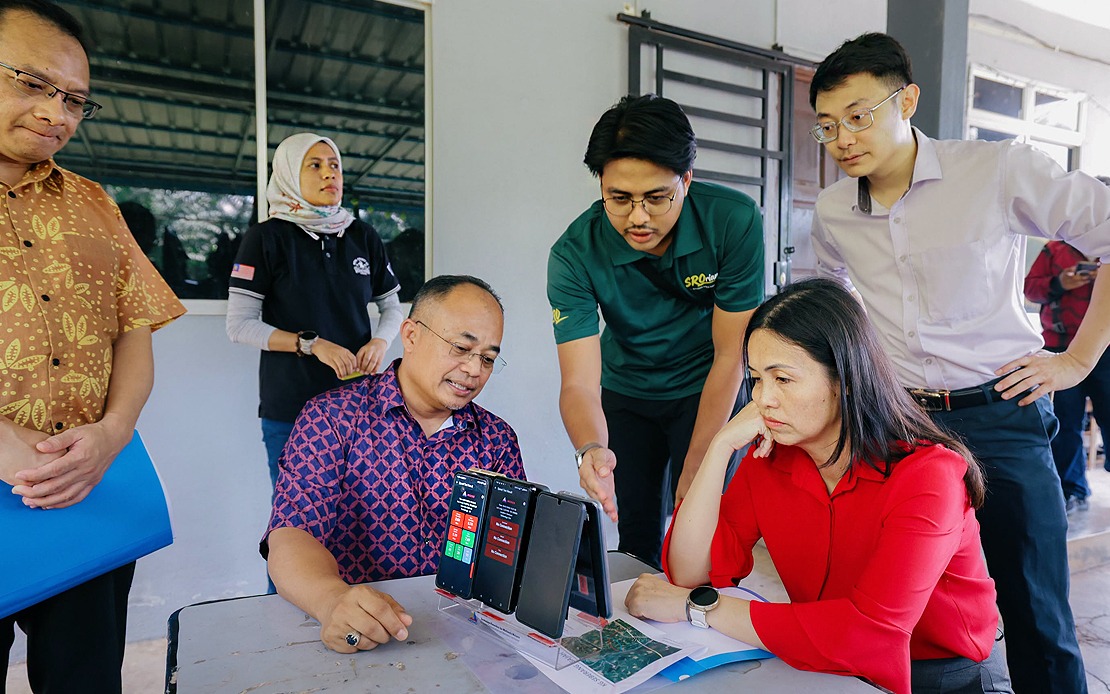
Persistent internet connectivity problems plaguing residents of Kampung Seberang Gajah in Tangkak are set for resolution with the planned construction of a dedicated telecommunications tower, Deputy Communications Minister Teo Nie Ching announced during a site visit to the community.
Despite two telecommunications towers already operating in proximity to the village, their signal coverage proves inadequate to meet local demand, leaving residents with unreliable connections and substandard service quality. The coverage deficiency has prompted intervention from the Malaysian Communications and Multimedia Commission (MCMC), which has directed service providers to establish infrastructure capable of properly serving the underserved locality.
The project has now reached an advanced planning stage, with construction specifications finalised and ready for implementation. However, the deployment timeline hinges on securing approval from the relevant local authority, a standard prerequisite before telecommunications companies can commence physical work on tower installation and activation.
Teo's visit, conducted jointly with MCMC officials and representatives from multiple telecommunications service providers, served both an informational and operational purpose. The delegation surveyed existing network performance across the area to document current service deficiencies and establish baseline data against which future improvements can be measured. Such comprehensive assessments enable regulatory bodies and private operators to calibrate infrastructure investments toward greatest impact.
The connectivity challenge facing Kampung Seberang Gajah reflects a broader pattern throughout Malaysia's more remote and rural communities, where population density and geographic factors create economic disincentives for private telecommunications investment. While urban and suburban areas enjoy competitive service provision from multiple operators, peripheral locations often languish with legacy infrastructure installed decades earlier, when bandwidth requirements and usage patterns differed dramatically from contemporary demands.
Regulatory intervention by MCMC demonstrates growing government acknowledgment that market forces alone fail to deliver universal broadband access, particularly in areas offering limited commercial returns. By mandating service providers expand coverage rather than relying on voluntary corporate social responsibility initiatives, the communications regulator shifts responsibility and accountability toward industry participants. This approach encourages operators to identify innovative deployment methods that reduce infrastructure costs while extending geographic reach.
The delay in securing local authority permits, while administratively routine, underscores persistent coordination challenges between federal regulators, state and municipal authorities, and private companies in Malaysia's telecommunications sector. Streamlining approval processes for infrastructure projects classified as public interest facilities could accelerate resolution of connectivity disparities. Several countries have established expedited permitting frameworks specifically for broadband infrastructure, recognising that connectivity increasingly functions as essential utility rather than optional service.
For residents of Kampung Seberang Gajah, reliable internet connectivity carries consequences extending beyond entertainment and social media access. Educational opportunities for school-aged children, economic prospects through remote work and digital entrepreneurship, healthcare access via telemedicine services, and participation in government digital services all depend upon functional broadband infrastructure. The digital divide between connected and unconnected communities compounds existing socioeconomic disparities.
Teo's call for expedited permit processing and construction reflects institutional pressure to move from announcement to implementation with minimal delay. Government officials have faced repeated criticism over communication infrastructure projects that languish in planning stages or advance at glacial pace, with residents experiencing minimal tangible improvement despite repeated announcements of imminent action. The public commitment to acceleration, made in the presence of multiple stakeholders, creates some accountability mechanism for delivery.
The telecommunications tower initiative also carries broader implications for Malaysia's digital economy ambitions. Economic diversification increasingly depends upon ubiquitous connectivity that enables knowledge workers, digital services providers, and e-commerce participants to operate from any location. Communities excluded from broadband networks effectively become excluded from participation in high-value economic activities, concentrating opportunities within already-developed urban corridors.
Beyond Kampung Seberang Gajah, the project methodology may establish precedent for addressing similar coverage gaps elsewhere. Documentation of community needs assessment, regulatory directive mechanisms, and infrastructure deployment processes could be replicated across other underserved localities. Systematic identification and resolution of connectivity blackspots represents more sustainable approach than ad hoc responses to individual complaints.

