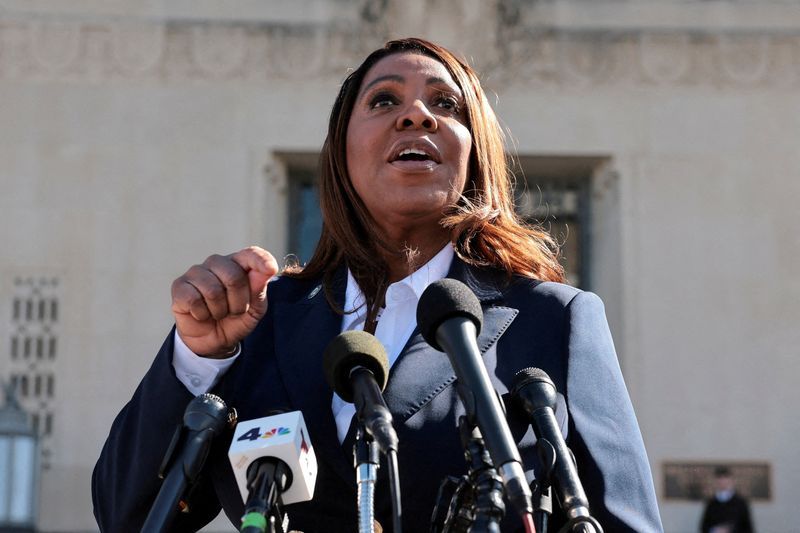
A New York state court has dealt a significant setback to Zelle, the electronic payment platform owned by seven major American banks, by refusing to dismiss a high-profile lawsuit alleging systemic failures in fraud prevention and consumer safety. Justice Phaedra Perry-Bond of a Manhattan court determined on Tuesday that Attorney General Letitia James had presented sufficient evidence that Zelle's parent company Early Warning Services—owned collectively by Bank of America, Capital One, JPMorgan Chase, PNC, Truist, US Bank and Wells Fargo—deliberately compromised consumer protections to accelerate market penetration and profitability.
The judge's decision is particularly significant because it addresses a central tension in digital finance: the conflict between rapid innovation and consumer safeguarding. Perry-Bond found that James had adequately demonstrated that Zelle's leadership consciously deprioritised safety measures, choosing instead to emphasise accessibility and convenience, even when banking partners raised concerns about the platform's vulnerability to fraud. This ruling substantially strengthens the attorney general's position heading into what promises to be a contentious litigation battle over corporate responsibility in fintech.
The scale of the alleged fraud problem is staggering. James contends that fraudsters have stolen more than $1 billion from Zelle users through various criminal tactics, including hacking into legitimate accounts and executing unauthorised transfers, deceiving users into sending money for goods and services that never existed, and impersonating trusted entities such as banks, government agencies, and utility companies. Each of these schemes exploited weaknesses that James argues could have been prevented with adequate security measures had the company prioritised defence over expansion.
A particularly damaging finding from the court relates to Zelle's continued collection of transaction fees derived from fraudulent transfers. Perry-Bond observed that by maintaining this revenue stream without implementing safeguards, Zelle may have tacitly approved or at least acquiesced to the fraudulent activity occurring on its platform. This observation carries serious legal implications, potentially establishing that the company had financial incentives not to aggressively police fraud—a claim that could significantly influence jury perception if the case proceeds to trial.
The marketing practices Zelle employed also drew judicial scrutiny. The platform promoted itself to consumers using language suggesting guaranteed security and institutional backing, with messaging such as "peace-of-mind" and claims that Zelle was "backed by the banks, so you know it's secure." James argued that such representations were inherently misleading given the platform's documented vulnerability to large-scale fraud and the absence of basic protective measures that could have been implemented before launch.
Zelle's defensive posture has centred on two main arguments. The company contends it was not misleading to market itself as safe and secure, and it characterises its failures to implement safety features as "passive nonfeasance"—essentially arguing that failing to act is not the same as actively causing harm. Additionally, Zelle claimed that fraud reports represent an exceptionally low percentage of total platform transactions, attempting to frame the $1 billion in losses as proportionally insignificant. However, the judge's decision indicates these arguments failed to persuade the court that the case should be dismissed at this early stage.
The timeline of Zelle's security evolution is central to the attorney general's argument. Launched in 2017 as a competitor to PayPal's Venmo and Block's Cash App, Zelle operated without implementing safeguards that the company itself had proposed as early as 2019. The platform only adopted these basic protective measures in 2023, James alleges, and only after intense pressure from the federal Consumer Financial Protection Bureau and congressional investigations forced the company's hand. This four-year gap between identifying necessary protections and implementing them forms the crux of her claim that profit motive overrode consumer welfare considerations.
The broader regulatory context adds weight to this lawsuit. The CFPB had pursued a similar enforcement action but unexpectedly dropped the case in March 2025, shortly after President Donald Trump's second term commenced and the agency dramatically curtailed its enforcement operations. James's decision to file her own action essentially continues the consumer protection effort at the state level, suggesting that New York intends to hold the fintech sector accountable even as federal oversight diminishes. This dynamic reflects growing tensions between state and federal regulatory approaches to technology companies.
Zelle's official response through spokesperson Eric Blankenbaker dismissed the lawsuit as politically motivated and legally baseless, claiming that courts across the country have repeatedly rejected similar allegations as meritless. The company emphasised that fraudulent activity represents an exceptionally small fraction of platform usage. However, the dismissal of these arguments by Justice Perry-Bond suggests that New York's court system may not view these defences as persuasive, at least not at the preliminary stage of litigation.
For Malaysian and Southeast Asian observers, this case illuminates important questions about how digital payment platforms balance innovation against consumer protection obligations. As fintech services expand throughout the region, regulators and consumers alike face decisions about what level of fraud risk is acceptable and who bears responsibility when platforms known to be vulnerable are deployed without adequate safeguards. The ruling suggests that courts may increasingly be willing to hold technology companies accountable for preventable losses, even when fraud is perpetrated by third parties, if evidence emerges that the platform itself created or failed to remedy obvious vulnerabilities.
The litigation ahead will likely establish important precedents about corporate liability in electronic payment services, particularly regarding whether platforms can disclaim responsibility for fraud while simultaneously profiting from the fraudulent transactions themselves. The case also raises fundamental questions about whether advertising security to consumers creates enforceable obligations to actually provide that security, or whether such claims can be dismissed as marketing puffery. Zelle's status as a mainstream payment service backed by major American banks means that the outcome could significantly influence how the industry approaches fraud prevention and consumer communication going forward, with potential implications extending to international payment networks operating in the Asian market.

