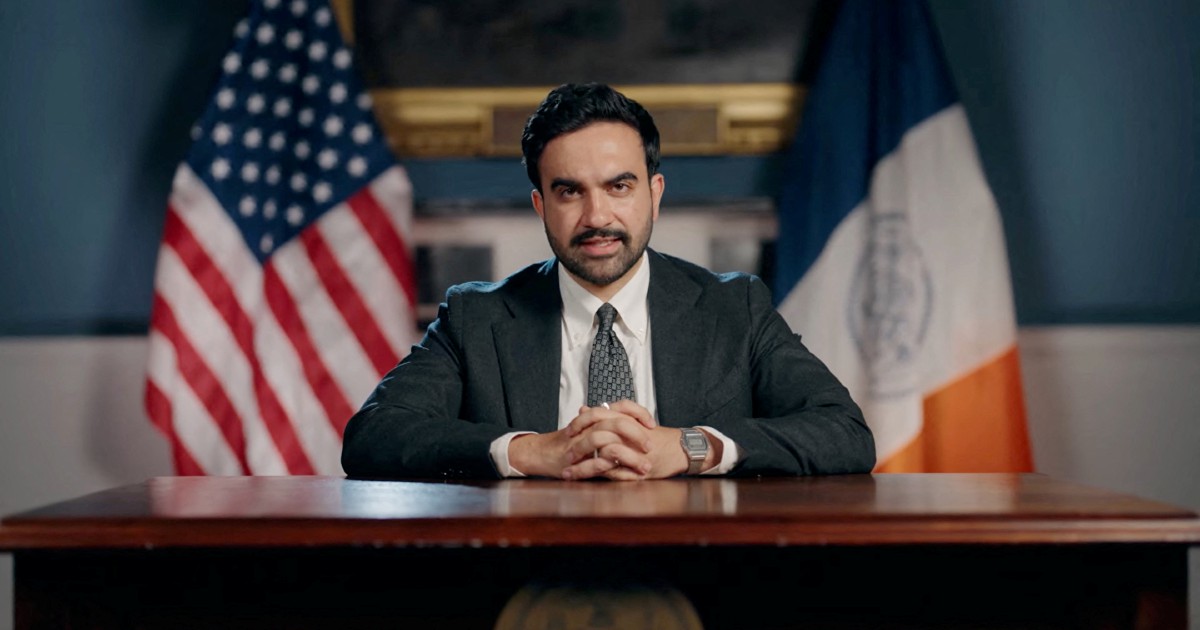
New York Mayor Zohran Mamdani stated on Tuesday that his city administration cannot legally execute the International Criminal Court's arrest warrant for Israeli Prime Minister Benjamin Netanyahu, instead appealing to federal authorities to take charge of the matter. The declaration clarifies the jurisdictional boundaries that govern how such extraordinary legal situations play out within the American federal system, where municipal governments operate under constrained powers.
Mamdani's position reflects the fundamental architectural division between local and national authority in the United States. Cities, despite their significant resources and police apparatus, function as creatures of state law with clearly delineated mandates. An ICC warrant, issued by an international court to which the United States is not even a signatory, falls squarely outside the remit of municipal law enforcement. The mayor's statement essentially acknowledges this constitutional reality while simultaneously shifting the onus toward Washington, where diplomatic and national security considerations typically guide such decisions.
The timing and nature of Mamdani's remarks carry particular weight in the context of ongoing Middle Eastern tensions and the International Criminal Court's deepening engagement with conflicts in that region. The ICC's prosecutor had sought arrest warrants for Netanyahu and other Israeli officials based on allegations connected to the conflict in Gaza. This development has created diplomatic friction between the United States and the international body, particularly as the US administration must navigate its relationship with Israel while respecting international legal frameworks.
For Malaysian and Southeast Asian observers, this episode illuminates how Western democracies grapple with the competing demands of international law, domestic politics, and alliance relationships. The situation differs markedly from how many Asian nations might handle equivalent scenarios. Where some countries maintain clearer hierarchies between international obligations and national sovereignty, the American approach involves courts, multiple government levels, and public debate—a messier but potentially more transparent process.
The broader implications touch on the credibility and enforceability of international courts in an increasingly fragmented world. When major powers can effectively opt out of ICC jurisdiction while its warrants target their allies, questions emerge about institutional legitimacy. The US has historically maintained distance from the ICC, even as it invokes international law selectively in various contexts. This inconsistency, however understandable from a realpolitik perspective, creates challenges for the global legal order.
Mamdani's appeal to federal officials suggests that responsibility now rests with the US State Department, the Justice Department, and ultimately the executive branch. These agencies must balance diplomatic considerations with legal obligations—a task far more complex than any local authority could undertake. The federal government can invoke sovereign immunity arguments, diplomatic recognition principles, and national interest exceptions that municipal officials cannot access. Whether federal authorities will treat the warrant as binding or discretionary remains uncertain and politically fraught.
The controversy also reveals how international legal mechanisms function in a world where enforcement depends largely on voluntary compliance and political alignment. Unlike domestic courts, the ICC lacks a dedicated police force or direct coercive power. It relies instead on member states to apprehend and transfer suspects. When significant powers decline to cooperate—whether formally or through strategic ambiguity—the court's effectiveness diminishes substantially, potentially undermining its legitimacy as a universal arbiter of justice.
For countries in Southeast Asia, which have increasingly engaged with international institutions and norms, this situation offers cautionary lessons about enforcement gaps. Regional bodies like ASEAN navigate similar tensions between national sovereignty and collective commitments. The Netanyahu warrant question thus resonates beyond Israel and the United States, touching on fundamental questions about how international law functions when powerful states resist its application to their interests or those of close allies.
Mamdani's statement, while technically correct about municipal authority, also represents a political calculation. By explicitly declining local enforcement authority while calling for federal involvement, the mayor avoids the city appearing to endorse or obstruct the warrant. This approach allows New York to remain neutral ground for important Israeli officials while technically respecting international legal processes. However, it also highlights how jurisdictional fragmentation can become a de facto way of managing politically explosive international disputes.
The incident underscores the enduring tension between universalist principles of international justice and the particularist interests of major powers. As Myanmar, Venezuela, and other nations have demonstrated, when countries object to ICC jurisdiction or warrants, enforcement becomes nearly impossible absent military intervention or regime change. This structural weakness in the international legal system has profound implications for how justice concerns are addressed globally, particularly regarding powerful nations and their leaders.

