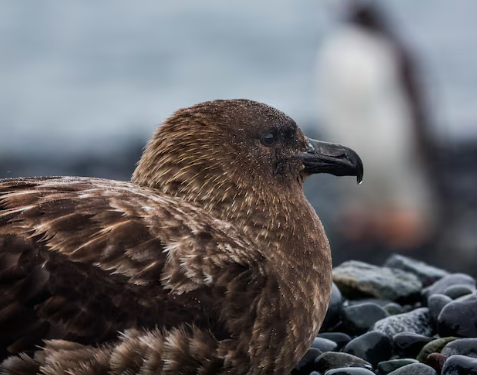
New Zealand has joined the growing list of nations grappling with the H5N1 bird flu pandemic after a brown skua seabird discovered on a Wellington beach tested positive for the virus, Biosecurity Minister Andrew Hoggard announced on Wednesday, July 15. The detection marks a significant milestone in the disease's geographic spread, as New Zealand becomes the final continent to report confirmed cases of the highly pathogenic strain that has devastated wild bird populations and agricultural operations globally over the past three years.
The arrival of H5N1 in New Zealand comes roughly a month after detection in neighbouring Australia, which has recorded at least 14 confirmed or presumed positive cases. This regional clustering underscores the virus's capacity to traverse vast oceanic distances via migratory bird populations, a phenomenon that public health officials across the Indo-Pacific region have monitored with growing concern. The broader context reveals an unprecedented disease emergence event: since 2021, the H5 strain has perpetrated what veterinarians describe as a wasting pandemic across wild bird and mammal populations worldwide, claiming millions of lives whilst simultaneously infiltrating commercial poultry operations and, in isolated instances, affecting farmworkers directly. The appearance in New Zealand represents not merely a symbolic endpoint in a planetary disease timeline, but a genuine biosecurity inflection point for a nation whose ecological isolation has created unusual vulnerabilities.
Official assessments suggest the immediate threat remains contained. Hoggard stated in his public announcement that no evidence currently indicates mass wildlife mortality events or inter-avian transmission within New Zealand's borders. Critically, poultry facilities throughout the country remain free of infection, a fact that officials emphasise as validation of existing biosecurity protocols developed collaboratively between government and the farming sector. This measured assessment appears calibrated to prevent public alarm whilst maintaining vigilance. New Zealand authorities have projected that the nation may experience a trajectory analogous to Australia's experience, where detections have remained sporadic and geographically dispersed rather than consolidating into outbreak clusters.
Yet beneath this ostensible stability lurks a profound ecological crisis. New Zealand's avian biodiversity occupies a categorical position unlike anywhere else on Earth. For millions of years, the archipelago's geographic isolation precluded the evolution of native land mammals, permitting birds to occupy ecological niches typically dominated by terrestrial creatures elsewhere. This evolutionary pathway produced extraordinary adaptations: numerous species became flightless, developed ground-nesting behaviours, and failed to develop sophisticated predator-avoidance mechanisms. Species such as the takahe and kakapo—both now critically endangered—exemplify this vulnerability. These birds possess minimal exposure to pathogenic threats in their evolutionary history, rendering their immune systems potentially unprepared for a novel viral challenge of H5N1's severity and transmission efficiency.
The convergence of evolutionary isolation and contemporary conservation crisis creates conditions for genuine extinction risk. Many of New Zealand's native species already teeter on extinction's precipice, their populations fragmented across small reserves and intensively managed breeding programmes. Habitat destruction, introduced predators including stoats, rats, and feral cats, and the ecological disruption accompanying human settlement have whittled populations to dangerously low numbers. Introducing an unfamiliar pathogenic pressure into already stressed populations could prove catastrophic. The virus's documented capacity to cause mass mortality in avian populations—evident in events across Europe, Asia, and North America—suggests that uncontrolled transmission within New Zealand's native bird communities could trigger secondary extinctions for species already dependent upon human intervention for survival.
Recognising these existential hazards, New Zealand health authorities have initiated an emergency vaccination programme targeting 300 core breeding birds representing five of the nation's most critically endangered species. The takahe and kakapo, both emblematic of New Zealand's conservation efforts, feature prominently in this intervention strategy. This represents an extraordinary deployment of resources and scientific expertise, reflecting the gravity authorities assign to the threat. The vaccination initiative constitutes not merely disease prevention but rather a form of species triage, wherein officials have identified specific individuals within endangered populations as worthy of direct protective intervention. Such approaches, whilst necessary, also underscore the precarious position these species occupy: they now depend upon human vaccination programmes for continued existence.
Brett Gartrell, a wildlife health specialist at Massey University, articulated the fundamental anxiety underpinning professional assessment. Gartrell told international media outlets that bird flu poses an extinction-level threat to New Zealand's unique biodiversity. His characterisation emphasises the unprecedented nature of this challenge: New Zealand's birds simply lack evolutionary experience with infectious agents of this magnitude and transmissibility. The observation that even vaccinated core populations might face inadequate immunity if viral spread accelerates sharply reveals the fundamental precariousness of current mitigation efforts. Vaccination programmes, whilst scientifically sound, operate under the assumption that transmission rates remain manageable and time permits inoculation protocols to reach protective thresholds before widespread exposure occurs.
The implications extend beyond New Zealand's borders and possess particular relevance for Southeast Asian nations. The region hosts diverse migratory bird populations that traverse between breeding grounds in central Asia and wintering habitats throughout the Indo-Pacific. Surveillance data demonstrate that H5N1 can persist asymptomatically in certain avian species whilst still transmitting infection to susceptible populations and other animal classes. Malaysia, Thailand, Indonesia, and other Southeast Asian countries maintain substantial poultry industries alongside populations of wild birds, creating ecological interfaces where zoonotic spillover events can occur. The New Zealand detection reinforces that no geographical isolation provides lasting protection against pandemic pathogens circulating in globally connected wildlife networks.
For the Malaysian context specifically, the emergence of H5N1 in New Zealand serves as a timely reminder regarding biosecurity preparedness across agricultural and wildlife sectors. Malaysia's avian diversity, whilst distinct from New Zealand's endemics, nonetheless includes vulnerable species and economically significant poultry operations. The poultry industry represents a substantial component of Malaysian food security and agricultural exports. Previous H5N1 outbreaks in Southeast Asia have necessitated mass culling operations, trade restrictions, and economic losses extending into millions of dollars. New Zealand's experience—particularly the focus upon preventing wildlife-to-poultry transmission—illustrates best practices that Malaysian officials can adapt to local contexts.
The detection of H5N1 in New Zealand also illuminates broader questions regarding pandemic preparedness in the Indo-Pacific region. The virus has demonstrated remarkable evolutionary capacity, generating variants with altered transmissibility and virulence profiles. The concentration of detection events across Australia and New Zealand within a compressed timeframe suggests either a single spillover event followed by dispersal, or independent introductions via migratory routes. Understanding transmission pathways and source populations remains essential for predicting future incursions and prioritising surveillance resources. Southeast Asian countries, positioned geographically along major migratory corridors, face genuine exposure risks that warrant continued investment in laboratory capacity, field surveillance, and information-sharing mechanisms.
New Zealand's response—combining border vigilance with proactive vaccination of vulnerable wildlife populations—reflects a sophisticated understanding that pathogen containment alone proves insufficient when ecological interfaces between wild and domestic animals proliferate across landscapes. The decision to vaccinate rather than immediately cull endangered birds reflects recognition that conservation objectives must integrate with disease management strategy. This represents a departure from historical approaches that treated wildlife as epidemiological threats warranting elimination. Such integrated approaches, combining conservation genetics with epidemiological principles, likely represent the future paradigm for managing zoonotic diseases in biodiverse regions.
As New Zealand's authorities monitor the situation in coming weeks, the international community watches closely for signals regarding transmission dynamics in temperate island ecosystems. Success in containing H5N1's spread whilst preserving critically endangered avifauna would validate integrated management approaches applicable across the Indo-Pacific. Conversely, rapid escalation would trigger urgent reassessment of prevention strategies and potentially force difficult triage decisions regarding resource allocation between domestic animal agriculture and endemic wildlife conservation. Either trajectory will generate lessons informative for Malaysia and neighbouring nations navigating the perpetual tension between biosecurity imperatives and biodiversity preservation.

