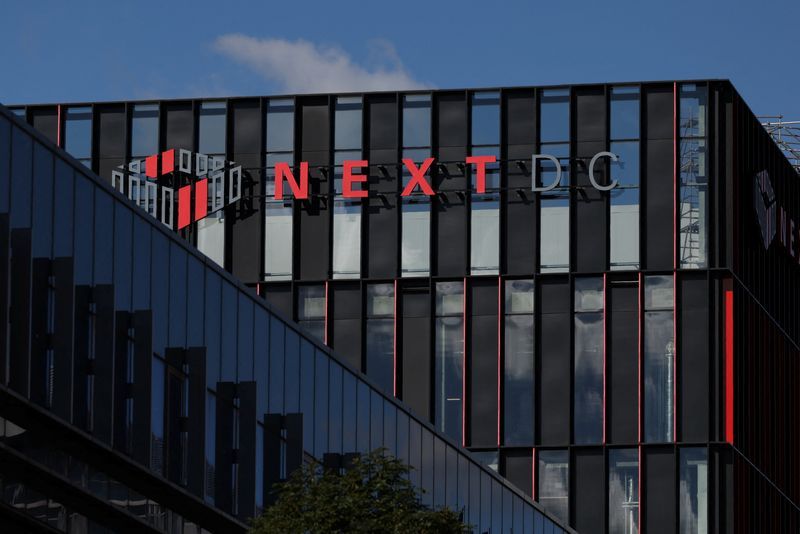
Australian data centre operator NextDC has delivered financial results that pleased investors but underscored growing environmental tensions surrounding the artificial intelligence boom across the region. The company swung to profitability with net income of A$82.1 million for the year ending June, a dramatic turnaround from a A$60.5 million loss in the prior corresponding period, while underlying earnings before interest, tax, depreciation and amortisation climbed 15 per cent to A$248.8 million. These figures exceeded analyst forecasts tracked by Visible Alpha, sending NextDC shares up 3.3 per cent by mid-session Friday, yet they arrived alongside disclosure of worsening environmental metrics that have triggered broader policy discussions across Australia's political establishment.
The company's water usage effectiveness ratio, a key measure of efficiency, deteriorated to 2.40 litres per kilowatt-hour from 2.25 litres in the prior year, while its power usage effectiveness ratio—which indicates how much electricity facilities consume for cooling and ancillary systems—rose to 1.49 from 1.44. These twin reversals mark the third consecutive year in which both metrics have moved in the wrong direction, painting a picture of operational strain despite organisational efforts to manage resource consumption. The divergence between financial performance and environmental metrics highlights a central tension in infrastructure development across Southeast Asia and Australasia, where governments face pressure to capitalise on the digital economy while managing finite water and electricity resources.
NextDC attributed these increases partly to newly constructed capacity that is running cooling systems at full throttle before information technology equipment has been fully deployed. This commissioning phase is inherent to data centre development but creates temporary inefficiency that can persist for months. The company also acknowledged that rigorous data reconciliation work during the reporting period uncovered previously undocumented water losses through leaks and identified anomalies in utility metering systems. In a sustainability report released alongside financial statements, management noted that "higher water consumption during the year reflected a combination of portfolio growth and increased activity across operational, expansion and commissioning projects," while separately disclosing that the reconciliation process involved "significant" investigation of water leaks, meter irregularities, and discrepancies between site-level measurements and utility company records.
These efficiency ratios have taken on outsized political significance in Australia and increasingly across the Indo-Pacific region, serving as visible proxies for the demands that data centre expansion places on electricity grids and freshwater supplies. Policymakers and constituents view them as measurable indicators of whether the infrastructure underpinning artificial intelligence and cloud computing represents genuine progress or simply transfers environmental costs onto communities already managing resource constraints. The metrics have become focal points in parliamentary debates about whether growth in the digital economy can be reconciled with climate commitments and water security objectives, particularly in drought-prone areas of Australia.
Canberra has responded to mounting public concern by considering mandatory national standards that would govern data centre operations across energy consumption, water usage, and siting decisions. The federal government recently floated proposals requiring data centre operators to construct new renewable energy capacity rather than drawing additional electricity from the national grid, a move that would fundamentally reshape development economics for the sector. These regulatory responses reflect wider global trends, with an expanding constellation of governments, city administrations and regional authorities implementing freezes on new data centre permits, tightening operational requirements, or introducing outright bans in jurisdictions where water scarcity or grid capacity constraints are particularly acute.
NextDC's competitors occupy similarly scrutinised positions within this regulatory environment. Blackstone-owned AirTrunk and Infratil-owned CDC both operate substantial portfolios and face comparable disclosure and compliance expectations. The competitive dynamics within Australia's data centre sector mean that efficiency improvements or deteriorations at one operator create benchmarks against which others are evaluated, intensifying pressure across the industry to demonstrate environmental stewardship. For multinational investors and operators expanding into Australia and Southeast Asia, NextDC's reporting reveals that operational sustainability has become inseparable from regulatory risk and stakeholder acceptance.
Revenue expansion of 16 per cent underscores the commercial strength of the data centre sector, driven by insatiable demand for computing capacity from cloud providers, financial institutions, and enterprises building artificial intelligence capabilities. This growth trajectory appears structural rather than cyclical, reflecting the necessity of physical infrastructure to support digital transformation across economies throughout the region. However, the disconnect between revenue growth and environmental efficiency gains suggests that capacity expansion is outpacing the company's ability to optimise resource consumption per unit of computing power delivered. This pattern raises questions about whether incremental improvements in technology and operations can sufficiently decouple data centre expansion from resource consumption, or whether constraints on water and electricity availability will eventually impose hard limits on infrastructure buildout.
For Malaysian and Southeast Asian readers, NextDC's experience offers cautionary perspective as governments across the region consider similar data centre development strategies. Countries evaluating whether to position themselves as regional artificial intelligence or cloud computing hubs must grapple with the resource implications evident in Australia's largest operator's financial disclosures. Water stress is not merely an Australian concern; it affects populations throughout the region experiencing climate variability and competing demands from agriculture, manufacturing and urban consumption. Electricity grid reliability and cost similarly preoccupy policymakers across Southeast Asia, where industrialisation and urbanisation already strain generation and distribution capacity.
The accounting gain on property valuations that contributed significantly to NextDC's reported profit suggests that financial performance may increasingly depend on asset appreciation rather than operational efficiency improvements. This pattern could incentivise rapid expansion and asset accumulation ahead of genuine optimisation, potentially locking in inefficiency that becomes difficult to remedy once infrastructure is embedded in operational portfolios. Regulators considering mandatory efficiency standards or renewable energy integration requirements may find that companies prioritise growth over optimisation in anticipation of tighter future constraints, creating a window during which environmental and resource costs accumulate.
NextDC's results ultimately demonstrate that the artificial intelligence boom generates genuine economic value and attracts significant capital investment, yet simultaneously imposes environmental costs that extend beyond corporate balance sheets. The company's technical and regulatory response to rising efficiency metrics will probably become a model against which regional and global peers are measured. For Australian and Southeast Asian policymakers, these figures underscore the necessity of embedding environmental performance standards into data centre development frameworks from the outset, rather than attempting to retrofit efficiency improvements onto expanding infrastructure portfolios after deployment.

