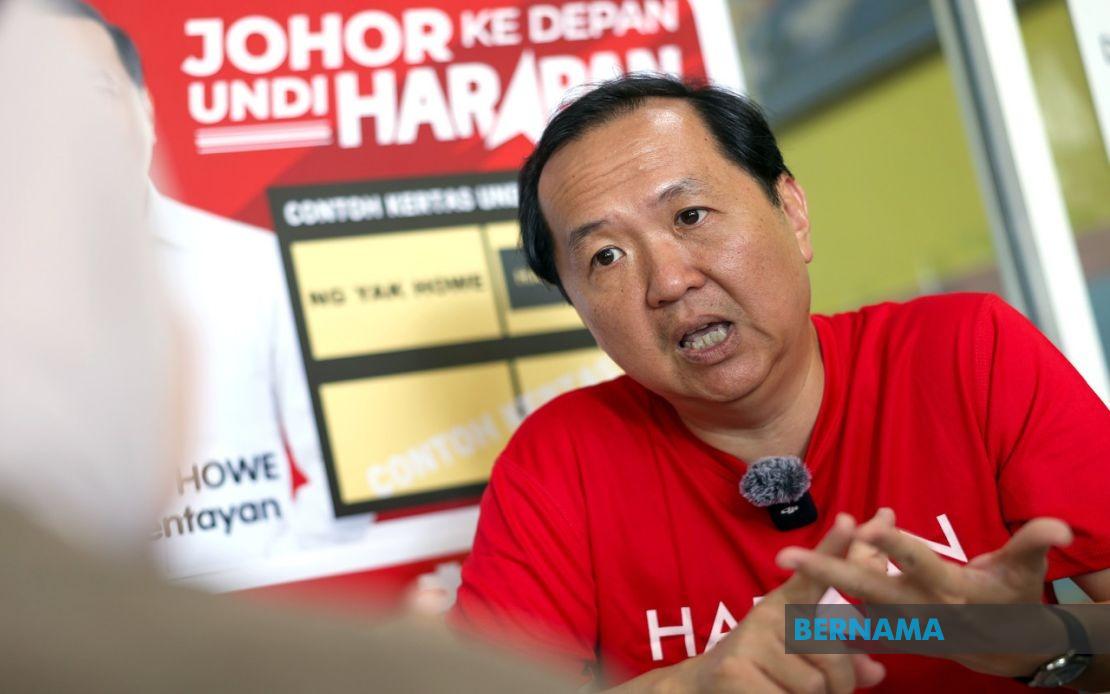
Pakatan Harapan's Ng Yak Howe is making the revitalisation of Muar town centre his defining campaign message as he seeks a third term representing the Bentayan state seat in the upcoming Johor election. The incumbent assemblyman has identified the gradual depopulation of the town's core as a critical challenge threatening its commercial viability and social cohesion, with the Bentayan constituency encompassing more than half of the historically important town centre.
The exodus of residents to suburban areas has created a particular problem for Muar's commercial district: while the town centre bustles with activity during business hours, it transforms into a near-empty landscape once offices close and shops shut their doors. This hollowing-out dynamic has left approximately 18 per cent of retail and office premises vacant, a visible reminder of economic stagnation that threatens the livelihoods of remaining traders and the town's long-term prosperity. Ng has diagnosed this as both an economic and social issue, understanding that the migration pattern reflects broader challenges around lifestyle preferences, housing costs, and the appeal of newer suburban developments that offer more amenities and space.
During grassroots engagement in Muar town, Ng has articulated a vision of attracting residents, particularly younger demographics, back to the town centre by creating a more vibrant environment centred on commerce and community activities. This approach recognises that urban revival cannot depend solely on government intervention but requires active participation from the private sector and residents themselves. By repositioning the town centre as a destination rather than merely a place to conduct business, Ng's strategy aims to establish a sustainable cycle where increased foot traffic generates business confidence and attracts new investment.
To translate this vision into concrete action, Ng has been collaborating with Bakri Member of Parliament Tan Hong Pin on initiatives designed to inject immediate purchasing power into the local economy. Cash voucher schemes and lucky draw campaigns are intended to incentivise residents to shop locally rather than migrating their consumption to out-of-town shopping malls and suburban commercial centres. These tactical measures, while temporary, serve a dual purpose: they generate immediate economic stimulus while building consumer habits that might persist once the promotional period ends.
Ng's background as a former quality assurance engineer with more than a decade of industrial experience suggests he approaches urban revitalisation with a systematic mindset. His career trajectory into politics reflects a broader pattern in Malaysian electoral politics where professionals transition into public service, bringing technical expertise to governance challenges. With over 25 years of political involvement and his position on the Johor DAP committee, Ng has accumulated considerable institutional knowledge about state and local governance, which he is positioning as an asset for implementing comprehensive town centre revival strategies.
The Bentayan seat represents a microcosm of economic challenges facing smaller Malaysian towns. As larger shopping complexes and suburban commercial hubs have proliferated, traditional town centres have struggled to remain competitive. The loss of residents and commercial vitality in Muar town centre reflects a pattern seen across numerous Malaysian towns, making this local election contest relevant to broader policy discussions about urban planning and regional economic development. The seat's 34,205 registered voters will determine whether continuity with Ng's approach or a change of direction through his Barisan Nasional challenger Chua Lee Huat appeals more to residents.
The straight contest between Ng and Chua reflects the two-party dynamics that have crystallised in Malaysian electoral politics post-2018, though it occurs within the context of the 16th Johor state election involving 172 candidates across 56 constituencies. Early voting is scheduled for July 7, with the main polling day on July 11, giving candidates limited time to mobilise support. For Ng, the challenge extends beyond merely retaining his seat; he must convince voters that his vision and collaborative approach with the federal MP can genuinely reverse Muar town centre's economic trajectory.
The revival of Muar town centre is not merely a local economic issue but touches on questions of social inclusion and urban equity. Suburban migration patterns often correlate with income stratification, as wealthier residents relocate to planned suburban developments while lower-income populations remain in town centres that lack investment and maintenance. Ng's emphasis on attracting younger residents suggests awareness that demographic renewal is essential for long-term viability, as ageing town centres without younger cohorts face further decline as the existing population retires.
The outcome of the Bentayan contest will offer insights into whether Malaysian voters reward incumbents for articulating coherent development visions and maintaining grassroots engagement. Ng's decision to conduct public walkarounds and meet traders directly demonstrates commitment to understanding local concerns rather than relying on generic campaign messaging. This approach, when combined with concrete programmes like the cash voucher initiatives, represents a pragmatic blend of long-term strategy and short-term responsiveness to voter needs.

